



May Auto Sales See 'Dismal' Beginning

Car and truck sales picked up speed in the first four months of the year on rising consumer confidence, but they appear this month to be losing momentum.
Auto experts had expected a lull in May because of shortages of some of the most popular Japanese models, but they're watching to see if there's more to the slowdown than a dearth of supplies — perhaps some backsliding in demand, reported The Detroit News.
Forecasting firm J.D. Power and Associates said several factors are contributing to a "dismal" start in May auto sales.
"The biggest drivers are a pullback in incentives as well as lower availability of vehicles," said Jeff Schuster, executive director of global forecasting at J.D. Power. "Those two are contributing the most."
But gas prices nearing record highs also are weighing on the market, prompting some consumers to delay purchases, he said.
Based on sales in the first 11 days of May, J.D. Power estimates a monthly total of 1.07 million cars and light trucks — up 6 percent from weak prior-year levels, but down sharply from April.
It estimates this month's selling rate at 11.9 million light vehicles after three consecutive months of sales exceeding 13 million units on an annualized basis.
Over the past three months, automakers had seized the opportunity to scale back on profit-eroding incentives, but Schuster expects them to start offering bigger discounts, particularly as the Memorial Day weekend approaches.
George Pipas, Ford Motor Co.'s market analyst, was reluctant to read much into the early May results.
With many Japanese models in short supply, "most observers expected the sales pace would fall off in May and June," he said.
"But it's too early to determine whether there's something else out there besides the limited availability of models in the marketplace," Pipas said.
High gas prices have an effect on the market, prompting consumers to buy smaller or more fuel-efficient vehicles.
As in 2008, when fuel prices hit record highs, demand for big pickups is down.
They're sitting on dealer lots for more than three months, on average, while the days' supply for small cars in the U.S. market has fallen to 36 days.
There's a 10-day supply of Toyota Prius hybrids, and Honda Motor Co. warned U.S. dealers this month that supplies of the new Civic compact would be "severely restricted" and the Civic hybrid might not be available until later this year.
Japanese brands are experiencing more shortages this month than in April from a devastating March earthquake that halted most vehicle output in Japan for more than a month. Dealers in California complain of severe shortages.
But Ivan Drury, an analyst at auto research firm Edmunds.com, says the weakness in sales may be due more to a recent pullback in incentives — which translates into higher car prices — than the shortage of models. Except for the Prius, he said, there aren't that many models that are unavailable.
Toyota Motor Corp., after recently announcing that it expected to restore production faster than initially thought, is bringing back some incentives. It is offering low-interest and attractive lease deals on a variety of models, including the Toyota Camry and Corolla sedans and Highlander SUV.
But while the incentives became available on May 12, showroom traffic in this region remains slow, said Bob Page of Page Toyota in Southfield.
High gas prices have prompted shoppers to defer purchases, he believes — and that's what he hears from dealers with other brands.
"It's not just Toyota. Dealers are all seeing business in May that's fairly soft," Page said.
"People are shocked at $50, $60 and $80 (gas) refills. I think they're really feeling it."
But they'll have to come back into the market at some point, consulting firm A.T. Kearney said this week. It said the average age of vehicles on U.S. roads is now 10.4 years, resulting in huge pent-up demand that will help lift auto sales to 13.2 million cars and light trucks from 11.6 million last year. It sees sales recovering to prerecession levels of about 16 million vehicles by 2013.
More Industry
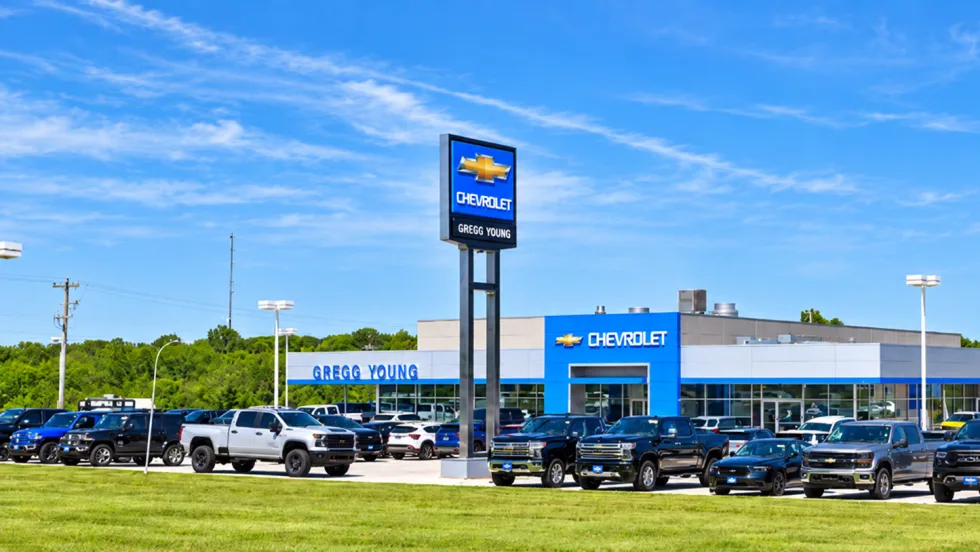
Nebraska Rooftop Changes Hands
The Gregg Young Automotive Group has sold its second dealership to Janssen Auto Group, both in Plattsmouth, Neb.
Read More →
Penske Auto Group Deal a Record
The deal to take the dealership and transportation services company private sets a new pace for industry buy-sell transactions.
Read More →
War Toll a Damper on Used Auto Prices
Cox Automotive found wholesale depreciation to be elevated in September amid high fuel prices and this year's unusual hurricane season.
Read More →
Bridge the Maintenance Gap
With many drivers missing recommended maintenance, service departments offering transparency and efficiency have a better chance of reaching financially strained consumers.
Read More →
California Store Has New Owner
The longtime dealership in the northern part of the state is known for robust fleet sales and has served the state capital for 115 years.
Read More →
BMW Plant Pursues Cleaner Energy
BMW Group Plant Leipzig has utilized hydrogen to help power its production since 2013, but a new pipeline is planned to take it to another level.
Read More →
Auto Affordability Inches Up
The latest Cox Automotive and Moody’s Analytics index shows a slight increase in new-vehicle affordability despite high prices.
Read More →
Ohio Auto Group Under New Ownership
After 79 years with the Schluter family, Mansfield Auto Group has been acquired by Missouri-based Clement Auto Group.
Read More →
RV Group Expands Carolina Footprint
Blue Compass RV Columbia Northeast is the 13th RV dealership owned by Blue Compass in the Carolinas.
Read More →
Agent Acumen
An Agent Summit panel of people who’ve been supporting auto dealers for years gave both timely and timeless advice for those starting out or mulling the prospect.
Read More →