



House Passes Legislation that Would Nullify CFPB Bulletin Regulating Car Dealers
WASHINGTON – The U.S. House of Representatives recently approved a piece of legislation that would nullify a 2013 bulletin issued by the Consumer Financial Protection Bureau, but would likely need the Senate to do the same by a veto-proof margin. The Reforming CFPB Indirect Auto Financing Guidance Act targets a bulletin that gave guidance on ... Read More »

WASHINGTON – The U.S. House of Representatives recently approved a piece of legislation that would nullify a 2013 bulletin issued by the Consumer Financial Protection Bureau, but would likely need the Senate to do the same by a veto-proof margin.
The Reforming CFPB Indirect Auto Financing Guidance Act targets a bulletin that gave guidance on Equal Credit Opportunity Act indirect auto lending requirements, reports legalnewsline.com.
“The bill passed with a veto-proof margin in the House, but it will have to pass the Senate with the two-thirds majority needed to withstand the possibility of a presidential veto,” said Elizabeth M. Bohn, shareholder at Carlton Fields Jorden Burt.
Bohn, who co-chairs the firm’s Consumer Finance Industry Group, added that those who opposed the bill argue that it would prevent the CFPB from effectively carrying out its duty to protect minority borrowers, and promised an administration veto.
“In my personal opinion, the bill does not appear to impair the CFPB’s authority to protect minority borrowers,” Bohn said.
“Rather, it is aimed at ensuring that (1) the Bureau does not regulate car dealers, who are exempt from (the Dodd-Frank Wall Street Reform and Consumer Protection Act); (2) that the methodology used by the Bureau to support its regulatory guidance based on findings of disparate impact is transparent and yields reliable information about disparate impact; and (3) that industry has fair notice of CPFB regulatory action vs. ‘guidance’ that appears to be de facto regulation,” Bohn said.
In 2013, the CFPB issued guidance that challenged a dealer’s ability to discount the annual percentage rate (APR) offered to consumers to finance vehicle purchases.
According to the bulletin, the CFPB confirmed that some indirect auto lenders use “markup and compensation policies” — policies that allow auto dealers to “mark up lender-established buy rates” and then compensate the dealers for those markups.
And since the compensation policies are created at the discretion of the dealers, the bulletin asserted that there is a “significant risk” of creating pricing disparities based on race, national origin or other prohibited bases. The ECOA makes discrimination by a creditor “in any aspect of a credit transaction” illegal.
CFPB’s bulletin proposed a strong influence over common auto industry practices, and some have wondered if the CFPB’s ability to change the auto industry world sets a difficult precedent in the industry. Bohn believes it does.
“The CFPB’s regulatory and enforcement activities against indirect auto lenders affect the auto finance industry and dealers alike,” Bohn said.
“For lenders to implement the policies and procedures needed to comply with Bureau expectations is costly and burdensome. Those added costs and burdens imposed on lenders, along with the reduction in profitability to dealers for originating contracts, could reduce the number of deals financed and lead to fewer financing options for consumers.”
Since the CFPB is supposed to deal with financial institutions, some question whether the CFPB is overstepping its boundaries by attempting to regulate the auto industry.
“The CFPB is authorized to regulate financial institutions and larger market participants providing consumer financial services, including consumer auto lenders. It isn’t authorized to regulate auto dealers,” Bohn said.
“The bill’s sponsors claim that the Bulletin represents a Bureau effort at an end-run around Dodd-Frank’s exclusion of auto dealers by attempting to regulate compensation paid to auto dealers.
“Specifically, by using enforcement actions against large indirect auto lenders to pressure finance companies to lower caps they set on dealer reserve or eliminate this discretion altogether. While indirect lenders who purchase consumer auto loans may be creditors subject to the Equal Credit Opportunity Act, and subject to CFPB enforcement, I would agree that the Bulletin’s expectation that lenders impose significant control on dealer compensation and mark up policies to avoid violations of ECOA swerves into regulation of auto dealers.”
More Industry
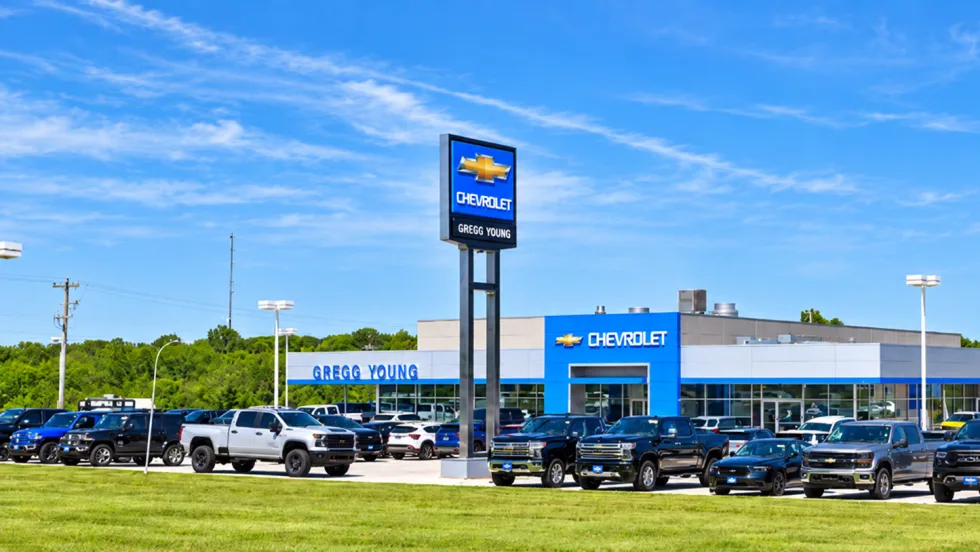
Nebraska Rooftop Changes Hands
The Gregg Young Automotive Group has sold its second dealership to Janssen Auto Group, both in Plattsmouth, Neb.
Read More →
Penske Auto Group Deal a Record
The deal to take the dealership and transportation services company private sets a new pace for industry buy-sell transactions.
Read More →
War Toll a Damper on Used Auto Prices
Cox Automotive found wholesale depreciation to be elevated in September amid high fuel prices and this year's unusual hurricane season.
Read More →
Bridge the Maintenance Gap
With many drivers missing recommended maintenance, service departments offering transparency and efficiency have a better chance of reaching financially strained consumers.
Read More →
California Store Has New Owner
The longtime dealership in the northern part of the state is known for robust fleet sales and has served the state capital for 115 years.
Read More →
BMW Plant Pursues Cleaner Energy
BMW Group Plant Leipzig has utilized hydrogen to help power its production since 2013, but a new pipeline is planned to take it to another level.
Read More →
Auto Affordability Inches Up
The latest Cox Automotive and Moody’s Analytics index shows a slight increase in new-vehicle affordability despite high prices.
Read More →
Ohio Auto Group Under New Ownership
After 79 years with the Schluter family, Mansfield Auto Group has been acquired by Missouri-based Clement Auto Group.
Read More →
RV Group Expands Carolina Footprint
Blue Compass RV Columbia Northeast is the 13th RV dealership owned by Blue Compass in the Carolinas.
Read More →
Agent Acumen
An Agent Summit panel of people who’ve been supporting auto dealers for years gave both timely and timeless advice for those starting out or mulling the prospect.
Read More →