



GM Sets Buyback, Placating Activists
General Motors Co. on Monday became the latest company to return billions of dollars to shareholders amid tussles with investors over how to better allocate corporate cash, reported The WSJ. Facing a potentially contentious fight over a board seat and a larger buyback, the car maker tried to walk the line between placating big investors ... Read More »

General Motors Co. on Monday became the latest company to return billions of dollars to shareholders amid tussles with investors over how to better allocate corporate cash, reported The WSJ.
Facing a potentially contentious fight over a board seat and a larger buyback, the car maker tried to walk the line between placating big investors and spending more on its future.
GM disclosed a $5 billion stock repurchase, a sum that comes on top of a previously announced dividend increase, and an additional $9 billion it will spend this year to improve brands including Cadillac, boost fuel efficiency and develop electric and driverless cars, among other things.
GM’s decision highlights a dilemma facing many companies as activists cement their toehold in boardrooms: Who is better at determining the appropriate use of cash as corporate balances grow?
Some data suggest activists discourage companies from investing in their businesses, something many activists would readily admit, citing wasteful spending.
Companies in the S&P 500 targeted by activists between 2003 and 2013 reduced their spending on plants, equipment and research to 29% of their cash from operations in the five years after activists bought their shares from a median of 42%, according to an analysis conducted for The Wall Street Journal by S&P Capital IQ’s Quantamental Research unit.
That compares with the much smaller drop to 25% from 27% for nontargeted companies over the same period.
Meantime, corporations targeted by activists boosted dividends and stock repurchases to a median of 37% of operating cash flow in the first year after being approached by activists, from 22%. S&P 500 companies that weren’t targeted by activists showed a 10-point increase, to 36%.
“Companies only have a finite amount of cash,” said David Pope, a managing director at S&P Capital IQ. “If they spend it on shareholder returns, there is less cash to spend on everything else.”
GM made its buyback decision after top officials determined its $25 billion in cash was more than enough to fulfill spending plans and handle uncertainties like the federal investigation into a botched ignition-switch recall. People familiar with the decision said a buyback already was under consideration and investor talks sped it up.
“We believe an initial $5 billion share buyback is good for our owners because we cannot earn better returns by investing that cash in the business at this time,” GM finance chief Chuck Stevens said on a conference call.
Separately, on Tuesday, some large investors and corporate chiefs are gathering in New York to debate the social and economic impact of rising shareholder pressure.
The nation’s largest auto maker had come under fire from Harry Wilson, a former architect of GM’s federal bailout, who wanted an $8 billion buyback and had the backing of four hedge funds in his bid to get a seat on the company’s board.
“Capital allocation is an underappreciated discipline,” Mr. Wilson said in an interview on Monday.
“When activism works well, one of the things it does is try to create a disciplined framework around this decision.”
GM had said last month that it would discuss more capital returns later this year.
The company was waiting for clarity around any fine the Justice Department might levy as well as other litigation that may result from a massive recall due to faulty ignition switches, the people said.
Mr. Wilson and the funds have dropped the request for a board seat in light of the buyback and GM’s pledge to better explain its spending and goals.
GM stock rose 3.1% to $37.66 in 4 p.m. New York Stock Exchange trading on Monday.
Not all investors were excited. James Potkul, a Parsippany, N.J., investment manager who controls about 10,000 GM shares, said the auto maker should instead marshal its cash to protect against uncertainties. “Are they worried about a downturn? They should be,” he said. “These companies can burn cash pretty badly when a downturn comes.”
How and when to use capital will be the topic of debate when the group of prominent investors and executives calling itself Focusing Capital on the Long Term meets in New York.
As a sign of the issue’s weight, U.S. Treasury Secretary Jacob Lew is expected to discuss how public policy can support the goals of the group’s members, including chief executives such as BlackRock Inc. ’s Laurence Fink , Unilever PLC’s Paul Polman and Barclays PLC Chairman Sir David Walker.
Elliott Management Corp., a New York-based hedge fund, last year started criticizing networking-equipment manufacturer Juniper Networks Inc. for spending $7 billion on acquisitions and nearly $8 billion in research and development while its stock price greatly underperformed the Nasdaq Composite Index since the company’s 1999 initial public offering.
Last year, after settling with Elliott to change the board, Juniper cut spending and repurchased $2.3 billion of stock. It plans to buy back almost $2 billion more through 2016.
The company paid its first-ever dividend and borrowed money to fund some of the returns.
“The Juniper share repurchase and cost-cutting efforts are the largest contributor to the stock staying stable,” said Scott Thompson , an analyst with Wedbush Securities.
At the same time, he warned that continued cuts could eventually hamper Juniper’s ability to keep pace with innovation in the industry.
Some efforts haven’t garnered the same praise. In early 2012, New York investment firm Clinton Group Inc. took a stake in teen fashion retailer Wet Seal Inc. and began urging a share buyback. By February 2013, the company disclosed it was cutting jobs and expenses and would repurchase $25 million of stock after appointing four Clinton representatives to its board.
This January, Wet Seal closed two-thirds of its stores and filed for bankruptcy protection.
In court documents, executives cited a broader drag on teen retailers as well as missteps that alienated core customers. People familiar with the bankruptcy say that in hindsight the buyback was a bad decision.
“If we had rewound and said they hadn’t done the buyback, that would have given them substantially more flexibility,” said Jeff Van Sinderen, an analyst at B. Riley & Co. “In those situations, $25 million dollars can go a long way.”
More Industry
Nebraska Rooftop Changes Hands
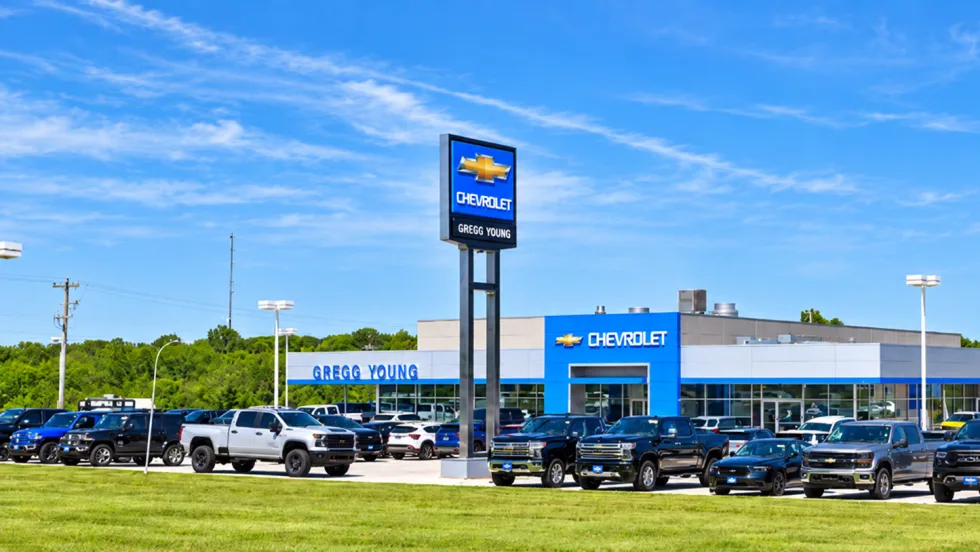
The Gregg Young Automotive Group has sold its second dealership to Janssen Auto Group, both in Plattsmouth, Neb.
Read More →
Penske Auto Group Deal a Record
The deal to take the dealership and transportation services company private sets a new pace for industry buy-sell transactions.
Read More →
War Toll a Damper on Used Auto Prices
Cox Automotive found wholesale depreciation to be elevated in September amid high fuel prices and this year's unusual hurricane season.
Read More →
Bridge the Maintenance Gap
With many drivers missing recommended maintenance, service departments offering transparency and efficiency have a better chance of reaching financially strained consumers.
Read More →
California Store Has New Owner
The longtime dealership in the northern part of the state is known for robust fleet sales and has served the state capital for 115 years.
Read More →
BMW Plant Pursues Cleaner Energy
BMW Group Plant Leipzig has utilized hydrogen to help power its production since 2013, but a new pipeline is planned to take it to another level.
Read More →
Auto Affordability Inches Up
The latest Cox Automotive and Moody’s Analytics index shows a slight increase in new-vehicle affordability despite high prices.
Read More →
Ohio Auto Group Under New Ownership
After 79 years with the Schluter family, Mansfield Auto Group has been acquired by Missouri-based Clement Auto Group.
Read More →
RV Group Expands Carolina Footprint
Blue Compass RV Columbia Northeast is the 13th RV dealership owned by Blue Compass in the Carolinas.
Read More →
Agent Acumen
An Agent Summit panel of people who’ve been supporting auto dealers for years gave both timely and timeless advice for those starting out or mulling the prospect.
Read More →