



GM Returns to Bankruptcy Court Seeking Legal Protection
The same judge who oversaw General Motors’ 2009 bankruptcy will hear arguments Tuesday over how much of a shield the company still has against lawsuits involving vehicles and crashes from before the automaker exited bankruptcy in July 2009, most notably those vehicles with defective ignition switches, reported Detroit Free Press. U.S. Bankruptcy Judge Robert Gerber ... Read More »

The same judge who oversaw General Motors’ 2009 bankruptcy will hear arguments Tuesday over how much of a shield the company still has against lawsuits involving vehicles and crashes from before the automaker exited bankruptcy in July 2009, most notably those vehicles with defective ignition switches, reported Detroit Free Press.
U.S. Bankruptcy Judge Robert Gerber isn’t expected to make a decision for weeks. After he rules, one side almost certainly will appeal to a federal court in New York.
A GM victory would at least limit its cost of recall-related lawsuits to vehicles produced after the bankruptcy. Any wrongful death or personal injury cases tied to the ignition-switch defect, in which the crash occurred after bankruptcy, could proceed. The Tuesday hearing involves cases brought to recoup economic loss and also victims’ lawsuits unresolved by a compensation process independently run for GM by compensation expert Ken Feinberg.
Should the plaintiffs prevail, GM could eventually have to pay a few more billions of dollars to cover mostly the legal fees incurred in pending class action lawsuits.
This slow legal process is unfolding against the backdrop of GM’s potential proxy fight with a group of hedge funds pressuring it to give shareholders $8 billion through a stock buyback.
On one side Tuesday will be attorneys representing thousands of people who own GM vehicles that were recalled last year for dozens of defects and potential malfunctions. They have sued for what they claim is the lost value of their cars and trucks. Some of the cases involved personal injuries or deaths.
Arthur Steinberg, an attorney with the firm of King & Spalding, will present GM’s argument.
GM had to know
First the plaintiffs’ view.
“The gist of our argument is quite simple,” said Steve Berman, a Seattle lawyer representing some of the plaintiffs who claim recalls eroded their vehicles’ value. “GM knew that it had a safety defect as a result of these defective ignition switches. Therefore GM was obligated to give them individual notice that they had a claim in bankruptcy court. The remedy is that the bankruptcy order is not applicable to those folks.”
Now for GM’s case.
The 2009 bankruptcy involved a sale of the automaker’s “good assets” to an entity called General Motors LLC, or “new GM.” The “bad assets” were retained by Motors Liquidation, or “old GM.”
The final sale agreement limited “new GM’s” liability to the unexpired portion of standard glove box warranties on vehicles manufactured before bankruptcy, any state Lemon Law obligations and claims from accidents or fatal incidents that occurred after the bankruptcy exit even if they involved vehicles produced by “old GM.”
Steinberg will argue that the company should be immune from all “lost value” lawsuits tied to vehicles produced before that time, even if the defects weren’t identified until last year.
GM contends those suits should be filed against “old GM,” a legal shell with assets that are far short of what is owed to thousands of other creditors. These plaintiffs would be at the end of a very long line.
Judge Gerber must determine whether GM had sufficient knowledge of any defects such as the defective ignition switches to warrant disclosure to him back in 2009 before old GM was given the shield and allowed to go broke.
The independent report by former federal prosecutor Anton Valukas, released last spring, was highly critical of GM’s delay in issuing a recall. But it found that neither CEO Mary Barra nor General Counsel Mike Millikin learned about the ignition defect until late January 2014.
Some mid-level engineers knew the switches were vulnerable to being bumped from the “on” position as early as 2003. Later higher-ranking engineers and some of Millikin’s legal staff knew how serious the flaw was, but they found out in 2012 or 2013.
Was there disclosure?
If Gerber rules GM intentionally failed before filing bankruptcy to disclose that or other defects that later led to recalls, the “lost economic value” owners have a much stronger case.
“Where it gets tricky is that some of the people who knew about this problem went from old to new GM,” said Claude Bowles Jr., a Louisville bankruptcy attorney with the firm of Bingham Greenebaum Doll. “Bankruptcy sales are final because you want the buyer to use the assets to build a viable enterprise. But you have to balance that against our notions of due process.”
Even the most liberal pro-GM interpretation by Gerber won’t solve all the company’s legal problems from last year’s tidal wave of recalls. The GM Ignition Compensation Fund continues to review remaining claims for deaths and injuries tied to the ignition-switch recall. GM has estimated the settlements reached through that process will cost between $400 million and $600 million.
For example, the family of Brooke Melton, the Georgia nurse who died in March 2010 after her 2005 Chevrolet Cobalt rolled off a highway near her home, have withdrawn their acceptance of a $5-million settlement GM offered before last year’s recall. But their attorney Lance Cooper said the Meltons, who chose not to pursue a claim with the compensation fund, will proceed with their case regardless of Gerber’s decision. Their daughter’s death occurred about a year after GM emerged from bankruptcy.
Berman said some of his clients own recalled vehicles from the 2010 through 2014 model years. Anyone who died or was injured in those vehicles were not eligible to submit claims to the GM Ignition Compensation Fund.
More Industry
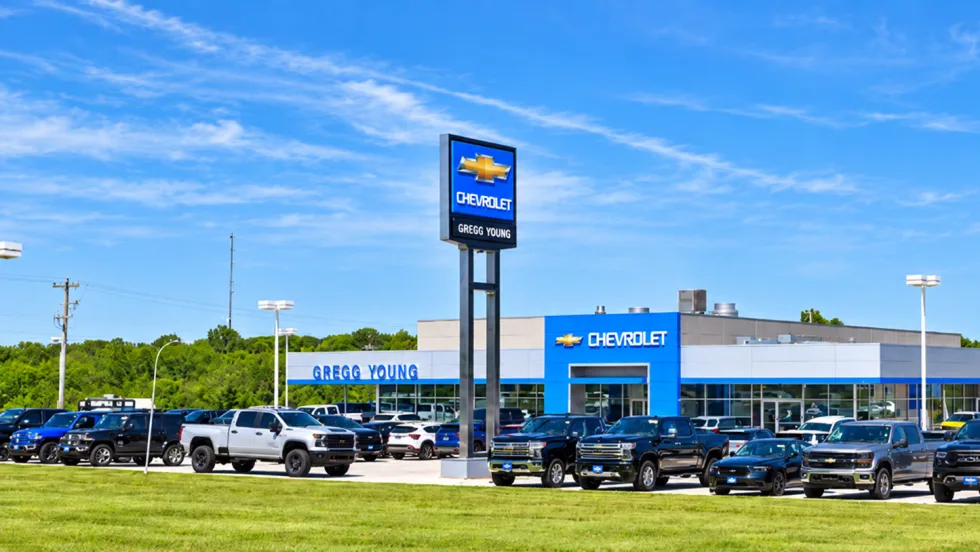
Nebraska Rooftop Changes Hands
The Gregg Young Automotive Group has sold its second dealership to Janssen Auto Group, both in Plattsmouth, Neb.
Read More →
Penske Auto Group Deal a Record
The deal to take the dealership and transportation services company private sets a new pace for industry buy-sell transactions.
Read More →
War Toll a Damper on Used Auto Prices
Cox Automotive found wholesale depreciation to be elevated in September amid high fuel prices and this year's unusual hurricane season.
Read More →
Bridge the Maintenance Gap
With many drivers missing recommended maintenance, service departments offering transparency and efficiency have a better chance of reaching financially strained consumers.
Read More →
California Store Has New Owner
The longtime dealership in the northern part of the state is known for robust fleet sales and has served the state capital for 115 years.
Read More →
BMW Plant Pursues Cleaner Energy
BMW Group Plant Leipzig has utilized hydrogen to help power its production since 2013, but a new pipeline is planned to take it to another level.
Read More →
Auto Affordability Inches Up
The latest Cox Automotive and Moody’s Analytics index shows a slight increase in new-vehicle affordability despite high prices.
Read More →
Ohio Auto Group Under New Ownership
After 79 years with the Schluter family, Mansfield Auto Group has been acquired by Missouri-based Clement Auto Group.
Read More →
RV Group Expands Carolina Footprint
Blue Compass RV Columbia Northeast is the 13th RV dealership owned by Blue Compass in the Carolinas.
Read More →
Agent Acumen
An Agent Summit panel of people who’ve been supporting auto dealers for years gave both timely and timeless advice for those starting out or mulling the prospect.
Read More →