



Ford Wants to Work with Wireless Companies to Create Safe Car Apps

Ford Motor Co., which has made its Sync connectivity technology a distinguishing feature of its vehicles, wants collaboration with the wireless community to create safer, smarter and more seamless connectivity solutions in vehicles while preventing distracted driving, The Detroit News reported.
Derrick Kuzak, Ford group vice president responsible for global product development, addressed the CTIA Enterprise & Applications 2010 wireless technology trade conference in San Francisco today.
“Customers have Ford vehicles and smart phones and demand that they work together beautifully,” Kuzak said. But that requires the auto industry and wireless telecommunications industry work together more closely.
Ford is the only automaker with a presence at the CTIA conference, originally known as the Cellular Telephone Industries Association. On display are vehicles with MyFord Touch, which is the latest version of Sync as well as a dashboard from a 2011 Ford Explorer to show how the system works.
Sync, developed with Microsoft, makes the vehicle an extension of a smart phone, as opposed to an imbedded car system such as General Motors Co.’s OnStar service.
Ford said it has been working to increase the number of Bluetooth phones that can communicate with Sync to provide more voice-activated functions in an effort to discourage drivers from texting or other functions that take their eyes off the road and hands off the wheel.
About 26 percent of Americans of driving age admit to texting while driving, according to a recent poll from Pew Internet and American Life Project.
Ford is one of many automakers that support legislation banning hand-held texting while driving.
The Dearborn-based company has offered text-to-voice capability through Sync since 2007, and MyFord Touch allows drivers to listen to incoming texts and reply using voice commands.
So far, about six cell phone types work with Sync but Kuzak wants to grow the number of compatible phones by encouraging adoption of standard protocols across the cell phone industry.
“A limited population of phones has the capability to work with the text message read-back feature of Sync,” said Kuzak in calling for help from phone makers and the wireless industry. “We’ve taken the initiative and encourage others to join us.”
The automaker already is working with Research In Motion, which makes BlackBerry smart phones.
“Our goal is to give customers a driving experience where listening to a text message is no different than listening to a news announcer on the car radio,” said Jim Buczkowski, director of Ford Global Electrical and Electronics Systems Engineering.
“Ford Sync provides a better answer to picking up the phone and taking your eyes off the road to read messages.”
Kuzak told the San Francisco audience that Ford has three categories of apps.
Built-in apps come standard with a vehicle, such as the ability to call a local 911 operator.
Beamed-in apps pull down information, such as directions, wirelessly.
The next phase is “brought-in” apps through a feature known as Applink that would identify the apps a consumer has on their phone, identify which ones are safe to import into a car, and then download them. An example would be Pandora Internet radio.
Kuzak said it is providing a software development kit to interested smart phone app developers, so they can modify their existing apps to work with Sync. The automaker already has received contacts from more than 1,000 interested parties wanting to ensure their apps are compatible with Sync, Kuzak said.
“Our goal is not to have thousands of apps available for the car because there are strict limitations on what should be allowed while driving,” he said.
Kuzak called on the companies at the annual trade conference to offer ideas for future apps and partnerships.
“We have an opportunity right now to set the standards others will follow.”
More Industry
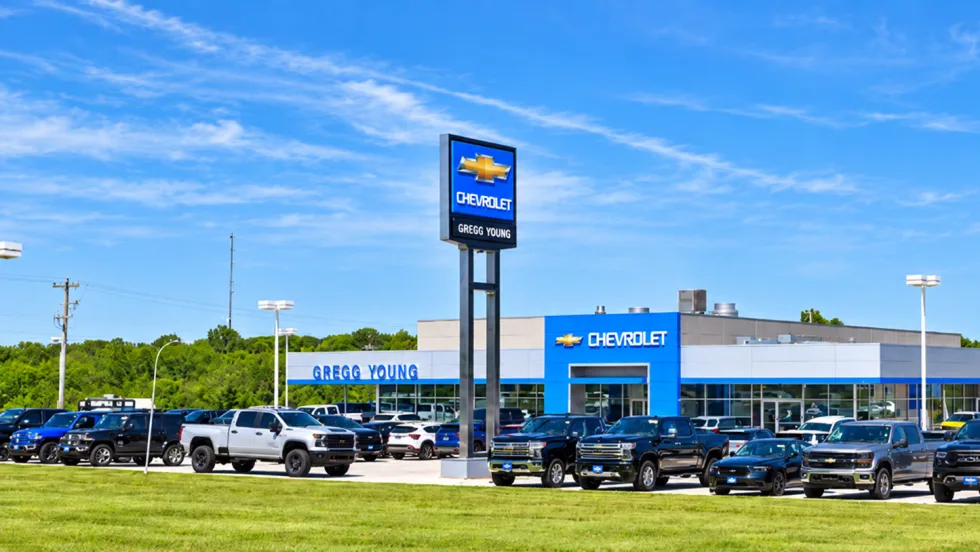
Nebraska Rooftop Changes Hands
The Gregg Young Automotive Group has sold its second dealership to Janssen Auto Group, both in Plattsmouth, Neb.
Read More →
Penske Auto Group Deal a Record
The deal to take the dealership and transportation services company private sets a new pace for industry buy-sell transactions.
Read More →
War Toll a Damper on Used Auto Prices
Cox Automotive found wholesale depreciation to be elevated in September amid high fuel prices and this year's unusual hurricane season.
Read More →
Bridge the Maintenance Gap
With many drivers missing recommended maintenance, service departments offering transparency and efficiency have a better chance of reaching financially strained consumers.
Read More →
California Store Has New Owner
The longtime dealership in the northern part of the state is known for robust fleet sales and has served the state capital for 115 years.
Read More →
BMW Plant Pursues Cleaner Energy
BMW Group Plant Leipzig has utilized hydrogen to help power its production since 2013, but a new pipeline is planned to take it to another level.
Read More →
Auto Affordability Inches Up
The latest Cox Automotive and Moody’s Analytics index shows a slight increase in new-vehicle affordability despite high prices.
Read More →
Ohio Auto Group Under New Ownership
After 79 years with the Schluter family, Mansfield Auto Group has been acquired by Missouri-based Clement Auto Group.
Read More →
RV Group Expands Carolina Footprint
Blue Compass RV Columbia Northeast is the 13th RV dealership owned by Blue Compass in the Carolinas.
Read More →
Agent Acumen
An Agent Summit panel of people who’ve been supporting auto dealers for years gave both timely and timeless advice for those starting out or mulling the prospect.
Read More →