



Ford Heads Toward More Cash Than Debt

Ford Motor Co. said an Italian news report misrepresented the automaker's drive to reduce its debt and return to investment grade, reported The Wall Street Journal.
According to Italian business daily Il Sole 24 Ore, Ford Chief Executive Alan Mulally said he expects the U.S. carmaker to pay off its debt in 2011 as he works to keep Ford an efficient and profitable player in the competitive industry.
But the company said that report was incorrect. Mulally "said we would be net debt positive in 2011 as we have said previously," company spokeswoman Karen Hampton wrote in an e-mail. That would mean that the company would have more net cash than automotive debt, but still have significant debt.
After the second quarter, Ford had $5.4 billion more debt that cash. By the end of 2011, Ford has said that the auto maker expects to have more cash than debt, which means going from net debt to a net cash position.
According to the interview published by Il Sole 24 Ore, Mulally said, "We plan to get rid of the net debt in 2011. We will already be firmly profitable this year with a positive cash flow in the auto business."
"In 2011 we will do even better," Mulally said in the interview, adding that Ford is ahead of its plans to qualify for an investment-grade rating.
Mulally also said he isn't interested in pushing to increase market share in Europe for the sake of it. "In Europe ... some competitors do it because they have a surplus of production capacity, but they will not be able to do it for long," he said.
In the first eight months of the year, Ford had a market share of 8.3 percent in Europe, the fifth-largest among auto makers, according to the latest industry figures.
Although Ford doesn't suffer from overcapacity in the region, it will keep restructuring its activities in order to remain profitable, Mr. Mulally said.
Asked about the possibility of the demand for cars in the U.S. returning to precrisis levels, he said he expects it to arrive to at least 16 million to 17 million units sold.
"In the future ... demand will continue to grow at a rate of 3 percent to 5 percent," Mulally said. "Even in this period in which growth seems slow, the world market will expand at a rate of 5 percent to 10 percent."
More Industry
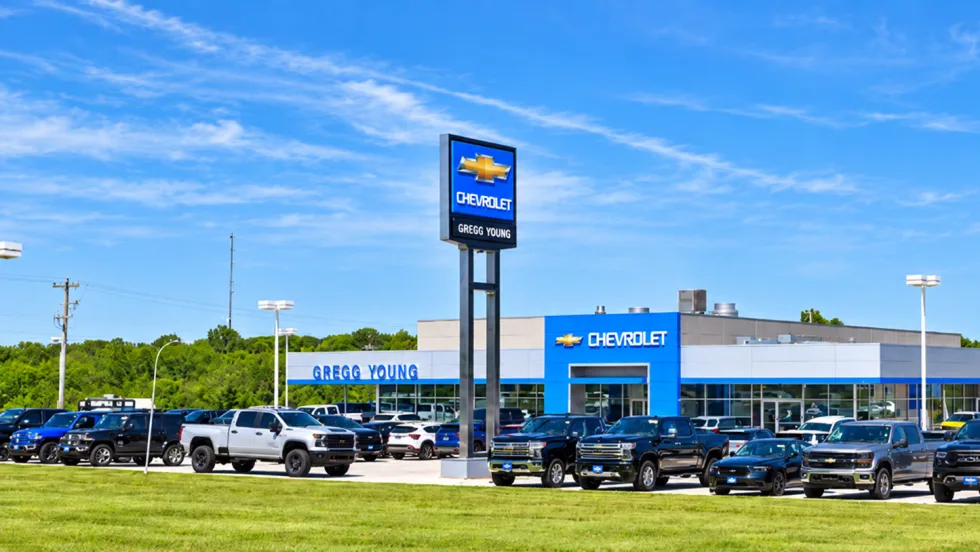
Nebraska Rooftop Changes Hands
The Gregg Young Automotive Group has sold its second dealership to Janssen Auto Group, both in Plattsmouth, Neb.
Read More →
Penske Auto Group Deal a Record
The deal to take the dealership and transportation services company private sets a new pace for industry buy-sell transactions.
Read More →
War Toll a Damper on Used Auto Prices
Cox Automotive found wholesale depreciation to be elevated in September amid high fuel prices and this year's unusual hurricane season.
Read More →
Bridge the Maintenance Gap
With many drivers missing recommended maintenance, service departments offering transparency and efficiency have a better chance of reaching financially strained consumers.
Read More →
California Store Has New Owner
The longtime dealership in the northern part of the state is known for robust fleet sales and has served the state capital for 115 years.
Read More →
BMW Plant Pursues Cleaner Energy
BMW Group Plant Leipzig has utilized hydrogen to help power its production since 2013, but a new pipeline is planned to take it to another level.
Read More →
Auto Affordability Inches Up
The latest Cox Automotive and Moody’s Analytics index shows a slight increase in new-vehicle affordability despite high prices.
Read More →
Ohio Auto Group Under New Ownership
After 79 years with the Schluter family, Mansfield Auto Group has been acquired by Missouri-based Clement Auto Group.
Read More →
RV Group Expands Carolina Footprint
Blue Compass RV Columbia Northeast is the 13th RV dealership owned by Blue Compass in the Carolinas.
Read More →
Agent Acumen
An Agent Summit panel of people who’ve been supporting auto dealers for years gave both timely and timeless advice for those starting out or mulling the prospect.
Read More →