



Ford Accounting Move May Add $13 Billion To Profit, Expert Says

Ford Motor Co. after earning $9.3 billion in the last two years, may make an accounting change this year to reflect confidence in its recovery, a move one tax expert said could boost its 2011 profit as much as $13 billion.
Ford in the second half may eliminate from its balance sheet a valuation allowance held against deferred tax assets, it said in a federal filing this week. The reserve was created in 2006 as Ford began four years of operating losses. Eliminating the allowance may add $10 billion to $13 billion to Ford’s net income this year, said Robert Willens, president of Robert Willens LLC of New York, a corporate tax specialist, reported Bloomberg.
“This is a very positive statement from Ford,” Willens said. “If you take the radical step of eliminating your valuation allowance, then you’ve developed a high degree of confidence in your future profit-making ability.”
Ford, the only major U.S. automaker to avoid bankruptcy in 2009, revealed in its Feb. 28 10-K filing that its valuation allowance at the end of 2010 was $15.7 billion, one of the five largest among U.S. public companies, Willens said. Once a company believes it has entered a sustained period of profitability, it must remove the item from its books, he said.
“We have had a sustained period of profitability in our operations and if that continues, we would remove our valuation allowance,” John Stoll, a company spokesman, said yesterday. “We’ve said we plan to deliver continued improvement this year in our pretax operating profit.”
When Ford removes the allowance from its balance sheet, it will record the accounting move as a “special item for the quarter” to avoid “a large negative effective tax rate,” it said in its filing. Without the allowance, The Dearborn, Michigan-based automaker said it would “experience more normal effective tax rates, approaching the U.S. statutory rate of 35 percent.”
Ford, which hasn’t paid U.S. taxes since 2005, may not pay federal taxes until the end of the decade because it still would have tax-loss benefits on its books from $31.4 billion in operating losses sustained from 2005 to 2009, said Brian Johnson, a Chicago-based analyst with Barclays Capital.
“Releasing the valuation allowance is purely an accounting move,” Johnson said in a March 2 interview. “It has absolutely no bearing on cash taxes and the U.S. government won’t collect from Ford for quite some time.”
The potential change in the reported tax rate has weighed on Ford’s shares this year, Johnson said. Investors apparently don’t understand Ford won’t pay additional taxes, he said.
Wall Street is focused on how Ford will need to reflect a 35 percent tax rate,” Johnson said. “But what investors should look at is that Ford still won’t be paying cash taxes.”
Ford rose 10 cents to $14.76 in composite trading on the New York Stock Exchange yesterday. The shares have fallen 12 percent so far this year.
In 1998, Ford recorded a $16 billion gain from spinning off Associates First Captial Corp., a consumer and commercial lender. The automaker had net income that year of $22.1 billion on operating income of $8.98 billion.
Ford earned $6.56 billion last year, the most since 1999, when new models such as the Fiesta subcompact and redesigned Taurus sedan helped the automaker’s U.S. sales rise 17 percent, outpacing the industrywide gain of 11 percent. Ford’s U.S. sales are up 9.7 percent so far this year, according to Bloomberg, trailing the industry’s overall increase of 22.6 percent.
“People won’t pay attention to the size of the special item,” Willens said of the boost to net income Ford may realize from removing the valuation allowance. “When you eliminate a reserve like this that you had on the books, you’re making a strong and bold statement about the outlook for the company.”
More Industry
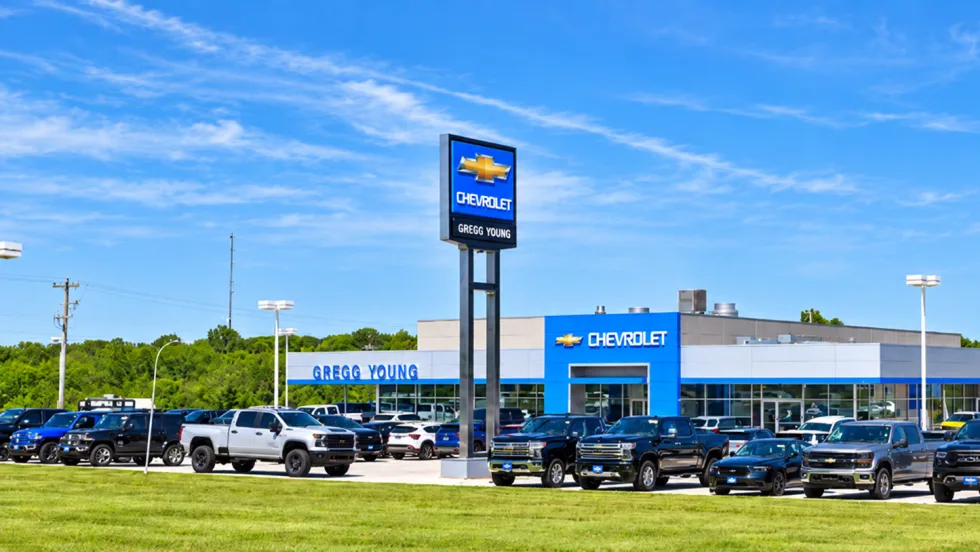
Nebraska Rooftop Changes Hands
The Gregg Young Automotive Group has sold its second dealership to Janssen Auto Group, both in Plattsmouth, Neb.
Read More →
Penske Auto Group Deal a Record
The deal to take the dealership and transportation services company private sets a new pace for industry buy-sell transactions.
Read More →
War Toll a Damper on Used Auto Prices
Cox Automotive found wholesale depreciation to be elevated in September amid high fuel prices and this year's unusual hurricane season.
Read More →
Bridge the Maintenance Gap
With many drivers missing recommended maintenance, service departments offering transparency and efficiency have a better chance of reaching financially strained consumers.
Read More →
California Store Has New Owner
The longtime dealership in the northern part of the state is known for robust fleet sales and has served the state capital for 115 years.
Read More →
BMW Plant Pursues Cleaner Energy
BMW Group Plant Leipzig has utilized hydrogen to help power its production since 2013, but a new pipeline is planned to take it to another level.
Read More →
Auto Affordability Inches Up
The latest Cox Automotive and Moody’s Analytics index shows a slight increase in new-vehicle affordability despite high prices.
Read More →
Ohio Auto Group Under New Ownership
After 79 years with the Schluter family, Mansfield Auto Group has been acquired by Missouri-based Clement Auto Group.
Read More →
RV Group Expands Carolina Footprint
Blue Compass RV Columbia Northeast is the 13th RV dealership owned by Blue Compass in the Carolinas.
Read More →
Agent Acumen
An Agent Summit panel of people who’ve been supporting auto dealers for years gave both timely and timeless advice for those starting out or mulling the prospect.
Read More →