



Electric Car Battery Manufacturer A123 Files for Chapter 11, Sells Assets to Johnson Controls

WALTHAM, Mass. – A123 Systems, Inc., a developer and manufacturer of Nanophosphate lithium iron phosphate batteries and systems, has entered into an asset purchase agreement with Johnson Controls Inc. in a transaction valued at $125 million. Under the terms of the agreement, Johnson
Controls plans to acquire A123’s automotive business assets, including all of its automotive technology, products and customer contracts; its facilities in Livonia and Romulus, Michigan; its cathode powder manufacturing facilities in China; and A123’s equity interest in Shanghai Advanced Traction Battery Systems Co., A123’s joint venture with Shanghai Automotive. The asset purchase agreement also includes provisions through which Johnson Controls intends to license back to A123 certain technology for its grid, commercial and government businesses. A123 also continues to engage in active discussions regarding strategic alternatives for its grid, commercial, government and other operations, and has received several indications of interest for these businesses.
To facilitate the transaction process, A123 and all of its U.S. subsidiaries filed voluntary petitions for reorganization under Chapter 11 of the U.S. Bankruptcy Code in the U.S. Bankruptcy Court for the District of Delaware. The company’s subsidiaries located outside the U.S. were not included in the filings. This action is expected to allow the company to provide for an orderly sale of the automotive business assets and all other assets and business units under Section 363 of the Bankruptcy Code and enable the company to maximize the value of its assets for its stakeholders in a controlled, court-supervised environment.
In conjunction with the proposed transaction, A123 has received a commitment from Johnson Controls for $72.5 million in “debtor in possession” financing to support the company’s continued operations during the pendency of the sale process. The company has filed a number of customary motions seeking court authorization to continue to support its business operations during the transaction process, including the continued payment of employee wages, salaries and health benefits without interruption.
“We believe the asset purchase agreement with Johnson Controls, coupled with a Chapter 11 filing, is in the best interests of A123 and its stakeholders at this time,” said David Vieau, CEO of A123. “We determined not to move forward with the previously announced Wanxiang agreement as a result of unanticipated and significant challenges to its completion. Since disclosing the Wanxiang agreement, we have simultaneously been evaluating contingencies, and we are pleased that Johnson Controls recognizes the inherent value of our automotive technology and automotive business assets. We are also pleased that we have received indications of interest that recognize the value of our grid and commercial businesses. We are encouraged by the significant interest we have received, as multiple parties have submitted proposals for these businesses. As we move through this transaction process, we expect to continue operating and working with customers and suppliers.”
“Our interest in A123 Systems is consistent with our long-term growth strategies and overall commitment to the development of the advanced battery industry,” said Alex Molinaroli, president, Johnson Controls Power Solutions. “Requirements for more energy-efficient vehicles continue to increase, which is driving automotive manufacturers to pursue new technologies across a broad spectrum of powertrains and associated energy storage solutions. We believe that A123’s automotive capabilities are a good complement to our existing portfolio and will further advance Johnson Controls' position as a market leader in this industry.”
The transaction is being completed pursuant to Section 363 of the U.S. Bankruptcy Code and is subject to, among other things, higher or otherwise better offers to purchase any or substantially all assets of the company, Court approval, antitrust approval, any other such approvals as may be required by law and other customary conditions.
More Industry
Nebraska Rooftop Changes Hands
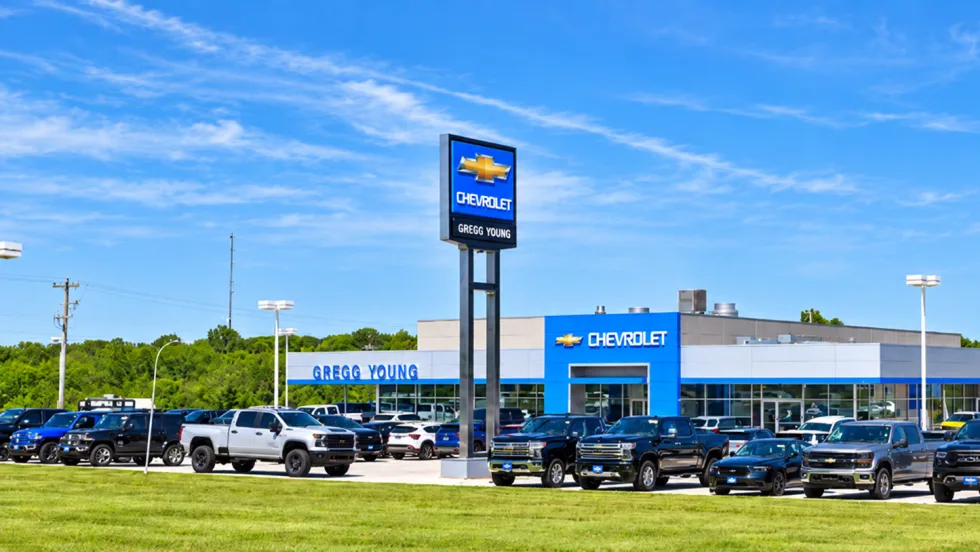
The Gregg Young Automotive Group has sold its second dealership to Janssen Auto Group, both in Plattsmouth, Neb.
Read More →
Penske Auto Group Deal a Record
The deal to take the dealership and transportation services company private sets a new pace for industry buy-sell transactions.
Read More →
War Toll a Damper on Used Auto Prices
Cox Automotive found wholesale depreciation to be elevated in September amid high fuel prices and this year's unusual hurricane season.
Read More →
Bridge the Maintenance Gap
With many drivers missing recommended maintenance, service departments offering transparency and efficiency have a better chance of reaching financially strained consumers.
Read More →
California Store Has New Owner
The longtime dealership in the northern part of the state is known for robust fleet sales and has served the state capital for 115 years.
Read More →
BMW Plant Pursues Cleaner Energy
BMW Group Plant Leipzig has utilized hydrogen to help power its production since 2013, but a new pipeline is planned to take it to another level.
Read More →
Auto Affordability Inches Up
The latest Cox Automotive and Moody’s Analytics index shows a slight increase in new-vehicle affordability despite high prices.
Read More →
Ohio Auto Group Under New Ownership
After 79 years with the Schluter family, Mansfield Auto Group has been acquired by Missouri-based Clement Auto Group.
Read More →
RV Group Expands Carolina Footprint
Blue Compass RV Columbia Northeast is the 13th RV dealership owned by Blue Compass in the Carolinas.
Read More →
Agent Acumen
An Agent Summit panel of people who’ve been supporting auto dealers for years gave both timely and timeless advice for those starting out or mulling the prospect.
Read More →