



Edmunds.com: Manufacturer Incentives Drop in December

SANTA MONICA, Calif. — Edmunds.com estimated that the average automotive manufacturer incentive in the U.S. was $2,542 per vehicle sold in December 2009, down $167, or 6.2 percent, from November 2009, and down $320, or 11.2 percent, from December 2008.
"In December, only about 24 percent of new cars sold were from the 2009 model year, so the average incentive expenditure is relatively low compared to November and last December when the old model year vehicles made up closer to half of the new car sales," said Jessica Caldwell, director of industry analysis for Edmunds.com. "If we only look at 2009 model-year vehicles, where the real deals were, automakers spent an average of $4,317 per vehicle sold in December.”
According to Edmunds.com, combined incentives spending for domestic manufacturers averaged $3,425 per vehicle sold in December 2009, down from $3,684 in November 2009. From November 2009 to December 2009, European automakers decreased incentives spending by $136 to $3,063 per vehicle sold; Japanese automakers decreased incentives spending by $80 to $1,564 per vehicle sold; and Korean automakers decreased incentives spending by $147 to $1,866 per vehicle sold.
In December 2009, the industry's aggregate incentive spending is estimated to have totaled approximately $2.57 billion, up 26.9 percent from November 2009. Chrysler, Ford and General Motors spent an aggregate of $1.6 billion, or 60.5 percent of the total; Japanese manufacturers spent $621 million, or 24.1 percent; European manufacturers spent $279 million, or 10.8 percent; and Korean manufacturers spent $118 million, or 4.6 percent.
Among vehicle segments, premium luxury cars had the highest average incentives, $4,838 per vehicle sold, followed by large SUV at $4,831. Subcompact cars had the lowest average incentives per vehicle sold, $1,047, followed by compact cars at $1,491. Analysis of incentives expenditures as a percentage of average sticker price for each segment shows large trucks averaged the highest, 12.4 percent, followed by large SUVs at 11.9 percent of sticker price. Sport cars averaged the lowest with 4.7 percent and premium sport cars followed with 4.8 percent of sticker price.
Comparing all brands, in December Scion spent the least, $361 followed by smart at $413 per vehicle sold. At the other end of the spectrum, Saturn spent the most, $5,925, followed by Pontiac at $5,882 per vehicle sold. Relative to their vehicle prices, Pontiac and Saturn spent the most, 24.2 percent and 21.6 percent of sticker price, respectively; while Porsche spent 1.5 and Subaru spent 2.0 percent.
"In reality, the sale on Pontiacs and Saturns was totally overhyped, in part because there weren’t that many to sell," said Senior Analyst Michelle Krebs in her report on Edmunds' AutoObserver.com. “However, the urgency of the closeout sale motivated people to storm the dealerships — a pure psychological reaction to a shortage.”
More Industry
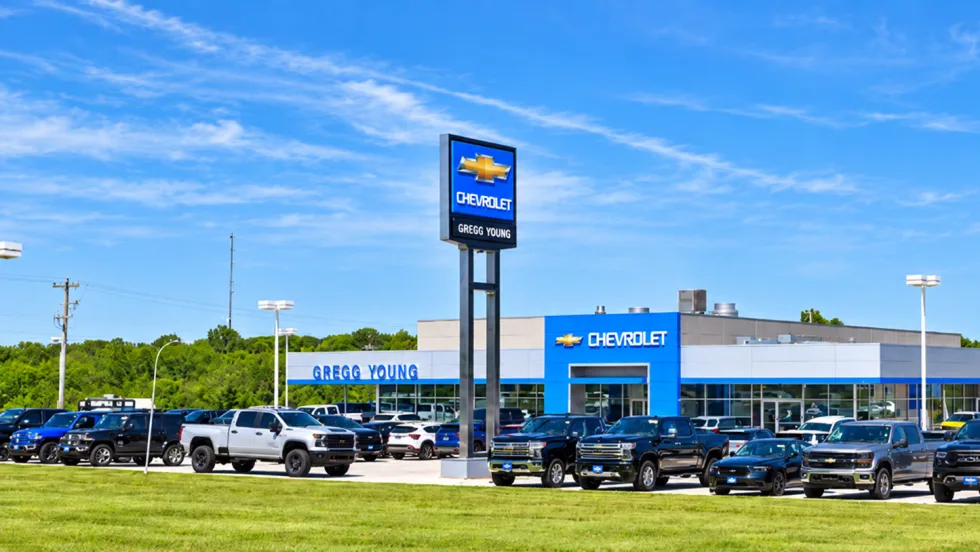
Nebraska Rooftop Changes Hands
The Gregg Young Automotive Group has sold its second dealership to Janssen Auto Group, both in Plattsmouth, Neb.
Read More →
Penske Auto Group Deal a Record
The deal to take the dealership and transportation services company private sets a new pace for industry buy-sell transactions.
Read More →
War Toll a Damper on Used Auto Prices
Cox Automotive found wholesale depreciation to be elevated in September amid high fuel prices and this year's unusual hurricane season.
Read More →
Bridge the Maintenance Gap
With many drivers missing recommended maintenance, service departments offering transparency and efficiency have a better chance of reaching financially strained consumers.
Read More →
California Store Has New Owner
The longtime dealership in the northern part of the state is known for robust fleet sales and has served the state capital for 115 years.
Read More →
BMW Plant Pursues Cleaner Energy
BMW Group Plant Leipzig has utilized hydrogen to help power its production since 2013, but a new pipeline is planned to take it to another level.
Read More →
Auto Affordability Inches Up
The latest Cox Automotive and Moody’s Analytics index shows a slight increase in new-vehicle affordability despite high prices.
Read More →
Ohio Auto Group Under New Ownership
After 79 years with the Schluter family, Mansfield Auto Group has been acquired by Missouri-based Clement Auto Group.
Read More →
RV Group Expands Carolina Footprint
Blue Compass RV Columbia Northeast is the 13th RV dealership owned by Blue Compass in the Carolinas.
Read More →
Agent Acumen
An Agent Summit panel of people who’ve been supporting auto dealers for years gave both timely and timeless advice for those starting out or mulling the prospect.
Read More →