



Consumer Loan Delinquencies Decline in 4Q 2009

WASHINGTON — Consumer loan delinquencies fell in eight of 11 loan categories in the fourth quarter of 2009, marking the second quarter in a row of broad-based improvement, according to the American Bankers Association's Consumer Credit Delinquency Bulletin, F&I reported. The composite ratio, which tracks eight closed-end installment loan categories, fell four basis points to 3.19 percent of all accounts compared from 3.23 percent of all accounts in the previous quarter. Bank card delinquencies fell 38 basis points to 4.39 percent of all accounts which is below the five-year average (4.52 percent). The ABA report defines a delinquency as a late payment that is 30 days or more overdue. ABA Chief Economist James Chessen said the news is a strong indication that the economy is on an upswing. "The fall in consumer delinquencies is a very positive and hopeful sign. Clearly, consumers are shoring up their finances and banks are putting losses behind them. Overall, there is a prudent approach to credit," he said. In the auto loan categories, direct loan delinquencies fell 10 basis points to 1.94 percent of all accounts. Indirect auto loan delinquencies (arranged through auto dealers) remained even at 3.15 percent of all accounts. Housing-related loans showed mixed results. Home equity loan delinquencies hit another record, rising to 4.32 percent of all accounts compared to 4.30 percent in the previous quarter. By contrast, home equity lines of credit delinquencies at quarter-end fell for the first time in six quarters to 2.04 percent of all accounts compared to 2.12 percent in the previous quarter. "This first sign of improvement has been a long time coming and is finally some positive indication that the housing market is stabilizing," Chessen said. Chessen said that while most consumers appear to be handling their finances well, the level of consumer credit delinquencies is still heavily tied to job creation. "People are actively reducing their level of debt relative to their income and are rebuilding their savings," he said. "But it's still a very stressful time for many families and this won't disappear until more people have jobs. This will keep delinquencies elevated for the next several quarters."
More Industry
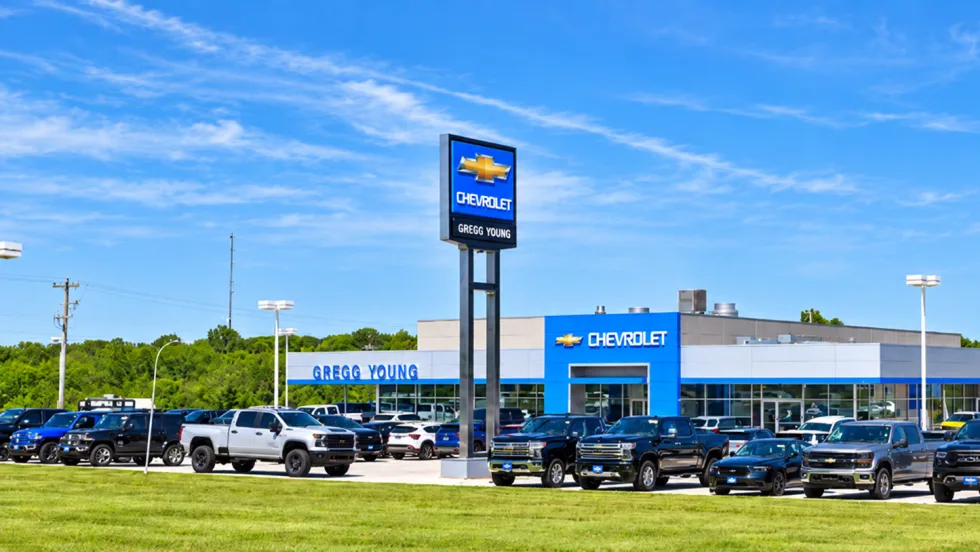
Nebraska Rooftop Changes Hands
The Gregg Young Automotive Group has sold its second dealership to Janssen Auto Group, both in Plattsmouth, Neb.
Read More →
Penske Auto Group Deal a Record
The deal to take the dealership and transportation services company private sets a new pace for industry buy-sell transactions.
Read More →
War Toll a Damper on Used Auto Prices
Cox Automotive found wholesale depreciation to be elevated in September amid high fuel prices and this year's unusual hurricane season.
Read More →
Bridge the Maintenance Gap
With many drivers missing recommended maintenance, service departments offering transparency and efficiency have a better chance of reaching financially strained consumers.
Read More →
California Store Has New Owner
The longtime dealership in the northern part of the state is known for robust fleet sales and has served the state capital for 115 years.
Read More →
BMW Plant Pursues Cleaner Energy
BMW Group Plant Leipzig has utilized hydrogen to help power its production since 2013, but a new pipeline is planned to take it to another level.
Read More →
Auto Affordability Inches Up
The latest Cox Automotive and Moody’s Analytics index shows a slight increase in new-vehicle affordability despite high prices.
Read More →
Ohio Auto Group Under New Ownership
After 79 years with the Schluter family, Mansfield Auto Group has been acquired by Missouri-based Clement Auto Group.
Read More →
RV Group Expands Carolina Footprint
Blue Compass RV Columbia Northeast is the 13th RV dealership owned by Blue Compass in the Carolinas.
Read More →
Agent Acumen
An Agent Summit panel of people who’ve been supporting auto dealers for years gave both timely and timeless advice for those starting out or mulling the prospect.
Read More →