



Black Book: Weekly Market Report
The market saw continued declines last week, with the overall rate of depreciation being consistent with what we have experienced over the last five weeks.

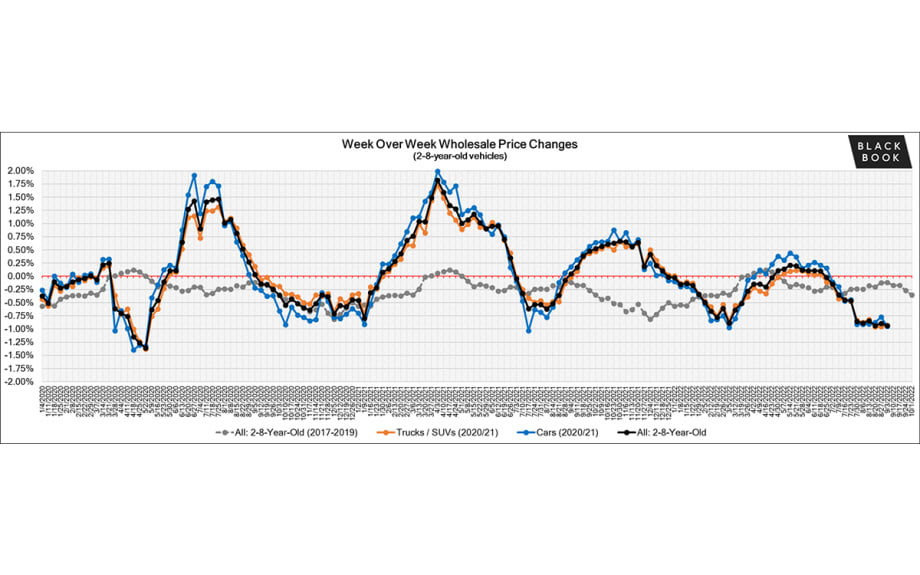
The market saw continued declines last week, with the overall rate of depreciation being consistent with what we have experienced over the last five weeks.
Black Book Market Insights – 9/7/22
Wholesale Prices, Week Ending September 3rd
The market saw continued declines last week, with the overall rate of depreciation being consistent with what we have experienced over the last five weeks. Luxury segments continue to report the largest declines, with many reporting depreciation rates that exceeded 1% last week.
This Week Last Week 2017-2019 Average (Same Week)
Car segments -0.95% -0.77% -0.11%
Truck & SUV segments -0.93% -0.95% -0.12%
Market -0.93% -0.89% -0.12%
Car Segments
On a volume-weighted basis, the overall Car segment decreased -0.95%. For reference, the previous week, cars decreased by -0.77%.
All nine Car segments decreased last week.
Four of the nine Car segments reported declines greater than 1% last week. Sporty Car led the Car segment depreciation with a decline of -1.30%, but Prestige Luxury (-1.25%), Near Luxury (-1.21%) and Compact Car (-1.01%) were not far behind.
The Sub-Compact Car segment has been experiencing declines, but the rate of decline has been well below the rest of the market. Last week, the segment reported a decline of -0.36%, slightly more than the 10-week average decline of -0.24% for the segment.
Truck / SUV Segments
The volume-weighted, overall Truck segment decreased -0.93%, compared to the prior week’s decrease of -0.95%.
All thirteen truck segments reported decreases.
Six of the thirteen truck segments reported declines greater than 1% last week. The Compact Luxury Crossovers led the declines at -1.37%, after the prior week’s even larger -1.86% depreciation.
The Full-Size Luxury Crossover/SUV (-1.12%) segment has experienced some of the largest segment declines in recent weeks, averaging -1.63% over the last six weeks, but last week, the declines showed signs of slowing down.
Weekly Wholesale Index
Calendar year 2020 and 2021 ended with used wholesale prices at elevated levels. With economic patterns (including the automotive market) driven by the pandemic, normal seasonal patterns (e.g., 2019 calendar year) in the wholesale market were not observed for most of the last 2 years. We saw a similar picture in 2009, at the end of the Great Recession. Calendar year 2021 did not have typical seasonality patterns as the market had rapid increases in wholesale values for the majority of the year. The Wholesale Weekly Price Index reached the highest point of the year at the end of December 2021, reporting over 1.51 points.
The graph below looks at trends in wholesale prices of 2-6-year-old vehicles, indexed to the first week of the year. The index is computed keeping the average age of the mix constant to identify market movements.
Retail (Used and New) Insights
BMW has started producing fuel-cell systems for its hydrogen-powered iX5 crossover; BMW will start delivering the limited iX5 hydrogen vehicles to selected partners in Europe, the U.S., and Asia at the end of 2022.
Stellantis plans to discontinue the Ram ProMaster City after the 2022 model year, joining Ford, Chevrolet, and Nissan in dropping small commercial vans in the U.S.
Genesis launched their first electric sedan, the Electrified G80, which focuses on interior comfort and style, while exhibiting just a few exterior differences compared to the gas-powered G80.
Used Retail Prices
Used Retail Prices are more accessible than in years past, due to the proliferation of ‘no-haggle pricing’ for used-vehicle retailing. Transparent pricing upfront makes the car buying process more enjoyable for customers and allows Black Book to accurately measure retail market trends.At the on-set of the pandemic, in CY2020, used retail prices increased slightly, following typical seasonal patterns, and then began dropping in April, finally hitting a low point in the late spring months. By late summer of CY2020, Used Retail Prices increased as supply of new vehicle inventory started to become scarce, but retail demand slowed down at the end of CY2020, resulting in declining retail asking prices for the last several weeks of the year. When CY2021 kicked off, demand rebounded while retail prices lagged slightly behind wholesale prices; March of 2021 started the dramatic increases in Used Retail Prices, fueled by stimulus payments, tax season, and shortages of new inventory. During the third quarter, retail prices continued to rise at a slower rate but soon picked up the pace once again to start the fourth quarter. In Q4, prices on retail listings steadily increased week after week. As CY2021 came to an end, the retail listing price index closed 36% above where the year began.
Now in 2022, the Retail Listings Price Index has remained relatively unchanged. In fact, retail price trends for this year look very similar to the pre-pandemic 2019’s trend.
This analysis is based on approximately two million vehicles listed for sale on U.S. dealer lots. The graph below looks at 2-6-year-old vehicles. The Index is computed keeping the average age of the mix constant to identify market movements.
Inventory
Used Retail
Used retail active listing volume continues to increase and is now above the 1.05 mark.
The Used Retail Days-to-Turn Estimate has dropped some and is now around 42 days.
Wholesale
The wholesale channels have remained consistent this last week, with model year 2022 vehicles making more of an appearance in the lanes with low miles and great conditions. There were still newer models (model year 2019 to model year 2021) with average condition and average miles. Large independent dealers made more of an appearance this week, along with the smaller franchise dealers. There was more inventory, and sellers looked like they were holding onto their floors; sales rates have continued to fall week-over-week. For example, there were several model year 2022 trucks with IF/No sales due to sellers’ floors continuing to be high on these new vehicles. The average price of Gas dropped to $3.83 from $4.19 at the beginning of August. Diesel prices increased week-over-week from $4.91 to $5.12, although when compared to the beginning of August, the average diesel price has remained somewhat consistent, only dropping $0.02.
The Estimated Average Weekly Sales Rate dropped to 59% last week.
Originally posted on Auto Dealer Today
More Industry
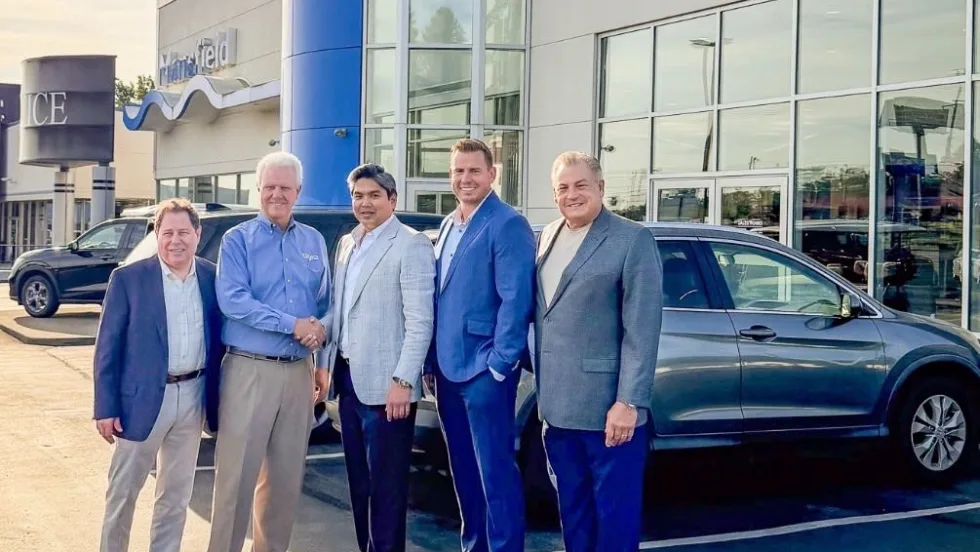
Ohio Auto Group Under New Ownership
After 79 years with the Schluter family, Mansfield Auto Group has been acquired by Missouri-based Clement Auto Group.
Read More →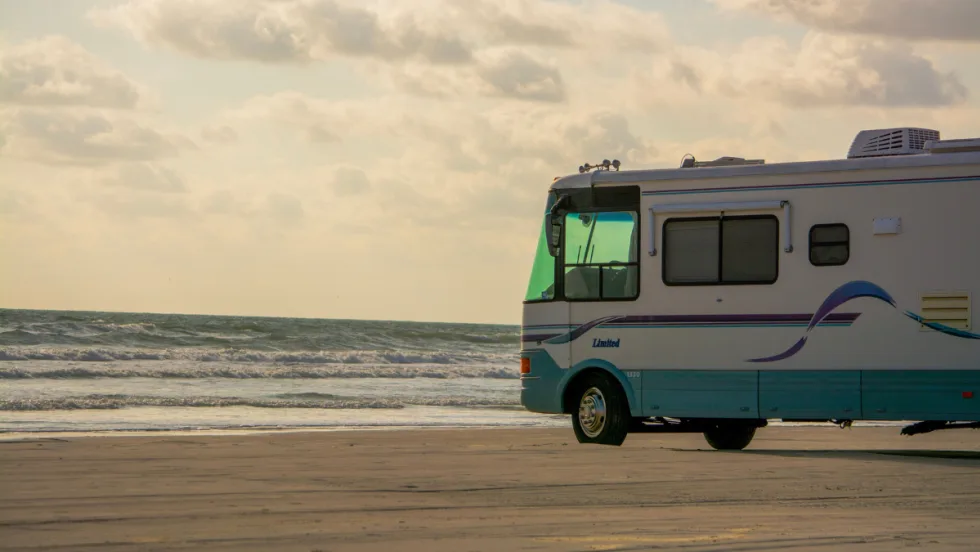
RV Group Expands Carolina Footprint
Blue Compass RV Columbia Northeast is the 13th RV dealership owned by Blue Compass in the Carolinas.
Read More →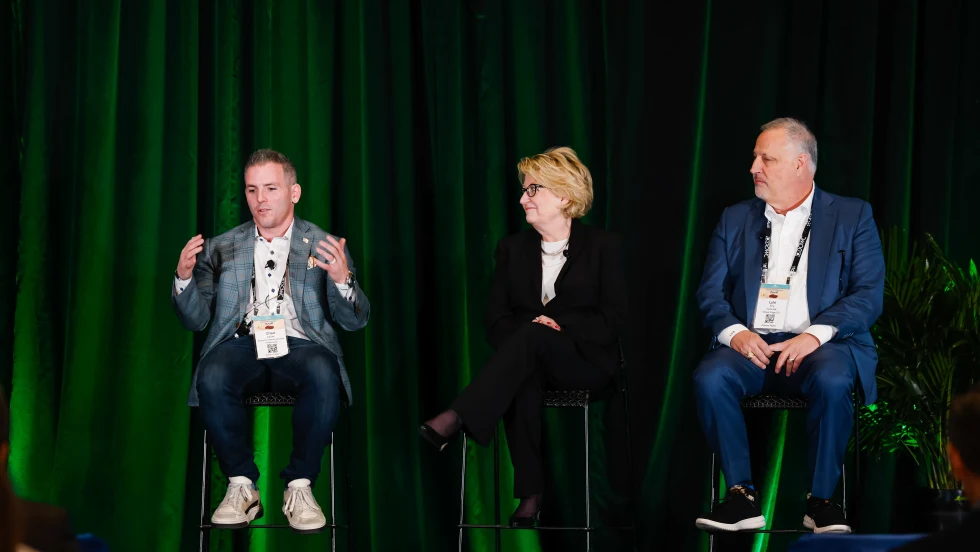
Agent Acumen
An Agent Summit panel of people who’ve been supporting auto dealers for years gave both timely and timeless advice for those starting out or mulling the prospect.
Read More →
Missed Maintenance Creates Opportunity
As families get back on the road and into daily school routines, service drives have an opportunity to capture customers who are behind on recommended vehicle maintenance.
Read More →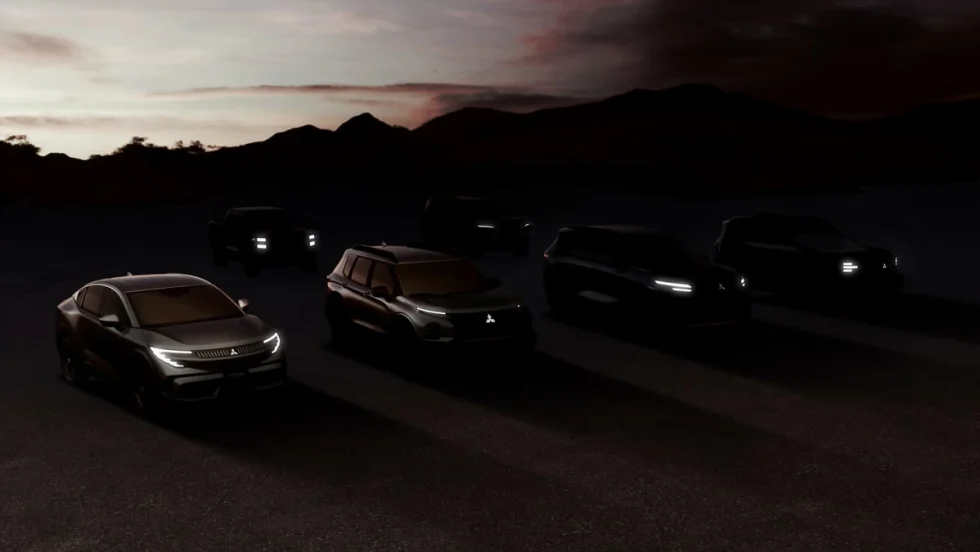
Mitsubishi Unveils U.S. Plan
The automaker announced a strategy that includes an expanded lineup and dealership presence, along with more ‘rugged’ and electric models.
Read More →
Selling to Grow
The question of whether you should sell your agency and if so, when, is up to you. But it’s a question worth asking to ensure you keep the business on the right path for yourself, employees and clients.
Read More →
Recalled Vehicles Hit 5-Year High
Though the number of events has fallen so far this year, impacted units are up significantly. Meanwhile, regulators consider consumer notification changes.
Read More →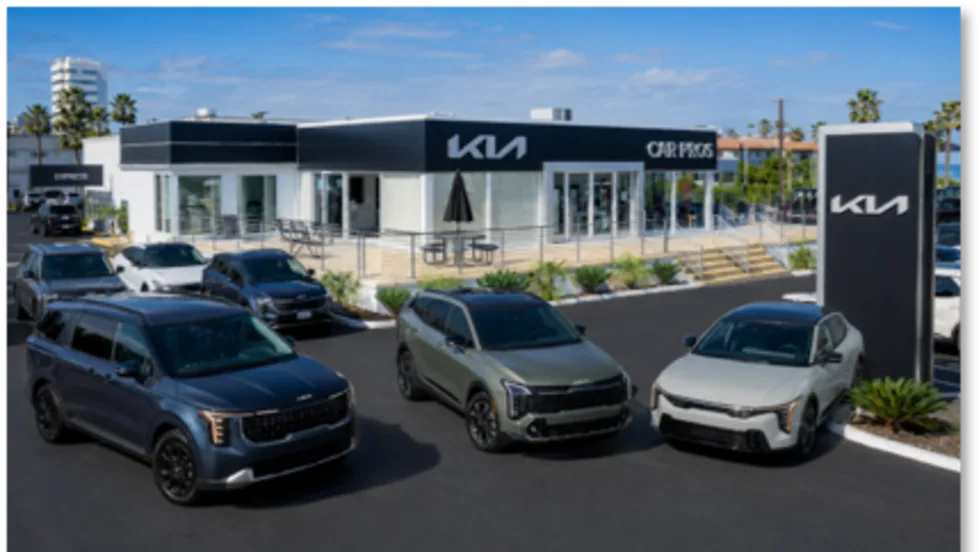
Auto Group Acquires Top-Performing Rooftop
Car Pros sold its Kia Huntington Beach location to Sutherlin Automotive Group, marking the buyer’s third location in Southern California.
Read More →
China as Pacesetter
Automotive leaders huddled on where North America stands in the global picture and how it can strengthen its position against the Asian juggernaut’s surging industry.
Read More →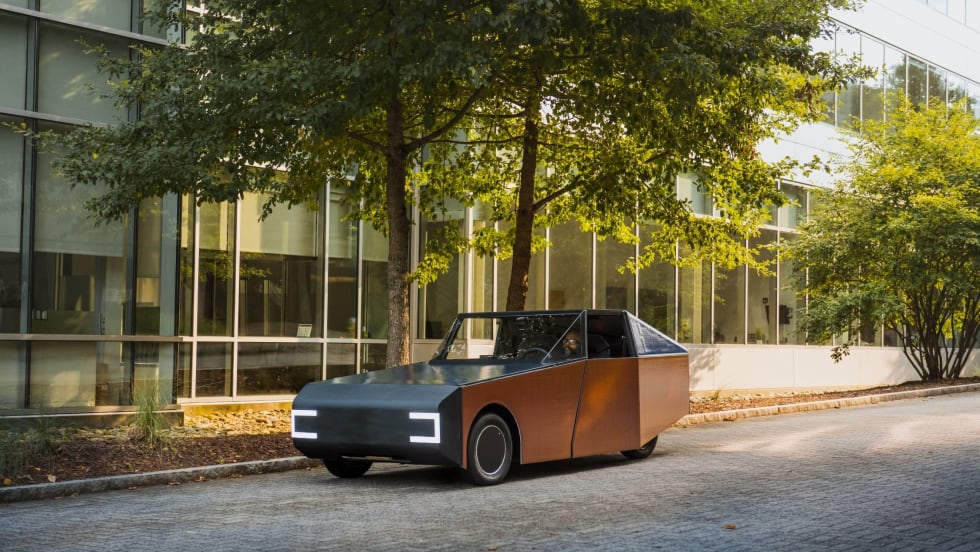
BMW Concept Car Makes Fuel to Burn
The prototype developed in concert with a South Carolina university engineering team generates more solar energy than it uses in a typical daily commute.
Read More →