



American-Made Aims Complex
Report says Mexico could actually benefit more from U.S. tariffs.

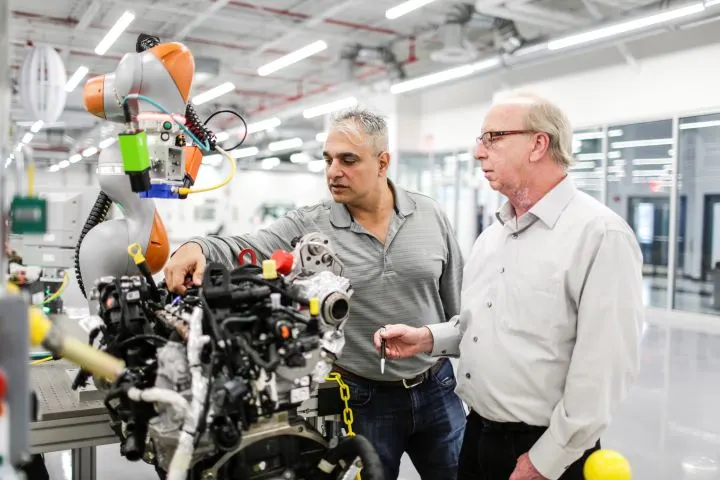
The Trump administration says it intends to increase manufacturing in the U.S. via the various trade tariffs it's imposed, along with bolstering national security.
Ford
Mexico stands to gain from U.S. tariffs intended to boost American manufacturing, one analyst says in a new report.
Under the North American trade agreement renegotiated during President Donald Trump’s first term, products with significant value originating on the continent are considered compliant and therefore exempt from tariffs.
A GlobalData analysis identifies Mexico as the main beneficiary in reshoring of product manufacturing to North America due to its lower labor costs and a recent increase in foreign investment in the country.
It said direct foreign investment in Mexico rose 5% year-over-year in the first quarter, when the Trump administration started instituting tariffs on imported goods. In addition, Mexico passed China in 2023 in exports of goods to the U.S., GlobalData said, citing Legacy Supply Chain data.
“This indicates a growing trend of both new investments and the reinvestment of profits in Mexico, despite the presence of tariffs, suggesting that Mexican manufacturing remains a viable option,” GlobalData said in its report.
U.S. manufacturers can also shift their supply chains to maximize North American materials sourcing, the company pointed out. Many analysts have emphasized, though, that such reconfigurations can be complex and therefore rarely unfold quickly.
“Companies should observe that these strategic shifts would not necessarily deliver on the US’ aim of revitalizing its domestic manufacturing sector (since the USMCA could result in manufacturing being reshored to Mexico, not the US). This could result in the Trump Administration rethinking tariff exemptions for USMCA-compliant goods,” said GlobalData Senior Consumer Analyst Rory Gopsill.
GlobalData pointed out that the North American trade agreement is scheduled for review next year and said tweaks being discussed include changes to automotive industry materials sourcing, as well as curbs on Chinese companies operating on the continent.
“Consumer goods and packaging companies should monitor how these talks progress closely to minimize risk when adjusting North American supply chain,” Gopsill said.
Originally posted on Auto Dealer Today
More Industry

Penske Auto Group Deal a Record
The deal to take the dealership and transportation services company private sets a new pace for industry buy-sell transactions.
Read More →
War Toll a Damper on Used Auto Prices
Cox Automotive found wholesale depreciation to be elevated in September amid high fuel prices and this year's unusual hurricane season.
Read More →
Bridge the Maintenance Gap
With many drivers missing recommended maintenance, service departments offering transparency and efficiency have a better chance of reaching financially strained consumers.
Read More →
California Store Has New Owner
The longtime dealership in the northern part of the state is known for robust fleet sales and has served the state capital for 115 years.
Read More →
BMW Plant Pursues Cleaner Energy
BMW Group Plant Leipzig has utilized hydrogen to help power its production since 2013, but a new pipeline is planned to take it to another level.
Read More →
Auto Affordability Inches Up
The latest Cox Automotive and Moody’s Analytics index shows a slight increase in new-vehicle affordability despite high prices.
Read More →
Ohio Auto Group Under New Ownership
After 79 years with the Schluter family, Mansfield Auto Group has been acquired by Missouri-based Clement Auto Group.
Read More →
RV Group Expands Carolina Footprint
Blue Compass RV Columbia Northeast is the 13th RV dealership owned by Blue Compass in the Carolinas.
Read More →
Agent Acumen
An Agent Summit panel of people who’ve been supporting auto dealers for years gave both timely and timeless advice for those starting out or mulling the prospect.
Read More →
Missed Maintenance Creates Opportunity
As families get back on the road and into daily school routines, service drives have an opportunity to capture customers who are behind on recommended vehicle maintenance.
Read More →