



The Right Way to Handle Red Flags
Have your dealers nailed down their Red Flags clearance process? Compliance guru has a checklist agents can enforce with dealers and F&I professionals, to do just that.


Compliance guru has a checklist agents can enforce with dealers and F&I professionals who have yet to nail down their Red Flags clearance process.
Photo by busracavus via Getty Images
The top three threats to dealers today are identity theft, bank fraud, and sexual harassment. Two of these are solely in the purview of the variable operations managers (identity theft and bank fraud) while sexual harassment is in everyone’s purview.
In this edition of ACE Space, we’ll focus on identity theft.
Background
Identity theft continues to be the fastest-growing crime in America. And the thieves are getting better, yet the industry seems to be languishing.
For example, synthetic identity fraud has been on the rise as a percentage of total fraud losses experienced by the nation’s banking system. The latest estimates are that these institutions lost $6 billion in 2018, or 20% of total fraud losses.
The National White Collar Crime Center shares war stories of Federales conducting raids on suspected identity theft rings and finding up to 300 synthetic identities under the control of one identity thief.
Another Federale in one locale is investigating a case of synthetic identity fraud and has reason to believe a DMV employee may be creating state driver’s licenses to support the synthetic identities a ring has created.
Yet, ask your dealers if they have had an instance of identity theft and the answer is often no, at least that they know of.
"Identity theft continues to be the fastest-growing crime in America. And the thieves are getting better, yet the industry seems to be languishing."
The Red Flags rule requires that dealers develop and implement an identity theft prevention program (ITPP) to detect and prevent an identity thief from using a stolen identity to purchase and finance a vehicle. Many dealers have a policy they can point to as compliance.
The Process
Dealers quickly realized that manually vetting and clearing potential Red Flags was fraught with potential mistakes, managers ignoring the signs, and ineffective. Vendors quickly came to the rescue with algorithms to vet the available information and provide a quick pass/fail grade, making it much easier for busy managers to complete the process.
Today’s Reality
Unfortunately, there appears to be a general laxity in the industry to the proper vetting and clearing of potential Red Flags identified by the dealer’s Red Flags vendor during the sales process. Unless this changes, the identity thieves will continue to win the identity theft war.
Read: Got a Kink In the House?
Many dealers task the sales manager with clearing Red Flags. Some of these sales managers view the clearing of Red Flags as a nuisance or an encumbrance to selling a vehicle. As a result, potential Red Flags are either ignored, manually updated without obtaining proper documentation to clear the potential Red Flag, or relying on the “out-of-wallet” process to clear any and all potential Red Flags.
The Right Way
Software vendors generally report one of four potential Red Flags: address discrepancy, Social Security number discrepancy, security freeze, or alerts. Each potential Red Flag requires a different clearing action that the manager must obtain, vet, and copy for the file.
Address Discrepancy
A good identity thief does not want any mail going to the victim, so a different address is provided. This good identity thief may be able to answer the out-of-wallet questions and will have a forged identity.
To properly clear an address discrepancy, the manager should follow these steps:
Check for a typo. Many of us tend to fat-finger when typing and it is not uncommon to make a typographical error when inputting customer information. If the address was not input correctly, correct the typo and rerun Red Flags. If that clears the address discrepancy, document the change and move on with overcoming sales objections.
If the input was not a typo, the F&I manager must obtain proof of residence. Our standard is similar to what many subprime companies may require to clear a POR stip: Driver’s license, insurance card, and vehicle registration is usually not an acceptable POR clearing document.
Vet the POR for legitimacy, make a copy for the file, and document in the vendor’s software the steps taken to clear the address discrepancy.
The dealer’s finance source is likely to receive a similar Red Flag and may stip the transaction for POR, so it is good to make a copy.
Social Security Number Discrepancy
A Social Security number discrepancy is handled in a similar manner with a different clearing documentation. First check for typo, then obtain a copy of the Social Security card or award letter. The third and fourth steps above apply to Social Security number discrepancies as well.
Security Freeze
Some consumers place a freeze on their credit files that must be thawed before it can be viewed by an inquiring company. When your dealer receives a security freeze alert, they must have the customer thaw the credit files for both the dealership and the finance sources the F&I manager intends to source the deal to.
Alerts
These include consumer statements, military deployment notices, or the vendor’s algorithm reporting that it can’t independently confirm the customer’s identity. The appropriate clearing action for alerts generally revolve around asking and confirming the out-of-wallet questions and obtaining a second photo identification.
In addition, the consumer statement must be addressed; if the F&I manager is instructed to call the consumer at a phone number, they must do so and document their steps in the vendor’s software.
Good luck and good selling.
Gil Van Over is the executive director of Automotive Compliance Education (ACE), the founder and president of gvo3 & Associates, and author of Automotive Compliance in a Digital World.
More Industry
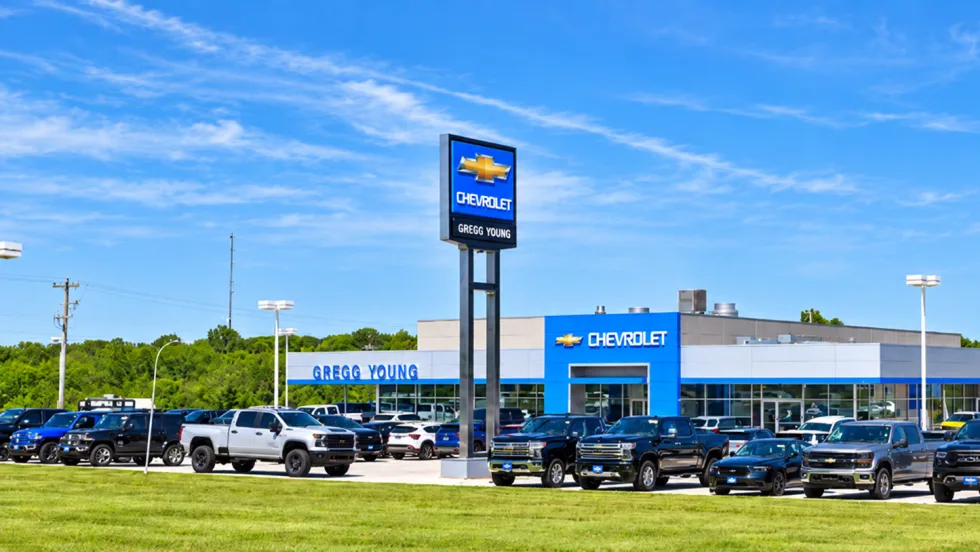
Nebraska Rooftop Changes Hands
The Gregg Young Automotive Group has sold its second dealership to Janssen Auto Group, both in Plattsmouth, Neb.
Read More →
Penske Auto Group Deal a Record
The deal to take the dealership and transportation services company private sets a new pace for industry buy-sell transactions.
Read More →
War Toll a Damper on Used Auto Prices
Cox Automotive found wholesale depreciation to be elevated in September amid high fuel prices and this year's unusual hurricane season.
Read More →
Bridge the Maintenance Gap
With many drivers missing recommended maintenance, service departments offering transparency and efficiency have a better chance of reaching financially strained consumers.
Read More →
California Store Has New Owner
The longtime dealership in the northern part of the state is known for robust fleet sales and has served the state capital for 115 years.
Read More →
BMW Plant Pursues Cleaner Energy
BMW Group Plant Leipzig has utilized hydrogen to help power its production since 2013, but a new pipeline is planned to take it to another level.
Read More →
Auto Affordability Inches Up
The latest Cox Automotive and Moody’s Analytics index shows a slight increase in new-vehicle affordability despite high prices.
Read More →
Ohio Auto Group Under New Ownership
After 79 years with the Schluter family, Mansfield Auto Group has been acquired by Missouri-based Clement Auto Group.
Read More →
RV Group Expands Carolina Footprint
Blue Compass RV Columbia Northeast is the 13th RV dealership owned by Blue Compass in the Carolinas.
Read More →
Agent Acumen
An Agent Summit panel of people who’ve been supporting auto dealers for years gave both timely and timeless advice for those starting out or mulling the prospect.
Read More →