



Reigning in Franken-agency
On June 29, the United States Supreme Court ruled that the structure of the Consumer Financial Protection Bureau was unconstitutional. A compliance expert shares why this matters, and why it matters to dealers in particular.

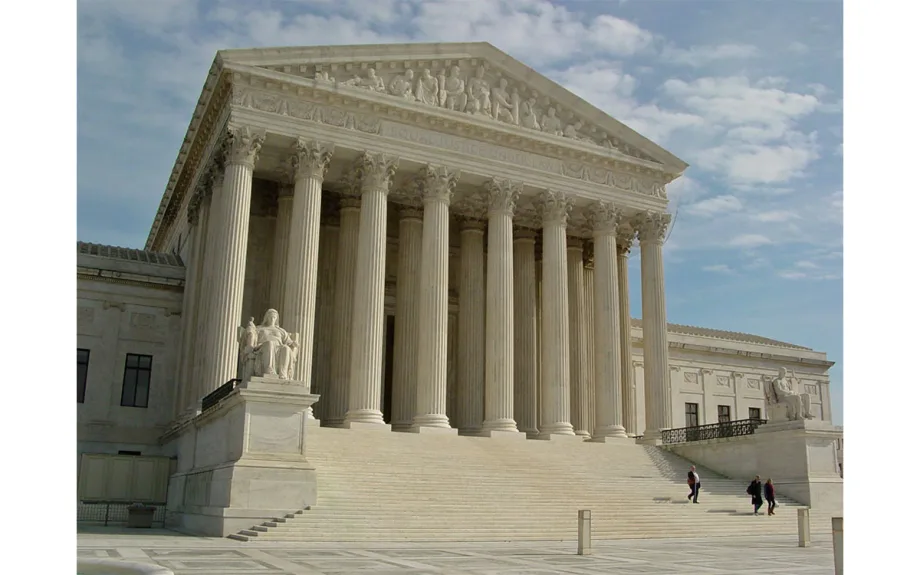
On June 29, the United States Supreme Court ruled that the structure of the Consumer Financial Protection Bureau was unconstitutional. A compliance expert shares why this matters, and why it matters to dealers in particular.
By a 5-4 decision, the United States Supreme Court on June 29, ruled that the structure of the Consumer Financial Protection Bureau was unconstitutional. At issue was whether the head of an executive agency could not be fired by the head of the Executive Branch, i.e., the President. To understand why this matters, and why it matters to dealers in particular, we need to get into the “Way Back Machine.” Destination: 2010, the birth of the CFPB. Recall that, in the wake of the 2008 financial markets meltdown, those in power in Washington, D.C. thought a new bureaucracy was in order. That new bureaucracy was the CFPB.
Such power and lack of oversight was unprecedented. As of June 29, it is now also unconstitutional.
Recall also, the cause of the 2008 meltdown or, more accurately, what was not the cause. The collapse of the subprime mortgage market was not the fault of the retail automotive industry. In fact, no one ever invested in a vehicle finance portfolio with the expectation that the value of the underlying collateral was going to increase.
Thus, a new federal agency that had the right to oversee the retail automotive industry for failings it did not commit was not a welcome development. The industry pushed back.
This pushback resulted in the Brownback Amendment, which exempted most franchised dealerships from direct oversight by the CFPB (buy-here-pay-here dealers, for example, were still subject to CFPB oversight). But what the Brownback Amendment gave, the Automobile Dealer Participation Guidance took away.
In that guidance, issued in 2013, the CFPB alleged that bank policies that allowed dealerships to mark-up interest rates above the buy rate resulted in discrimination against women and minorities. Please note that there has never been any credible evidence presented to prove this allegation. [See “Requiem for a Guidance,” Providers & Administrators Magazine, August 2018).
So the CFPB effectively began regulating dealership’s finance function (which the Brownback Amendment prohibited) by regulating the financial institutions that bought dealerships’ installment sale contract, which the Dodd-Frank Wall Street Reform and Consumer Protection Act of 2010 allowed it to do.
The Automotive Dealer Participation Guidance was repealed in 2018, but industry distrust of the CFPB lingers. One reason for this mistrust (and this is not unique to car dealers) is that the CFPB was intentionally designed to evade oversight and accountability. This is repugnant to most patriotic Americans, and most dealers seen themselves as patriotic Americans.
If a normal agency – say, the Department of Veterans Affairs – is not responsive to the expectations of the voting public, the voting public has a means of expressing its displeasure. First, the citizens can vote against the Boss – the President who, as Chief Executive, is supposed to be responsible for the Executive Branch.
Second, the citizens can express their displeasure by voting against their elected representatives. While members of Congress don’t govern Executive Branch agencies, they do have the power of the purse and can influence agency behavior by the level of funding they approve.
Unfortunately for democracy, the CFPB was designed to be immune from these levers of accountability. To address the second lever first, the CFPB is not subject to congressional appropriations. Rather, the CFPB is funded directly through a percentage of the earnings of the Federal Reserve. Therefore Congress’ power of the purse does not apply.
And, as originally designed, the CFPB was run by a single director who was not subject to presidential oversight. The director could only be removed for narrowly-defined “cause.” In other words, the director weaponized the agency against, say, the retail automotive industry, and the President couldn’t do a thing about it, including terminating the director.
Taken together, the CFPB was, from its inception unique, something of a “Frankenagency” – unlike any other Executive Branch agency ever created. Where similar agencies have a five-member set of commissioners, the CFPB had a single director, literally answerable to no one. Where similar agencies are subject to Congressional appropriations, the CFPB is immune. Eventually, this monster had to be confronted and its legality tested.
And that brings us to the present Supreme Court decision. The case before the high bench, Seila Law v. CFPB, arose when the CFPB issued a subpoena (technically, a “civil investigative demand”) seeking documents related to a law firm’s business practices. The law firm sought to have the subpoena set aside on the ground that the agency’s leadership under a single director who could only be removed for cause violated the Constitution’s doctrine of separation of powers.
In striking down the CFPB’s contention that its director could not be fired by the President, Chief Justice John Roberts wrote: “Such an agency lacks a foundation in historical practice and clashes with constitutional structure by concentrating power in a unilateral actor insulated from Presidential control.”
Such power and lack of oversight was unprecedented. As of June 29, it is now also unconstitutional.
The CFPB itself remains intact. The immediate impact of the high court’s decision is that the CFPB is now more directly responsive to the democratic process. If the bureau goes in a direction unfavored by the voting public, their elected official — the President —may make a change.
One issue left unresolved by this recent decision is its impact on pending or completed enforcement actions. Specifically, is an enforcement action in the name of a director with unconstitutionally broad power valid?
Taken together with the repeal of the CFPB’s “dealer participation guidance” in 2018, the CFPB has certainly had its wings clipped under the current administration. But as a result of Monday’s decision, a different administration with different priorities could install a new director to change the bureau’s direction. According to the Supreme Court, that is what the Constitution intended.
James S. Ganther is president of Mosaic Compliance Services and co-founder of Automotive Compliance Education (ACE).
Originally posted on P&A Magazine
More Industry

War Toll a Damper on Used Auto Prices
Cox Automotive found wholesale depreciation to be elevated in September amid high fuel prices and this year's unusual hurricane season.
Read More →
Bridge the Maintenance Gap
With many drivers missing recommended maintenance, service departments offering transparency and efficiency have a better chance of reaching financially strained consumers.
Read More →
California Store Has New Owner
The longtime dealership in the northern part of the state is known for robust fleet sales and has served the state capital for 115 years.
Read More →
BMW Plant Pursues Cleaner Energy
BMW Group Plant Leipzig has utilized hydrogen to help power its production since 2013, but a new pipeline is planned to take it to another level.
Read More →
Auto Affordability Inches Up
The latest Cox Automotive and Moody’s Analytics index shows a slight increase in new-vehicle affordability despite high prices.
Read More →
Ohio Auto Group Under New Ownership
After 79 years with the Schluter family, Mansfield Auto Group has been acquired by Missouri-based Clement Auto Group.
Read More →
RV Group Expands Carolina Footprint
Blue Compass RV Columbia Northeast is the 13th RV dealership owned by Blue Compass in the Carolinas.
Read More →
Agent Acumen
An Agent Summit panel of people who’ve been supporting auto dealers for years gave both timely and timeless advice for those starting out or mulling the prospect.
Read More →
Missed Maintenance Creates Opportunity
As families get back on the road and into daily school routines, service drives have an opportunity to capture customers who are behind on recommended vehicle maintenance.
Read More →
Mitsubishi Unveils U.S. Plan
The automaker announced a strategy that includes an expanded lineup and dealership presence, along with more ‘rugged’ and electric models.
Read More →