



F&I Products for the High-Mileage Market

F&I Products for the High-Mileage Market
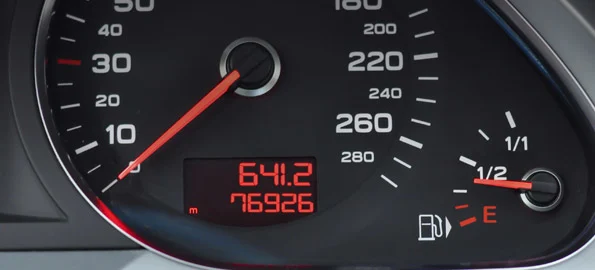
New-vehicle sales are up, leasing is accounting for an ever-increasing share and there is a potential glut of used cars on the market. The shift toward leasing that began during the tail end of the Great Recession has begun to flood the market with gently used vehicles. But off-lease units are not the only source. The latest data from R.L. Polk puts the average age of a U.S. registered vehicle at 11.4 years, a figure inflated by Recession-era thriftiness and a nearly universal improvement in quality. Simply put, consumers are holding onto and investing in older vehicles longer, putting more wear-and-tear and more mileage on them before finally opting to trade up.
In the past, many of those vehicles would have gone to auction lanes (or the scrapyard). However, many dealers are finding that there is still profit to be made through the sale of used vehicles with up to 100,000 miles — and beyond — on the odometer. Young people looking to buy their first cars, families still struggling to recover from the downturn and price-conscious drivers are all more willing than ever to consider cars and trucks with higher mileage and lower price tags.
But where does that leave F&I?
Today, there are options out there from a wide range of providers that specifically target the high-mileage vehicle market. AE talked to five of them to get their take on this segment: Jason Garner, general sales manager, AUL Corp.; Mike Melby, vice president of strategy and business development, GWC Warranty; Kelly Price, president, National Automotive Experts (NAE)/NWAN; Mike Toms, vice president of business development, The Penn Warranty Corp.; and Glen Tuscan, president, Dealer Commitment Services.
Demand and Coverage Levels
One thing all our experts agreed on was that the high-mileage market is large and growing at a fairly quick pace. AUL’s Garner believes the next few years should be exciting for this market. He believes that the combination of longer ownership cycles and a growing number of used vehicles on the market, will help bring down the price of the vehicles themselves as demand continues to rise. This, in turn, will create new opportunities for dealers to boost their F&I production.
Mike Toms agrees, noting that lender buy-in is a key factor. He says banks and finance companies are increasingly asking for warranties on high-mileage vehicle loans as a means of mitigating future losses. Specifically, he says, his company is starting to see lenders require vehicle service contract (VSC) terms that cover at least half of the finance period, as well as minimum acceptable coverage levels.
“So many challenges in the subprime and high-mileage market revolve around price,” notes Melby, explaining that high-mileage car buyers are far more price- and budget-conscious than the average consumer, so F&I professionals may feel more than the usual resistance to their presentations — particularly if they fail to adequately explain the value proposition.
Tuscan adds that there is only so much wiggle room in the loan on an affordable, high-mileage vehicle. It is a tough sell, he notes, if the cost of and markup on the service contract adds thousands of dollars to the price of the car, which could represent as much as 30% of the entire vehicle value. As an example, he explains that one of these vehicles might retail in the $8,000 to $12,000 range, which is the “sweet spot” for the segment. To make it affordable for the customer and profitable for the dealer, he says he would offer a 30-month, 30,000-mile comprehensive VSC package in the $1,800 range. In that scenario, the dealer would make $900 in profit and be more likely to sell in volume.
The Product Mix
Our experts agreed that, when it comes to the high-mileage segment, GAP and service contracts reign supreme. They are the two F&I products that will make the most sense to budget-conscious customers and the finance companies that serve them. But that doesn’t mean agents shouldn’t push for sales of appearance protection or any other product sold to new-car buyers.
Another candidate is credit life and disability coverage, which Tuscan notes is of particular value to those who are underinsured.
“Sixty-three percent of Americans right now cannot afford a catastrophic financial event over $500. If they have a refrigerator go out today, they would struggle to replace it,” he says.
Dealers may find that GAP and VSCs offer a more tangible benefit, particularly for vehicles that have passed the 75,000-mile mark. At that point, Price notes, it is inevitable that parts will begin wearing out and breaking down. She advises agents and dealers to focus on those products with great coverage for a great value, priced fairly.
Not only will strategic pricing increase penetration levels, she adds, it will also lead to fewer chargebacks and higher CSI scores. Customers should drive away feeling satisfied that they got a great deal, and if anything does go wrong, they won’t suddenly find themselves either out of pocket for repairs they can’t afford or making payments on a car they can no longer drive.
Garner points out that part of the sale is discovering what is more important to the consumer: the terms or the price. Some consumers will prefer to have a VSC that focuses only on the powertrain but that will last for 60 months. Others might prefer more comprehensive coverage and are willing to accept a shorter contract term. By having products that are flexible — or having a range of options for dealers to choose from — it helps the F&I manager and the consumer find the one that will best fit their specific needs.
“Almost every customer wants and needs the peace of mind that comes with protecting their vehicle investment,” Toms stresses. He advises agents to offer a range of products that will fit nearly any need. Some service contracts should cover a vehicle up to as many as 200,000 miles, and others should have no mileage limits and should cover the consumer for the entire term of the contract, no matter how much they drive.
Melby agrees, describing the service contract as a “must-have.” He stresses that most buyers of high-mileage vehicles simply don’t have room in their budget for repair bills — and repairs are almost inevitable on those vehicles. It is just a matter of whether it is something minor that goes wrong and can be fixed easily, or whether it’s a major issue that could take the vehicle out of action completely until repairs are made.
Underwriting and Compliance
Of course, given we are talking about a segment that is focused on used cars and trucks that have more than 75,000 miles on them — some with more than 100,000 miles — the odds of a VSC paying out for repairs is quite a bit higher than it would be on a new vehicle.
Melby says that agents choosing a VSC to offer to dealers serving the high-mileage segment should ignore their gut instinct to choose based on price alone. As critical as that element is for consumers, it is more important to partner with a company with a history of underwriting service contracts for six-figure odometers, because the knowledge base that tells them what is likely to go wrong on each make, model and year of the vehicles they cover takes years of experience and the accumulation of adequate actuarial data.
While contracts that offer lower prices and the opportunity for higher penetration rates might look great on the bottom line in the short term, poorly designed products can lead to more rejected claims down the line. That, in turn, can lead to higher rates across the board, unhappy consumers and, eventually, an exit from the market — leaving the dealer and the agent to handle the fallout.
“Loss ratios are the biggest challenge, which plays into the challenge of pre-existing conditions,” says Price, noting that it is just as important for the agents and dealers to understand what goes into pricing a VSC aimed at this market as it is for the provider to provide it at a low cost. Working with providers who have taken the time to study the market and base their contracts and pricing around the most likely parts to break — and the costs associated with those parts — will help mitigate much of that particular risk factor.
Garner points out that compliance is another key concern, noting that, as of late, the Consumer Financial Protection Bureau (CFPB) and state agencies have become increasingly more active in looking at F&I products — including those aimed at the high-mileage space — and debating whether regulators should have a say in the way they are sold and priced. He believes agents should do everything they can to stay up-to-date with new rules and legislation in order to keep their dealers informed.
Looking Ahead
Despite the risks, our experts agree that offering F&I products designed for high-mileage used vehicles can create a competitive edge. Dealers who are properly equipped to serve that market will have a competitive advantage over those who continue to send high-mileage units to wholesale. Here are a few predictions our experts offered:
No more “as-is”: VSCs that fit into high-mileage car buyers’ budgets and offer reasonable coverage could make “as-is” sales much less common. Why ask customers to assume all the risk of buying an aging vehicle when a service contract can keep them on the road and keep them coming back to the dealership?
No more “I drive too much” objections: One major objection many F&I managers face is common among consumers who don’t believe they’ll get the full value of the VSC because they will exceed the mileage allowance long before the term of the agreement is up. In some cases, they are purchasing a high-mileage vehicle precisely because they want a car or truck they can run into the ground. Having a partner that offers coverage with no mileage restrictions will help agents and dealers diversify their product portfolios and get more customers covered.
More affordable and flexible options: The process has already started, but as more providers gain proficiency in this space, the contracts will become much more focused, with many more options designed to suit the budget-conscious consumer. And as the ability to accurately predict how the products will perform improves, costs should come down, allowing dealers to increase their profit margins in the long term.
Simplification: Technology is playing a bigger role throughout the F&I process, and products for high-mileage vehicles are no exception. Providers are offering online systems that make it faster and easier to get approvals. As the process becomes easier, the time in the F&I office gets shorter, which in turn makes consumers more open to hearing about their options. When someone has waited more than an hour to see their F&I manager, they aren’t going to be all that keen on hearing about why they should add an $1,800 service contract onto their $10,000 purchase. But if they’ve only been waiting 10 minutes, they will likely be much more open to hearing about the benefits and value.
The market for F&I products that specifically target high-mileage vehicles is not going to go away any time soon. For agents and dealers who are willing to adapt, those units could prove to be moneymakers.
As Garner notes, “Customers are keeping their vehicles longer than ever. The average mileage continues to climb in the industry and average life of a vehicle continues to lengthen. This segment will continue to grow in importance and size.”
More Industry
Nebraska Rooftop Changes Hands
The Gregg Young Automotive Group has sold its second dealership to Janssen Auto Group, both in Plattsmouth, Neb.
Read More →
Penske Auto Group Deal a Record
The deal to take the dealership and transportation services company private sets a new pace for industry buy-sell transactions.
Read More →
War Toll a Damper on Used Auto Prices
Cox Automotive found wholesale depreciation to be elevated in September amid high fuel prices and this year's unusual hurricane season.
Read More →
Bridge the Maintenance Gap
With many drivers missing recommended maintenance, service departments offering transparency and efficiency have a better chance of reaching financially strained consumers.
Read More →
California Store Has New Owner
The longtime dealership in the northern part of the state is known for robust fleet sales and has served the state capital for 115 years.
Read More →
BMW Plant Pursues Cleaner Energy
BMW Group Plant Leipzig has utilized hydrogen to help power its production since 2013, but a new pipeline is planned to take it to another level.
Read More →
Auto Affordability Inches Up
The latest Cox Automotive and Moody’s Analytics index shows a slight increase in new-vehicle affordability despite high prices.
Read More →
Ohio Auto Group Under New Ownership
After 79 years with the Schluter family, Mansfield Auto Group has been acquired by Missouri-based Clement Auto Group.
Read More →
RV Group Expands Carolina Footprint
Blue Compass RV Columbia Northeast is the 13th RV dealership owned by Blue Compass in the Carolinas.
Read More →
Agent Acumen
An Agent Summit panel of people who’ve been supporting auto dealers for years gave both timely and timeless advice for those starting out or mulling the prospect.
Read More →