



Credibility vs. Rapport: Which is More Important?


Credibility vs. Rapport: Which is More Important?
In developing training programs and processes over the last 19 years, we continually identify and study the top-performing F&I departments in the country. While every one of these top F&I managers is different in some way, they do have some things in common. One of the traits they seem to share is their unique ability to create credibility in the minds of their customers.
Creating credibility with today’s consumer is no small feat. Think about it. What has every customer been told, by every media source out there, will happen to them in a car dealership? That’s why they act the way they do. They are both skeptical of the dealership personnel and sales resistant at the same time. While it’s easy to argue about or dismiss this attitude towards our industry, it remains a fact that has to be accepted and dealt with.
In creating top F&I performance, it is important that we understand that selling an automobile is a completely different science than the F&I process. In selling a big-ticket, tangible product, like a car or truck, a key element of success is the establishment of rapport. Customers tend to buy from people they like. The qualification process, demonstration ride and the friendly handling of the commitment and closing stages of the sale are most effective when the salesperson has developed a positive relationship with the customer. However, in the F&I process this attempt to develop rapport can work against us.
Some of this has to do with the psychological state of the buyer at different stages of the purchasing process. When they are considering a new vehicle, their thoughts and feelings are focused on positive factors. They are picturing themselves in that new vehicle, imagining how they will look and feel driving it and are excited at the prospect of the new vehicle experience. However, when they get to the F&I stage of the process a host of negatives like monthly payments, interest rates, mechanical breakdowns, even their death or disability come into play. Applying the sales tactics we use to sell a car to address those areas is not the most effective way to evoke a buying response.
This is why many skilled automobile salespeople become frustrated and confused when they first move into F&I. The skills that made them successful on the showroom floor fail them in the F&I office.
Why is credibility so important? First we have to understand why people buy F&I products. The “psycho-neuro” triggers that cause them to purchase are fear of loss, and are security based. They have very little to do with a perception of “value.” The key is to get them to consider and evaluate the security issues and protection that your products provide without evoking a wall of sales resistance. Credibility will do this; rapport will not. In fact, if the customer feels they are being sold these products or they get the idea that there is something in it for you, they will resist.
So how do we create credibility? Below are some tips to help:
1. First, always, (I repeat), always tell the truth. No matter what. Dr. Phil says that 95% of all communication is non-verbal. It’s certainly true in the F&I office. If you are committed to telling the truth it will show in your answers, demeanor and how you interact with the customer. They will pick up on it.
2. Immediate full disclosure. Build a full and complete disclosure of all of the elements of the car deal into the first minute of your presentation process. This is the first step to creating credibility with the customer and separating yourself from the “sales” process. While many inexperienced F&I managers shy away from this approach, top F&I performers know that this is an effective way to begin the F&I interaction.
3. Give simple explanations of the products, not sales pitches. Many customers don’t buy particular products simply because they didn’t really understand what they were. Make sure your explanation is short, simple and to the point. Use plain language, not proprietary industry phrases or word tracks.
4. Listen carefully. Show the customer that you feel what they are saying is important. Make eye contact when listening. You are a Business Manager, not a salesperson. Let them know that their options are important to them and that their feelings and thoughts are important to you.
5. Take yourself out of the decision-making process. Offer all your products equally and let the customer respond. If they have an objection, don’t react in a negative way. Offer an alternative. Make sure it’s about the product, not about you.
6. Make it short, to the point and fast. Many of the presentations we have been taught go into a lengthy feature/benefit spiel. While product providers want you to give each and every highlight and benefit of their product, you can’t keep the customer’s attention that long. And the longer the explanation, the more it starts to sound like a sales pitch.
More Industry

Ohio Auto Group Under New Ownership
After 79 years with the Schluter family, Mansfield Auto Group has been acquired by Missouri-based Clement Auto Group.
Read More →
RV Group Expands Carolina Footprint
Blue Compass RV Columbia Northeast is the 13th RV dealership owned by Blue Compass in the Carolinas.
Read More →
Agent Acumen
An Agent Summit panel of people who’ve been supporting auto dealers for years gave both timely and timeless advice for those starting out or mulling the prospect.
Read More →
Missed Maintenance Creates Opportunity
As families get back on the road and into daily school routines, service drives have an opportunity to capture customers who are behind on recommended vehicle maintenance.
Read More →
Mitsubishi Unveils U.S. Plan
The automaker announced a strategy that includes an expanded lineup and dealership presence, along with more ‘rugged’ and electric models.
Read More →
Selling to Grow
The question of whether you should sell your agency and if so, when, is up to you. But it’s a question worth asking to ensure you keep the business on the right path for yourself, employees and clients.
Read More →
Recalled Vehicles Hit 5-Year High
Though the number of events has fallen so far this year, impacted units are up significantly. Meanwhile, regulators consider consumer notification changes.
Read More →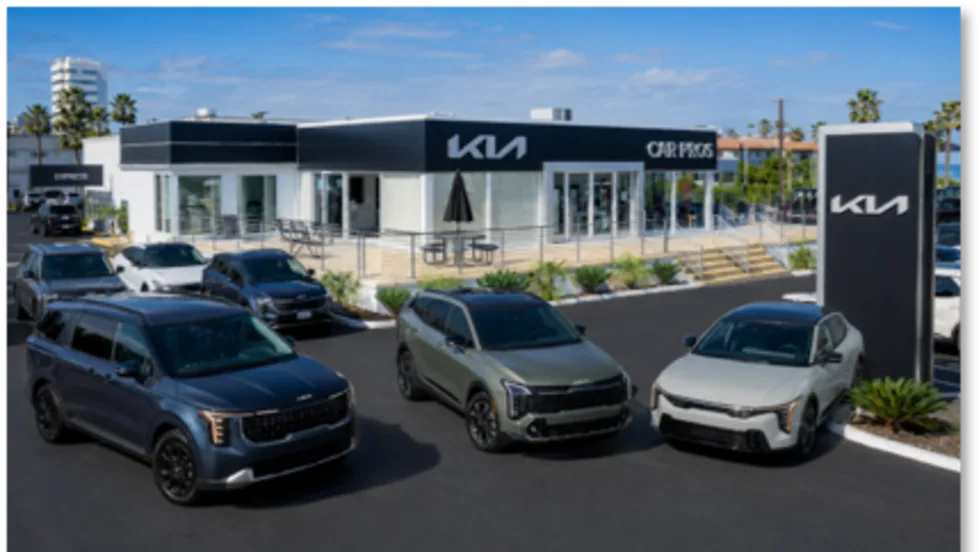
Auto Group Acquires Top-Performing Rooftop
Car Pros sold its Kia Huntington Beach location to Sutherlin Automotive Group, marking the buyer’s third location in Southern California.
Read More →
China as Pacesetter
Automotive leaders huddled on where North America stands in the global picture and how it can strengthen its position against the Asian juggernaut’s surging industry.
Read More →
BMW Concept Car Makes Fuel to Burn
The prototype developed in concert with a South Carolina university engineering team generates more solar energy than it uses in a typical daily commute.
Read More →