



Continuing Education: Should You Choose Online or In-person?

I recently had a conversation with some colleagues about how important, and necessary, it is for anyone in the workforce to keep up-to-date in our respective industries. The idea of continuing our professional education is not so new and, for those of us in America, dates as far back as the early 1800s.
Now, of course, the setting has changed in character, form and substance, but the idea is the same: for any of us to be successful in our careers, it is critical that we continue our training and education. To retain our current customers and compete effectively for new ones, it is critical to keep ourselves current with sales methods and techniques, software and technology advances, new product and service rollouts and other information and processes necessary to run a business or organization.
Benefits apply to agents, dealers and providers in that the agent is the liaison among the three. If you don’t have well-trained, knowledgeable F&I managers at the dealership who are using the provider’s products, you don’t have providers who are satisfied with the agent’s selling and customer service ability. In a recent article in F&I and Showroom magazine it was said that, “Agents are the critical extension of most technology and product providers – acting as both sales representative and dealer consultants.” I couldn’t have said it better myself.
For agents in the automotive and power sports F&I industry, further training comes in two types: required and voluntary. Now it is obvious what the necessary training for agents and brokers encompasses: pre-licensing courses and examinations with the state in which you are planning to become licensed and sell insurance. Agents and brokers need a sufficient amount of knowledge about insurance fundamentals and the state insurance laws to be able to sell in their respective states. In addition, for agents to maintain their licenses, many states have mandatory continuing education requirement that focus on insurance laws, consumer protection and the technical details of various insurance policies.
The not so obvious training, the “voluntary training” for agents in the automotive and power sports F&I industry are those courses that focus on selling strategies and techniques, business and/or organizational software (word processing, spreadsheets, database and presentation programs), industry-specific software (menu, reporting and integration programs) and product- and services-related training on those you’re promoting.
This is the training that provides you with that competitive edge, and can take your success to the next level. Even those of us who are not agents need to keep up to date on this type of information. Unfortunately, trying to keep current with everything can be very time consuming. And we all know that it is often difficult to get everything done in a day that needs to be done, let alone fitting a training class into your schedule.
The advent of the Internet has definitely made it more convenient to stay current on training, but is it the best way to learn and retain what is being taught? Which is better – traditional in-class courses or online courses? They both have their advantages and disadvantages, and it seems for each advantage, there is a disadvantage.
For example, online classes offer the ability to “attend” the course anytime, and from anywhere. That’s great! But, what if you are someone who travels a lot and the Internet isn’t running correctly at your location? Or, you can’t get Internet access from your computer? Online classes allow you more flexibility from a scheduling standpoint because they are accessible “24 hours a day, 7 days a week,” but there are still deadlines. Suppose you are one who procrastinates and then when you are all ready to review the material or take a test, you cannot access the Internet or the website you need to go to to complete your training?
Lower cost is often cited as a benefit of online courses, but when I checked with a couple local colleges, the fees for online training were more expensive than traditional classroom training. Who is this less expensive for? The trainer? I suppose the cost of the course depends on the type of training, be it college courses or vocational courses.
I have also read that an advantage of online classes is that they are “interactive.” I suppose they can be, but aren’t traditional classroom settings interactive as well? I have attended plenty of courses, training sessions and workshops in my life and they have all been interactive.
I am sure that those who are reading this are summing me up to be an advocate of traditional classroom-style learning. Perhaps! My colleagues definitely thought so. But, that is not why I’m playing devil’s advocate here. My point is that one approach is not better than the other. Wouldn’t it be better to use the advantages of both mediums? The truth of the matter is that I feel a combination of classroom and online training is the best method of training – and, therefore, the best method to look for when considering your training, be it required or optional.
More Industry
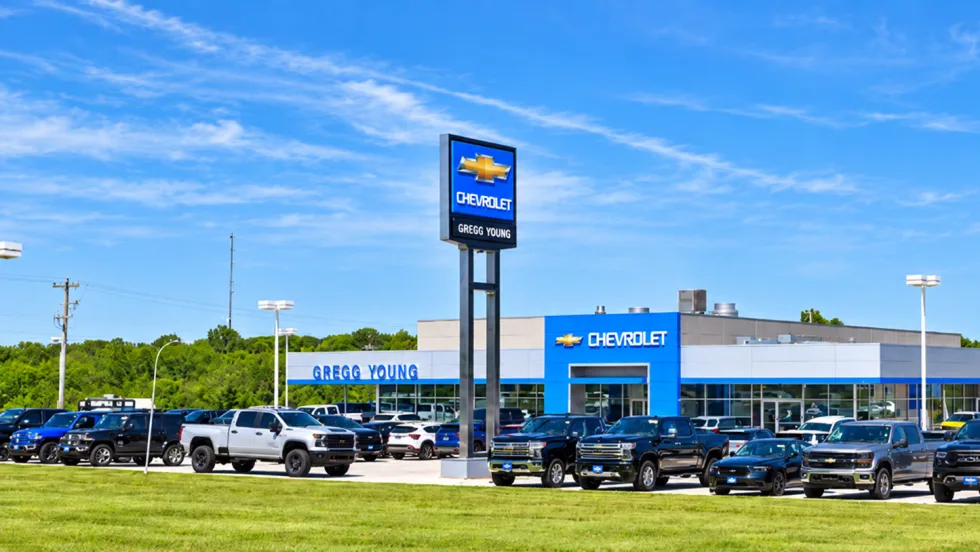
Nebraska Rooftop Changes Hands
The Gregg Young Automotive Group has sold its second dealership to Janssen Auto Group, both in Plattsmouth, Neb.
Read More →
Penske Auto Group Deal a Record
The deal to take the dealership and transportation services company private sets a new pace for industry buy-sell transactions.
Read More →
War Toll a Damper on Used Auto Prices
Cox Automotive found wholesale depreciation to be elevated in September amid high fuel prices and this year's unusual hurricane season.
Read More →
Bridge the Maintenance Gap
With many drivers missing recommended maintenance, service departments offering transparency and efficiency have a better chance of reaching financially strained consumers.
Read More →
California Store Has New Owner
The longtime dealership in the northern part of the state is known for robust fleet sales and has served the state capital for 115 years.
Read More →
BMW Plant Pursues Cleaner Energy
BMW Group Plant Leipzig has utilized hydrogen to help power its production since 2013, but a new pipeline is planned to take it to another level.
Read More →
Auto Affordability Inches Up
The latest Cox Automotive and Moody’s Analytics index shows a slight increase in new-vehicle affordability despite high prices.
Read More →
Ohio Auto Group Under New Ownership
After 79 years with the Schluter family, Mansfield Auto Group has been acquired by Missouri-based Clement Auto Group.
Read More →
RV Group Expands Carolina Footprint
Blue Compass RV Columbia Northeast is the 13th RV dealership owned by Blue Compass in the Carolinas.
Read More →
Agent Acumen
An Agent Summit panel of people who’ve been supporting auto dealers for years gave both timely and timeless advice for those starting out or mulling the prospect.
Read More →