



Auto Industry Reacts to Tariff
As the world absorbs separate reciprocal duties on imported goods, the sector starts adjusting to the 25% tariff on vehicles, awaits parts equivalent.

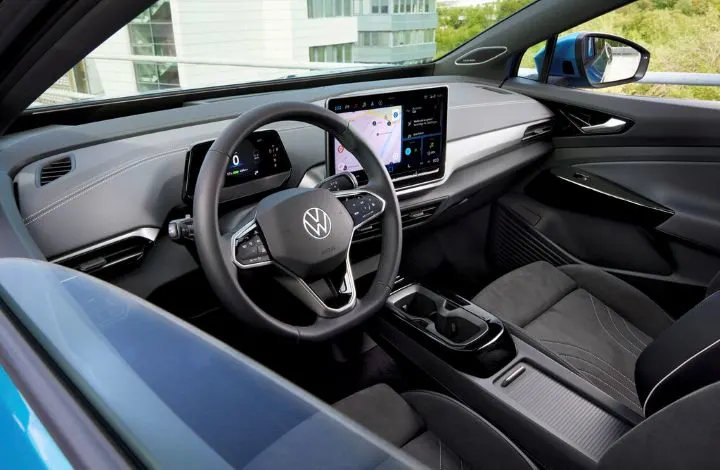
Volkswagen is among automakers that stand to be impacted the most by the auto tariffs because it imports about 80% of its U.S.-sold vehicles.
Volkswagen
Twenty-five percent U.S. tariffs on vehicle imports took effect Thursday as the world reeled from separate reciprocal tariffs on imported goods.
Though the sweeping reciprocal tariffs won’t be stacked on top of the vehicle duties, the latter will be added to tariffs on steel and aluminum imports, as well as 25% tariffs on certain auto parts set to take effect on May 3.
Industry analysts have said they expect the tariffs to result in at least a 10% increase on already high new- and used-vehicle prices. Though many vehicles sold in the U.S. are assembled here, they’re made with parts from around the world.
Both U.S.-based and overseas automakers reacted to the vehicle tariffs in various ways.
Ford extended employee vehicle discounts to the public – “You pay what we pay,” it says on its website.
Jeep maker Stellantis said it will temporarily shut down a plant each in Canada and Mexico and lay off 900 U.S. workers as it metabolizes the tariffs and decides how to move forward.
Germany-based automaker Volkswagen, along with German cohort Mercedes, plus Volvo, Mazda and Hyundai, is among automakers most exposed to the new tariff. It imports about 80% of its U.S. sales units, according to S&P Global Mobility.
The German Association of the Automobile Industry, issuing a statement calling for European unity along with openness to negotiation, said the auto tariffs “mark a fundamental turning point in trade policy.”
“It represents the US's departure from the rules-based global trading order - and thus a departure from the foundation for global value creation and corresponding growth and prosperity in many regions of the world,” the trade group said. “This is not America first; this is America alone.”
LEARN MORE: OEM Group Protests Auto Tariffs
Originally posted on F&I and Showroom
More Industry

Penske Auto Group Deal a Record
The deal to take the dealership and transportation services company private sets a new pace for industry buy-sell transactions.
Read More →
War Toll a Damper on Used Auto Prices
Cox Automotive found wholesale depreciation to be elevated in September amid high fuel prices and this year's unusual hurricane season.
Read More →
Bridge the Maintenance Gap
With many drivers missing recommended maintenance, service departments offering transparency and efficiency have a better chance of reaching financially strained consumers.
Read More →
California Store Has New Owner
The longtime dealership in the northern part of the state is known for robust fleet sales and has served the state capital for 115 years.
Read More →
BMW Plant Pursues Cleaner Energy
BMW Group Plant Leipzig has utilized hydrogen to help power its production since 2013, but a new pipeline is planned to take it to another level.
Read More →
Auto Affordability Inches Up
The latest Cox Automotive and Moody’s Analytics index shows a slight increase in new-vehicle affordability despite high prices.
Read More →
Ohio Auto Group Under New Ownership
After 79 years with the Schluter family, Mansfield Auto Group has been acquired by Missouri-based Clement Auto Group.
Read More →
RV Group Expands Carolina Footprint
Blue Compass RV Columbia Northeast is the 13th RV dealership owned by Blue Compass in the Carolinas.
Read More →
Agent Acumen
An Agent Summit panel of people who’ve been supporting auto dealers for years gave both timely and timeless advice for those starting out or mulling the prospect.
Read More →
Missed Maintenance Creates Opportunity
As families get back on the road and into daily school routines, service drives have an opportunity to capture customers who are behind on recommended vehicle maintenance.
Read More →