agent Entrepreneur logo
MenuMENU
SearchSEARCH

Autotrader: 48% of Car Buyers Choose In-Vehicle Tech Over Brand, Body Style

ATLANTA — Nearly half of consumers (48%) prioritize in-vehicle technology over brand and body style, according to the 2017 Autotrader Car Tech Impact Study. Released on Sunday at the 2017 North American International Auto Show, the report showed a growing number of consumers believe certain safety technologies, including blind-spot detection and forward collision warning, should ... Read More »

January 9, 2017
3 min to read


ATLANTA — Nearly half of consumers (48%) prioritize in-vehicle technology over brand and body style, according to the 2017 Autotrader Car Tech Impact Study.

Released on Sunday at the 2017 North American International Auto Show, the report showed a growing number of consumers believe certain safety technologies, including blind-spot detection and forward collision warning, should come standard on all vehicles in the United States. Convenience and entertainment options also ranked high on consumers’ preferred list of technology features.

Ad Loading...

“Technology has become the deciding factor for car buyers selecting a vehicle,” said Michelle Krebs, Autotrader senior analyst. “Automakers must deliver innovative features or risk consumers looking elsewhere.”

The study also shows that 56% of car shoppers have done their research and know exactly what in-vehicle technology they are interested in before they visit a dealership. Younger car buyers, 18- to 34-year-olds in particular, are generally more tech savvy and are less willing to compromise on the features they want.

Additionally, 70% of respondents noted they would consider paying more for driver-assist technology such as blind-spot monitoring or adaptive cruise control in their next vehicle purchase. However, 65% still have concerns over system failures with self-driving cars, roughly the same number as in 2016. In general, nearly two-thirds of respondents believe new technology has improved the way they drive.

The study also indicated experience with advanced, self-driving technologies will likely lead to quicker adoption: three out of four drivers who own a vehicle with these advanced technologies (adaptive cruise, collision warning, etc.) say it helps make them a better driver and feel safer.

“And yet, despite the appeal of advanced driver-assist and technology features, the study found that convenience and entertainment features such as voice commands and Wi-Fi are still more desired,” the company stated in its press release. “Connectivity systems such as a General Motors’ OnStar, Ford’s Sync and Toyota’s EnTune; advanced, adaptive navigation systems and technology that provides wireless device charging are all high on consumer’s want list. Regardless of age or comfort with technology, 53% of consumers expect vehicle technology to be every bit as robust as smartphone technology.”

Ad Loading...

Here are additional findings from the study:

  • Millennials Drive Demand: Millennial drivers are willing to pay more for the technology they want, with 55% of them expecting to spend an additional $2,600 to get desired tech features.

  • Parents Adopt Technology: Parents are twice as likely to purchase advanced safety features than non-parents (51% vs. 22%) and three times more likely to own a vehicle with autonomous features.

  • Trust in Autonomous Vehicle Technology Growing: Compared to 2016, consumers are growing more comfortable with the idea of giving up control to a self-driving vehicle. In fact, 49% of respondents indicated they’d give up control in exchange for some free time not driving or watching the road (up from 35% in 2016); 17% of respondents said they would use the time to catch up on work while 16% said they would play games, both up significantly from last year.

  • Autonomous Technology in Unexpected Situations: Consumers are also becoming more comfortable with how a self-driving vehicle would react in unexpected situations, such as encountering a deer in the road (42% of respondents are not concerned); interacting with non-self-driving vehicles (57%) and interacting with pedestrians or bicycles (56%), all up from 2016.

The study was conducted by KS&R Inc. in partnership with Research Now on behalf of Autotrader. The online survey includes responses from 1,020 U.S. vehicle owners aged 18 or older.


More Industry

Photo of man with most of his face hidden as he types on a computer keyboard
Industryby Hannah MitchellApril 2, 2026

Fake Auto Dealer Websites Frauding Consumers

The Point Predictive study traced a pattern across more than 100 websites it believes are being developed by an international theft ring.

Read More →
photo of Volkswagen vehicle steering wheel and interior
Industryby Hannah MitchellApril 1, 2026

One of Earliest U.S. Auto Dealers Exits

The sale of two Minnesota franchises ends a rare multigenerational business while adding to one of the Midwest’s biggest auto groups.

Read More →
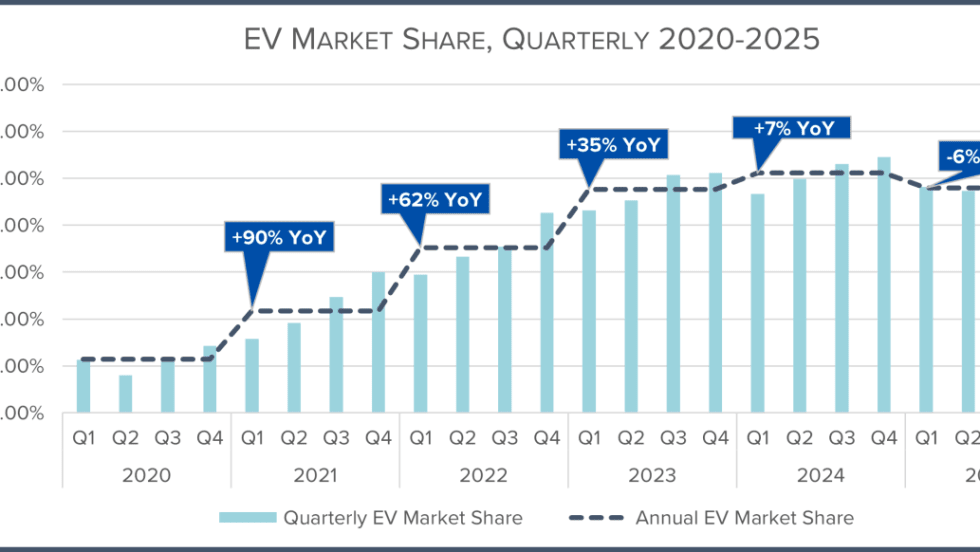
chart showing the quarterly electric vehicle market share from 2020-2025
Industryby Lauren LawrenceMarch 27, 2026

EV Sales Slide While Hybrids Climb

California, as usual, led the country in EV registrations in the fourth quarter, but the U.S. as a whole saw a 43% year-over-year volume decrease.

Read More →
Ad Loading...
Photo of new car's tail light
Industryby Hannah MitchellMarch 26, 2026

New-Vehicle Sales Ride Tax Returns Wave

Forecasts show that the spring sales season is rising above overriding economic concerns, among them continuously rising car prices, trade tariffs, elevated interest rates, and now a war.

Read More →
Photo of Toyota car parked in front of a Toyota dealership
Industryby Hannah MitchellMarch 23, 2026

2025 Dealership Buy-Sells a Record

The Kerrigan Index shows that despite a chaotic year of musical trade tariffs, high vehicle prices and more roadblocks, acquirers still flush with pandemic-era cash accelerated the consolidation pace.

Read More →
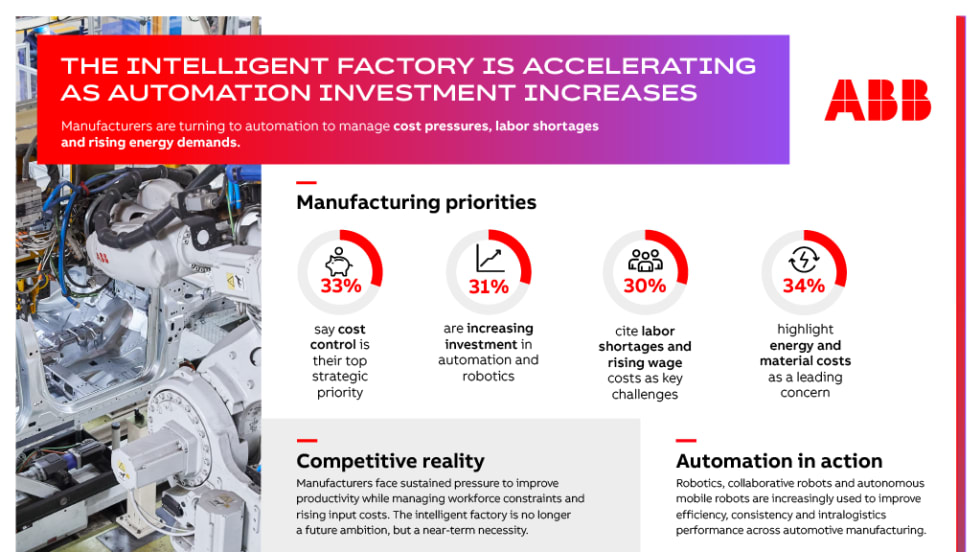
Infographic from ABB titled “The Intelligent Factory is Accelerating as Automation Investment Increases.” It shows a robotic manufacturing assembly line on the left and key statistics on the right. Highlights include: 33% of manufacturers prioritize cost control, 31% are increasing investment in automation and robotics, 30% cite labor shortages and rising wages as challenges, and 34% identify energy and material costs as a leading concern. Additional sections explain competitive pressures and how automation technologies like robots improve efficiency, consistency, and productivity in modern manufacturing.
Industryby Lauren LawrenceMarch 19, 2026

Automation Acceleration Seen in Manufacturing

Labor shortages, material costs and tariffs are just a few of the reasons automakers are looking to expand their investments in automation and robotics this year.

Read More →
Ad Loading...
Overhead view of container cargo ship loaded with vehicles
Industryby Hannah MitchellMarch 19, 2026

War Threatens Major U.S. Auto Exports Stream

The Middle East imports a sizable share of vehicles made in the states. It’s unclear how the Iran War could affect the keystone market for U.S. automakers.

Read More →
five people sitting in a row with paperwork, Retention Requires Strategy, Agent Entrepreneur logo
Industryby Hannah MitchellMarch 17, 2026

Hiring That Sticks

Auto dealers don’t have to settle for high employee turnover. Despite historical patterns of rotating dealership doors, they can tweak their processes to find and keep the right people on staff.

Read More →
row of cars, used vehicle demand spikes, chart showing data spike, F&I and Showroom logo
Showroomby Lauren LawrenceMarch 11, 2026

Used Market Gains Speed

New-vehicle sales fell year-over-year for the fifth month in a row in February, making retail deliveries the slowest they’ve been since 2023, according to a CarGurus report.

Read More →
Ad Loading...
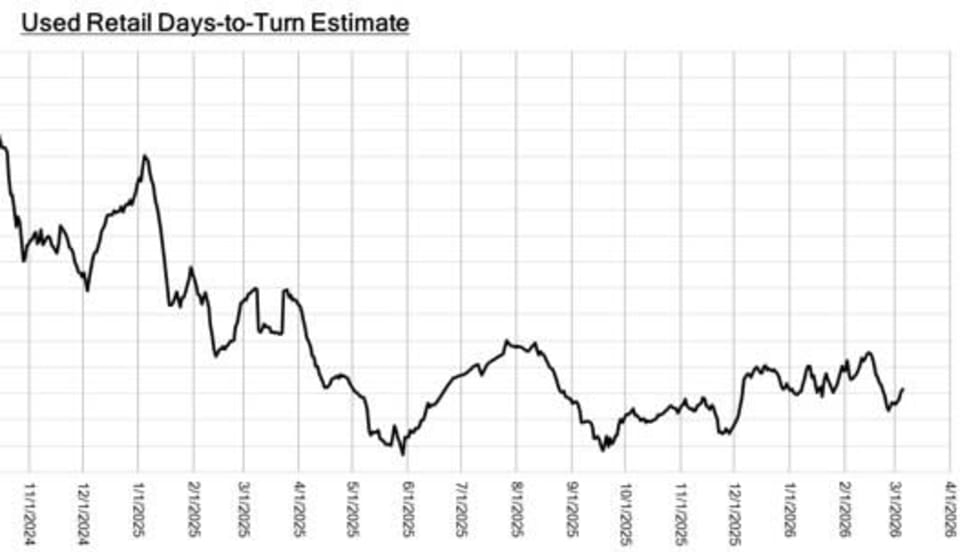
Graphic showing used-vehicle days to turn rate
Showroomby StaffMarch 10, 2026

Black Book: Weekly Market Update

Both vehicle values and conversion rates sped up last week as two segments outperformed in the pre-spring burst of buying.

Read More →