PALO ALTO — In 2017, the National Automobile Dealers Association (NADA) celebrates 100 years serving franchised automobile dealers. Next year also marks the centennial of the first evidence of vehicle reconditioning, according to a provider of reconditioning workflow time-to-market software solutions. Rapid Recon issued a press release today saluting the NADA for 100 years of ... Read More »
PALO ALTO — In 2017, the National Automobile Dealers Association (NADA) celebrates 100 years serving franchised automobile dealers. Next year also marks the centennial of the first evidence of vehicle reconditioning, according to a provider of reconditioning workflow time-to-market software solutions.
Rapid Recon issued a press release today saluting the NADA for 100 years of faithful service to the automobile industry. It also offered a brief look into the history of the industy, the association and the reconditioning.
The NADA story began in 1917 when 30 auto dealers traveled to the nation’s capital to convince Congress not to impose a luxury tax on the automobile. They successfully argued that the automobile is a necessity of American life, not a luxury. From that experience, the NADA was born.
“We’re excited to be an exhibitor at NADA in New Orleans for its 100th anniversary, a proud organization for a great industry,” said Dennis McGinn, founder and CEO of Rapid Recon. “It is remarkable how many people today make their living working in and supporting the American automobile dealership, nearly five million men and women.”
The company will be exhibiting in Booth No. 5417 at the NADA Convention & Expo, which will be held at the New Orleans Ernest N. Morial Convention Center on Jan. 26-29.
Some industry milestones, sourced from The American Car Dealership, show how quickly the franchised auto dealer network developed:
1896: The first franchised new-car dealership opened in Reading, Pa. It sold Winton automobiles, one of the earliest successes of the emerging automobile manufacturing business
1899: First automotive showroom opened in New York City, displaying Winton cars
1905: Cars first sold on an installment plan. Two dealer groups formed from which would become the National Automobile Dealers Association
1917: NADA officially organized with 15,000 dealers, representing 600 brands, many of which never produced a working vehicle or sold vehicles
1933: First NADA Used Car Guide
1934: NADA membership reaches 30,000
2017: NADA membership totals 16,000 new car and truck dealers, with 32,500 franchises, both domestic and international members, representing 38 brands.
Recon Recognized
As for recon, there was no need for reconditioning at first, at least not as it exists today. What trade-ins there were in the industry’s beginning were animal-drawn wagons and similar conveyances, according to information collected by Rapid Recon. Undoubtedly, some of America’s first automobile dealers spiffed up those vehicles, replacing a wooden wheel or two, repairing a broken seat or strengthening a weak axle spring to give a worn-out buggy “like-new” appeal for buyers.
By the time the NADA was founded in 1917, the sufficiency of units in operation meant a growing opportunity for used-vehicle sales. According to motor vehicle registrations in 1917, as compiled by the U.S. Bureau of Public Roads, nearly five million cars and trucks were registered. While difficult to calculate how many of the 7,653 million vehicles registered from 1914 until then would have still be in operation, it’s likely many of them flowed back to dealers as trades.
By late 1916, creative rebuilders were putting old cars, now “reconditioned,” back on the road.
Motor Age magazines from the 1920s discuss reconditioning in he role of used-car sales success. The May 11, 1922, edition presented two ideas: “The used-car company will sell its car at cost, plus reconditioning, plus sales expense, plus a normal profit.” In a separate article, “The National Used Car Company Plan,” the publication floated the idea of centralized used-car operations and reconditioning by zone — the thought then being used-car sales were a distraction to new-car salespeople.
Most reconditioning in those early days was cosmetic, though there was a growing recognition of the need to make those cars both safe and somewhat “reliable,” according to Rapid Recon’s research. During the Great Depression, reconditioned vehicles supplemented dealers’ new-car opportunities.
The beginning of World War II is recognized as the birth of intentional reconditioning, which morphed into the operation that’s now integral to new-car dealership used-car departments. With new-car manufacturing curtailed by the U.S. government from 1942 to late 1945, new-car supply was virtually nonexistent. Used cars were in demand, and dealers survived by sourcing and refurbishing those vehicles. Service, parts, tires and other related opportunities became dealers’ bread-and-butter, not unlike today.
Throughout the ‘50s and ‘60s, most dealers viewed reconditioning as a necessary evil and as a means of disposing used cars taken in trade during that era of the two-to-three-year trade cycle.
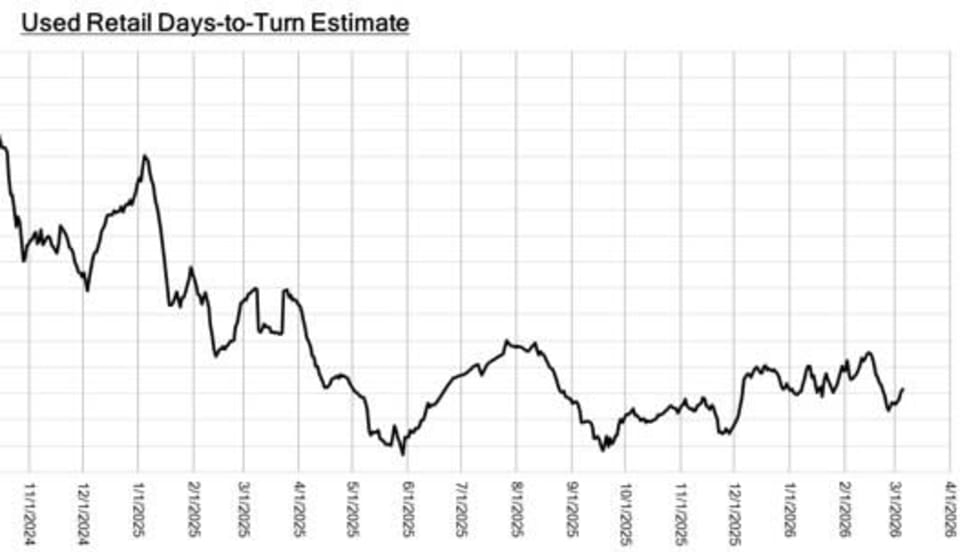
Today, reconditioning continues as a discipline for cosmetically and mechanically upgrading used vehicles so they’re safer and more reliable and can command higher sales grosses. Recognizing the faster they can get used cars from acquisition to the front line to sell them, many dealers today are adopting time-to-market workflow software to reduce this cycle to three to five days, not the average and costly eight to 15 or so days, McGinn noted.
This need has expanded considerably in recent years with the flow of off-lease vehicles, which OEMs ask their dealers to market as pre-owned certified models. Certified pre-owned worked its way into the automotive vocabulary when Lexus launched the first CPO program in November 1993. Toyota’s program started in 1996. Most manufacturers and their dealers today offer certified pre-owned vehicles to buyers.
A Dealer’s Recall
One expert industry veteran, still in the business today, spent his earlier career working for Garber Buick in Saginaw, Mich., which was Buick’s first store. Its owner Gary Garber was one of General Motors’ first 13 distributors. Working in that historic environment gave this industry veteran opportunity to review and study old dealership and industry records, from which he shared recently, including perspectives on attitudes about vehicle reconditioning through the years and how over time recon practices changed.
“In the ‘50s and ‘60s, recon was patching vehicles up — making them look good cosmetically, but just good enough to pass off to somebody else and make some money on them,” he recalled.
It was not until the late ‘70s and early ‘80s that dealers began to take a serious interest in reconditioning used cars. That work, however, was predominately sublet. It was the advice of industry consultants, Garber said, that began to convince dealers they needed to bring reconditioning into their own operations to keep that profit internally.
About this time too, he added, dealers, seeing the growth in third-party service contract sales, formed their own off-shore service contract companies to retain those profits themselves. As service contract professionalism grew, those companies’ management teams, in order protect their risks, pushed for higher reconditioning standards. Better reconditioned vehicles, in turn, helped attract more used-car buyers, making used-car departments integral to dealership profitability.
As we move toward a new decade, industry changes will continue to keep manufacturers, dealers, and solution providers watchful. The huge volume of vehicle open safety recalls in recent years is one concern. Fortunately, use of recall management software woven into the reconditioning process helps identify affected models so their recall issues can be addressed before those vehicles reach the frontline and the consumer, whenever the recall is announced in the recon cycle.