



Will GM’s Dominance End Over Chip Shortage?
GM sales fall short of Toyota Motor Corp. over two consecutive quarters.

sellanycar.com
General Motors has bested other automaker’s sales in the U.S. for 90 years, but the automaker appears to be falling short over the microchip shortage.
Toyota Motor North America has sold more new vehicles than General Motors for a second consecutive quarter.
Toyota saw a 22% decline in sales in September. Sales of its top selling automobile, the RAV4, plunged by over half. Still, Toyota modestly increased sales year-over-year in the third quarter.
Bob Carter, head of sales for Toyota Motor North America, reports Toyota has stayed strong because of strong supplier relations and adjustments it made after the 2011 Japan earthquake and tsunami. The company now carries more inventory of slow-moving parts, including chips.
In contrast, GM saw sales fall to the lowest three-month total since the Great Recession in 2009. GM enters the fourth quarter trailing Toyota’s sales by around 90,000 light vehicles.
GM executives report the worst is behind them, and that things will improve as its North American plants go back online after lengthy shutdowns.
Analysts paint a less rosy picture as they predict as the chip shortage persists, the industry will struggle to keep pace with consumer demand in the fourth quarter.
They also factor in other problems, such as port congestion and transport problems, labor issues, and parts shortages. Jeff Schuster, LMC Automotive's president of the Americas operations and global vehicle forecasting, told Automotive News: "We've got a pretty long road before the industry gets out of this."
The inventory crunch drove U.S. light-vehicle sales down over 10% in the third quarter. Automakers and dealers are preparing for a tough month as manufacturers continue to add plant downtime.
For dealers, the crisis involves getting cars to sell, not selling them.
Toyota has announced sizable production cuts for October, which could affect the race for first in auto sales. Its inventory is also dwindling. Automotive News reported that Toyota began October with fewer than 100,000 vehicles either at dealerships or in transit.
GM is a little stronger, with 128,757 vehicles at dealerships or on the way. However, it has five times as many U.S. franchises to supply. A smaller dealership network and fewer vehicle combinations have given Toyota an edge, reported Cox Automotive's senior economist, Charlie Chesbrough.
Originally posted on Auto Dealer Today
More Sales

September Payments Reach New Heights
Despite lower interest rates and longer loan terms, the average new-vehicle monthly payment continues to climb, and transaction prices remain high.
Read More →
Used Lots Getting the Business
Many consumers are seeking out the units to save money, and the demand – higher in July than normal – is keeping supply limited and prices up.
Read More →
Two Kinds of Agents and the 5 Ps That Separate Them
Follow these key guidelines to distinguish your agency from competitors by adding more value to your dealer clients' businesses.
Read More →
Positive Equity Reaches Record High
Mainstream vehicle owners who bought a car seven years ago are likely to have positive equity when trading in for a new vehicle, according to second-quarter Edmunds data.
Read More →
Used Market Stabilizes
The Carfax Used Car Index noted a major drop in used-vehicle price increases in July after several months of hikes.
Read More →
July Auto Sales Simmer
Deliveries were up modestly from a year ago despite still-high prices as OEMs offered more incentives and loan rates eased somewhat.
Read More →
Used Sales Hit Summer Drag
The vacation season, combined with high prices, has dented deliveries and added to inventories, though supply is still slim enough to keep listings elevated.
Read More →
June Automotive Boon?
A forecast for this month’s new-vehicle sales tells a familiar 2026 story: Year-over-year comparisons must be made in light of last year’s aberrations.
Read More →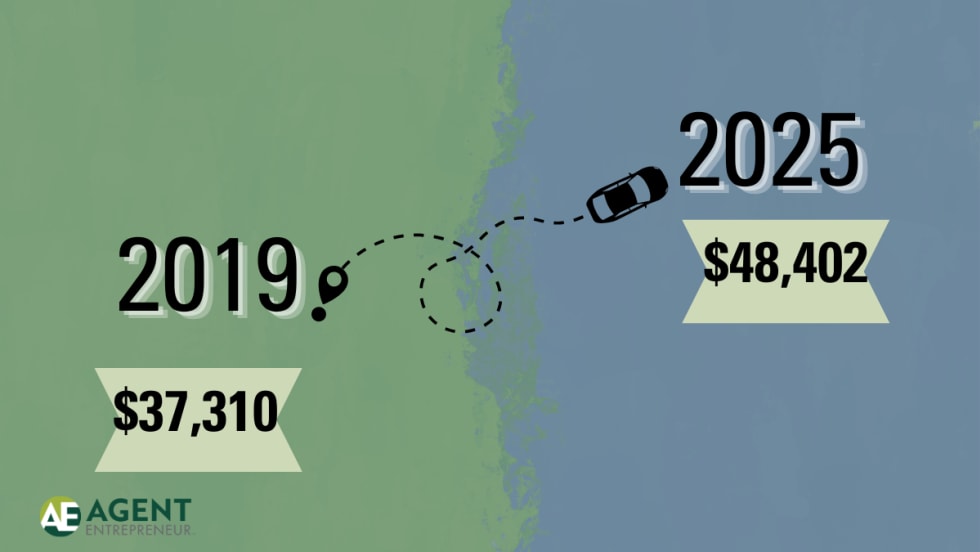
Affordable New Cars a Thing of the Past
More than one out of five new vehicles sell for more than $60,000, according to Edmunds. That's up 7% compared to prepandemic 2019.
Read More →
Legacy Automakers Risk Falling Behind
As legacy automakers, mostly in the U.S. and Japan, have revised their 2030 electric-vehicle sales targets and shifted to a hybrid focus, they risk falling behind new market leaders.
Read More →