



Two Kinds of Agents and the 5 Ps That Separate Them
Follow these key guidelines to distinguish your agency from competitors by adding more value to your dealer clients' businesses.


The five key 'Ps' agents should employ in their business have nothing directly to do with products.
Pexels/Arturo Añez
There are two kinds of people in this world: those who tell the truth and those who tell a better story. In our world, there are also two kinds of agents and partners: Those who truly add value to a dealership and those who say they do.
Dealers, OEMs and leaders know the difference. They see it in the numbers, in the consistency and in the customer experience.
Products are everywhere. Every agent has access to service contracts, gap, tire-and-wheel and ancillary protection. That is not the separator anymore.
The real separator is how you show up.
If you want to move from vendor to partner, it comes down to five things. The Five Ps.
Process
Great agents do not just install a menu. They build a system that works every time.
They help the dealership create a repeatable experience from start to finish. That includes a clean turnover, a structured interview, a consistent menu presentation, and a defined close.
Most stores do not struggle with product availability. They struggle with inconsistency. One manager does it right. Another skips steps. Results bounce around.
A strong agent removes that variability. He or she brings structure, reinforces it, and holds the line.
Process is what turns potential into performance.
People
The biggest opportunity in most dealerships is not product. It is skill. Top agents develop people.
They do not just present in meetings. They get involved in the work, listen to deals, tighten word tracks, and coach managers through real situations. They build confidence, clarity and consistency.
A trained manager with average products will outperform an untrained manager with the best products every time.
If you are not improving the people, you are not improving the store.
Performance
Average agents report numbers. Great agents drive them. They understand per-vehicle retail, product penetration, product index, and chargebacks. More importantly, they connect those numbers to behavior.
They are willing to say what needs to be said:
- Where is the store missing opportunity?
- Who is executing?
- Where is the process breaking?
This is where many agents hesitate. They protect relationships instead of addressing reality.
Dealers and OEMs do not need comfort. They need clarity. Performance improves when truth is part of the conversation.
Protection
Growth without discipline creates risk.
Top agents understand their role in protecting the dealership. They reinforce proper menu usage, support clear disclosures, and eliminate bad habits that create exposure.
They align selling with doing what is right for the customer.
It is easy to push numbers in the short term. It is harder to build something that lasts. One bad practice can undo years of work.
Dealers trust partners who grow the business and protect it at the same time.
Presence
This is where separation becomes obvious.
Weak agents show up when it is time to sell. Strong agents show up when something breaks.
The strong agents help resolve claim issues, step into escalations, and fix breakdowns between the dealership and the administrator. They stay engaged between visits. They stay connected to the operation.
Presence builds trust. It shows the dealer and the OEM that you are invested in the outcome, not just the opportunity.
Bottom Line: The 5 Ps
- Process
- People
- Performance
- Protection
- Presence
Every agent has access to products. That is not your advantage. Your advantage is how you build the operation around those products.
Dealers and OEM partners are not looking for more programs. They are looking for people who improve results, develop teams, protect the business, and show up when it matters.
If you bring the 5 Ps consistently, you become difficult to replace. If you do not, someone else will.
Stay focused on the right things, the right way, every time. That is how agents become partners, and partners become difficult to replace.
And remember, it’s a beautiful day ... to help a customer!
More Sales
Used Lots Getting the Business
Many consumers are seeking out the units to save money, and the demand – higher in July than normal – is keeping supply limited and prices up.
Read More →
Positive Equity Reaches Record High
Mainstream vehicle owners who bought a car seven years ago are likely to have positive equity when trading in for a new vehicle, according to second-quarter Edmunds data.
Read More →
Used Market Stabilizes
The Carfax Used Car Index noted a major drop in used-vehicle price increases in July after several months of hikes.
Read More →
July Auto Sales Simmer
Deliveries were up modestly from a year ago despite still-high prices as OEMs offered more incentives and loan rates eased somewhat.
Read More →
Used Sales Hit Summer Drag
The vacation season, combined with high prices, has dented deliveries and added to inventories, though supply is still slim enough to keep listings elevated.
Read More →
June Automotive Boon?
A forecast for this month’s new-vehicle sales tells a familiar 2026 story: Year-over-year comparisons must be made in light of last year’s aberrations.
Read More →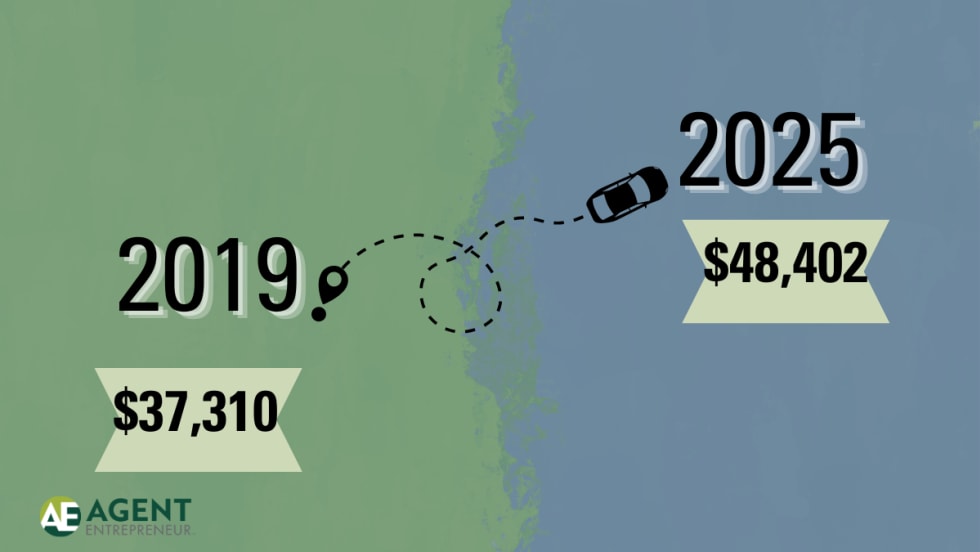
Affordable New Cars a Thing of the Past
More than one out of five new vehicles sell for more than $60,000, according to Edmunds. That's up 7% compared to prepandemic 2019.
Read More →
Legacy Automakers Risk Falling Behind
As legacy automakers, mostly in the U.S. and Japan, have revised their 2030 electric-vehicle sales targets and shifted to a hybrid focus, they risk falling behind new market leaders.
Read More →
New Cars a Tad More Affordable
May averages show that combined circumstances gave auto consumers slightly better buying power for the month, though average prices were up year-over-year.
Read More →
New Vehicles Down for Most Brands
Healthy May sales cut into inventory as automakers kept a tight reign on supply, though some brands ended the month with excess units on the ground.
Read More →