



Trade Dispute Decision Could Move More Auto Manufacturing to Canada, Mexico
Preliminary ruling would give countries more leeway in meeting duty-free threshold.

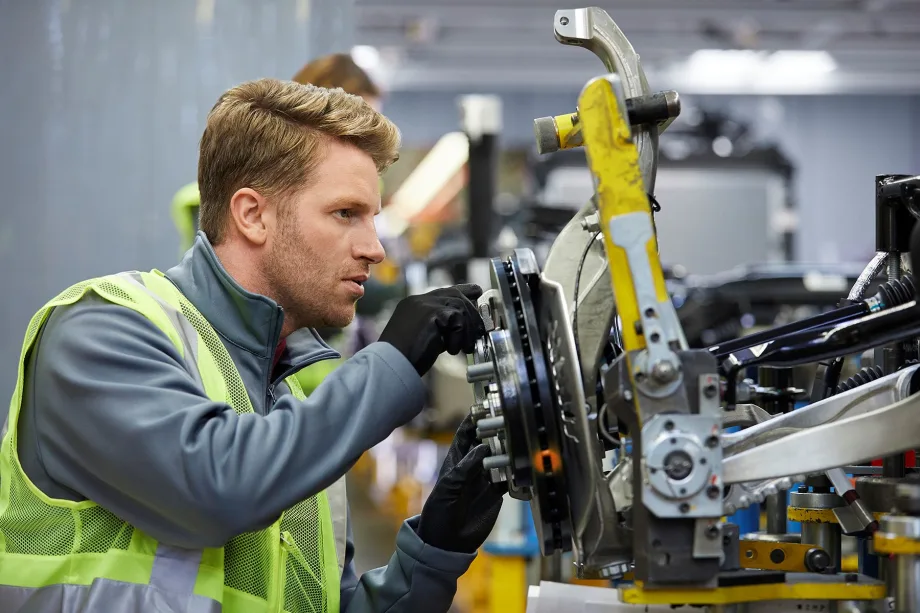
Vehicles are the top manufactured product traded among the three trade partners.
IMAGE: Getty Images/Morsa Images
Canada and Mexico prevailed in a trade fight with the U.S. over vehicles moved across regional borders in a decision that could lead to more auto parts manufacturing in those countries, Bloomberg reported.
The ruling by a panel convened under the 2020 U.S.-Mexico-Canada Agreement issued a preliminary ruling last month that hasn’t yet been made public, the news service said. The three countries have 30 days to respond to it before its final version is issued.
Mexico initiated the challenge in January, Bloomberg reported, to resolve a dispute among the countries over how to calculate the percentage of a vehicle that originates collectively in the three countries. It and Canada say the USMCA allows for more regionally made parts to be covered by tax-free shipping than the U.S. desires, Bloomberg said.
Under the USMCA, which replaced the Clinton-era North American Free Trade Agreement, or NAFTA, at the behest of former President Donald Trump, 75% of a vehicle’s components are to originate in the region to qualify for tax exemption.
The preliminary panel ruling could incentivize manufacturers to make car parts and assemble more cars in Canada and Mexico, particularly the latter, where wages are far lower than those in the U.S., and especially for high-cost components, such as electric batteries, one expert told Bloomberg. He said that the decision could both lower vehicle costs and increase carmaker profits.
The ruling apparently grants leeway in the percentage calculation. The new trade agreement had increased prices of North American-made vehicles due to the difficulty of achieving set domestic content amounts. The U.S. pushed a stricter calculation method than Canada and Mexico to determine parts’ origin, making it harder for plants in those two countries to meet the 75% threshold. NAFTA required a lower, 62.5%, threshold for duty-free shipping.
Vehicles are the top manufactured product traded among the three partners, Bloomberg said.
Originally posted on Auto Dealer Today
More Industry

Auto Affordability Inches Up
The latest Cox Automotive and Moody’s Analytics index shows a slight increase in new-vehicle affordability despite high prices.
Read More →
Ohio Auto Group Under New Ownership
After 79 years with the Schluter family, Mansfield Auto Group has been acquired by Missouri-based Clement Auto Group.
Read More →
RV Group Expands Carolina Footprint
Blue Compass RV Columbia Northeast is the 13th RV dealership owned by Blue Compass in the Carolinas.
Read More →
Agent Acumen
An Agent Summit panel of people who’ve been supporting auto dealers for years gave both timely and timeless advice for those starting out or mulling the prospect.
Read More →
Missed Maintenance Creates Opportunity
As families get back on the road and into daily school routines, service drives have an opportunity to capture customers who are behind on recommended vehicle maintenance.
Read More →
Mitsubishi Unveils U.S. Plan
The automaker announced a strategy that includes an expanded lineup and dealership presence, along with more ‘rugged’ and electric models.
Read More →
Selling to Grow
The question of whether you should sell your agency and if so, when, is up to you. But it’s a question worth asking to ensure you keep the business on the right path for yourself, employees and clients.
Read More →
Recalled Vehicles Hit 5-Year High
Though the number of events has fallen so far this year, impacted units are up significantly. Meanwhile, regulators consider consumer notification changes.
Read More →
Auto Group Acquires Top-Performing Rooftop
Car Pros sold its Kia Huntington Beach location to Sutherlin Automotive Group, marking the buyer’s third location in Southern California.
Read More →
China as Pacesetter
Automotive leaders huddled on where North America stands in the global picture and how it can strengthen its position against the Asian juggernaut’s surging industry.
Read More →