



Toyota Shifting More Authority to U.S. Units

SAN ANTONIO - Years before Toyota Motor Corp.'s quality problems raised doubts about its centralized management style, the automaker already was planning to shift more authority to its U.S. operations to allow them to react faster to changing market conditions, reported The Detroit News.
Now Toyota is pursuing that strategy with renewed vigor, after reviewing the missteps that led to record recalls in its most lucrative market, a top executive said. Since June, Toyota has promoted several U.S. and Canadian executives to build the ranks of future managers for North America.
"We're trying to change the structure," said Atsushi Niimi, executive vice president of Toyota in charge of North America and global manufacturing.
Toyota drafted a plan in 2002 titled "Project Self-Reliance," which was adopted two years later. But it didn't advance far, and when the biggest crisis in Toyota's 53-year history in the United States erupted last year, decision-making was still concentrated at its headquarters deep in the Japanese heartland.
Toyota is moving fast now, appointing four U.S. and Canadian managers to run assembly plants in the past two months. But it also plans to send Japanese executives on North American stints to support the regional operations.
"To promote self-reliance, we have to increase the local capabilities," Niimi said here, in a rare interview with a U.S. newspaper. "During the initial transition period, we'll dispatch Japanese executives to local operations who can make decisions right there."
Those executives also are expected to strengthen the analytic capabilities in the region and transfer expertise across a wide range of areas, from parts procurement to production.
Compared with British giant BP's move to install its first American chief executive after a record oil spill, Toyota's actions seem incremental. But this is a big step for the company that Nissan Motor Co. CEO Carlos Ghosn once described as the most Japanese of the Japanese carmakers.
Some analysts who have followed Toyota for a long time aren't convinced that things will change, even now. "They want to do these things, but they don't have a culture that welcomes that level of participation," said Maryann Keller of Maryann Keller & Associates in Stamford, Conn.
In 2007, sales chief Jim Press became the first non-Japanese member of Toyota's board. But his presence had little impact, and Press left the same year. People familiar with the situation say some of Toyota's top executives opposed plans to shift more authority to regional operations.
Now, however, Toyota's management style has been implicated in the poor handling of the quality problems and recalls. Not only has Toyota's reputation been tarnished, it faces lawsuits and federal investigations in the United States, where it traditionally generates more than half of its profits.
Former U.S. Transportation Secretary Rodney Slater, retained by Toyota to form a panel of experts to review what went wrong, said in April that the panel was looking into management issues at the company, notably "the flow of communications."
Toyota is confident that it has identified the causes of its problems. For one thing, Niimi said, it grew too fast. Toyota's sales expanded 50 percent between 2002 and 2007, when they peaked above 9 million. The organization couldn't keep pace.
Toyota is adamant on two points: It did not cover up defects, and it has seen no evidence of mysterious malfunctions in the vehicles' electronic systems. Two weeks ago, the U.S. Transportation Department said its preliminary review found no electronic problems in the Toyota vehicles that it examined that could cause unintended acceleration.
Still, Toyota executives don't dispute that things did go wrong, as shown by a rash of defects ranging from sticking pedals and rusting frames to cracking parts in steering systems.
As reports of problems piled up in the United States, poor communications stymied the response. The magnitude of the problems wasn't always clear to managers in Japan, Niimi said.
The situation exposed shortcomings in Toyota's organization, which he described as a series of concentric circles with the Toyota City headquarters at the center. All regions report to the center and relay information to other regions through the headquarters.
More responsibility will be delegated to all regional operations, not just North America.
Toyota is still working out the details, Niimi said. If, for instance, U.S. managers want to recall a vehicle but similar models are sold elsewhere in the world, "can the U.S. operation alone make the decision? This is one of the challenges," he said.
U.S. lawmakers and industry experts say Toyota might have limited the damage had the company had a U.S.-based executive who could sign off on recalls.
But even within the United States, the sales, manufacturing and regulatory operations are in different states, and they don't always seem aligned.
Memos written by managers in Toyota's Washington office suggest that cost was a primary concern when negotiating safety recalls with regulators.
And in 2009, Toyota was telling dealers to ensure that vehicles were fitted with the right floor mats. But the urgency of the message wasn't getting through -- even though Toyota had a floor mat-related recall in 2007.
An investigation into the crash last August of a Lexus ES 350 sedan near San Diego found that a wrong-sized mat had trapped the gas pedal. The car had been loaned to California Highway Patrol Officer Mark Saylor by a dealer.
Four people died in the wreck, which focused national and government attention on complaints of runaway Toyotas.
Toyota created internal and outside quality panels and appointed regional managers who can appeal directly to President Akio Toyoda if they see a quality issue requiring urgent action.
Steve St. Angelo, a former General Motors executive, is Toyota's chief quality officer for North America and one of the company's top manufacturing executives in the region.
"On the outside," St. Angelo said, "it may appear like we're adding layers of management, but we're able to make decisions quicker because all the right players are in the room."
The North American managers' influence is growing. "We are much, much more involved in running the business today," he said, "than we've ever been."
More Industry

Penske Auto Group Deal a Record
The deal to take the dealership and transportation services company private sets a new pace for industry buy-sell transactions.
Read More →
War Toll a Damper on Used Auto Prices
Cox Automotive found wholesale depreciation to be elevated in September amid high fuel prices and this year's unusual hurricane season.
Read More →
Bridge the Maintenance Gap
With many drivers missing recommended maintenance, service departments offering transparency and efficiency have a better chance of reaching financially strained consumers.
Read More →
California Store Has New Owner
The longtime dealership in the northern part of the state is known for robust fleet sales and has served the state capital for 115 years.
Read More →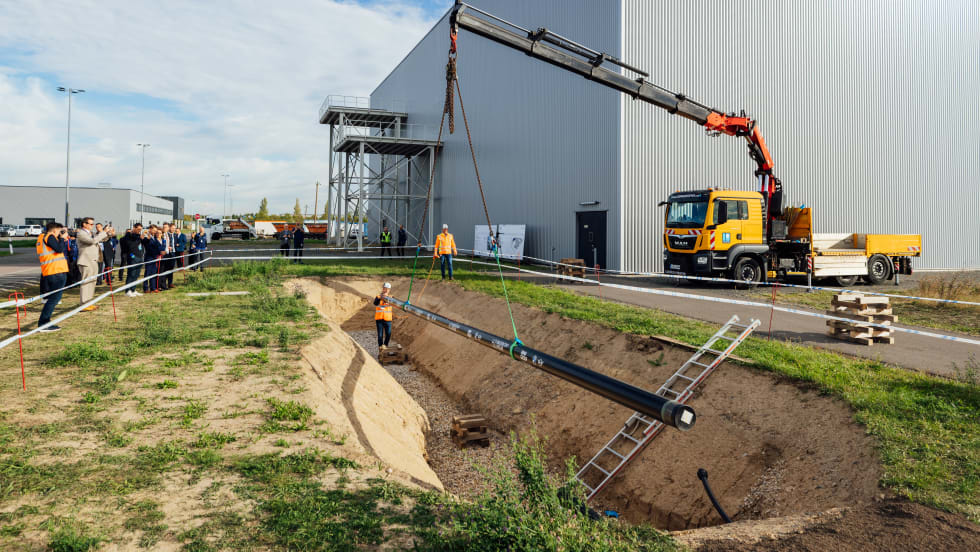
BMW Plant Pursues Cleaner Energy
BMW Group Plant Leipzig has utilized hydrogen to help power its production since 2013, but a new pipeline is planned to take it to another level.
Read More →
Auto Affordability Inches Up
The latest Cox Automotive and Moody’s Analytics index shows a slight increase in new-vehicle affordability despite high prices.
Read More →
Ohio Auto Group Under New Ownership
After 79 years with the Schluter family, Mansfield Auto Group has been acquired by Missouri-based Clement Auto Group.
Read More →
RV Group Expands Carolina Footprint
Blue Compass RV Columbia Northeast is the 13th RV dealership owned by Blue Compass in the Carolinas.
Read More →
Agent Acumen
An Agent Summit panel of people who’ve been supporting auto dealers for years gave both timely and timeless advice for those starting out or mulling the prospect.
Read More →
Missed Maintenance Creates Opportunity
As families get back on the road and into daily school routines, service drives have an opportunity to capture customers who are behind on recommended vehicle maintenance.
Read More →