



Tesla Leads U.S. Luxury Market
In January, Tesla Inc. lead U.S. luxury market sales, lapping segment leader BMW in new vehicle registration, finds Experian data.

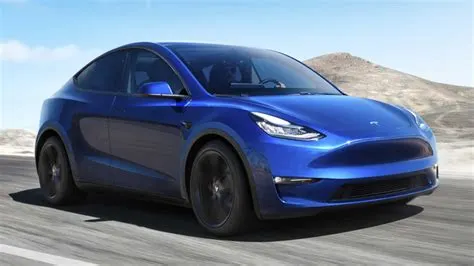
Tesla Model Y
Tesla
In January, Tesla Inc. lead U.S. luxury market sales, lapping segment leader BMW in new vehicle registration, finds Experian data.
Tesla’s registrations rose 49% to 37,162 vehicles, compared to January 2021, Experian reported. In contrast, BMW registrations rose 8.2% to 30,563.
Other competitors in the luxury market saw decreases. Lexus registrations fell 5.5% to 24,843 in January, while Mercedes-Benz registrations plummeted 20% to 22,022, Experian noted.
The EV company, owned by Elon Musk, narrowly lost to BMW for vehicle registrations in 2021. BMW had 347,453 registrations last year, compared to 342,412 for Tesla. Even so, Experian data showed that Tesla had greater momentum, with a 71% sales gain compared to a 24% gain for BMW in 2021.
Registration data includes all models from the luxury automakers, including gasoline-powered vehicles, hybrids and full-electrics.
Tesla has a new Texas plant coming on line that will help it satisfy demand for its electric vehicles and is pushing output to up to 600,000 vehicles at its Fremont, California, plant in 2022.
Tesla's official sales numbers in 2021 showed an 87% increase globally to 936,172 vehicles. The company forecasts at least a 50% increase this year to push deliveries to 1.4 million.
Tesla also has a new factory coming on line in Berlin in 2022 to support vehicle production.
Experian reported that the Tesla Model Y was the top EV in the U.S. at 18,549 registrations, followed by the Tesla Model 3 with 13,604 and the Tesla Model S with 3,903.
The Ford Mustang Mach-E with 2,781 registrations took 4th place, the Nissan Leaf at 1,479 took 5th, and the Hyundai Ioniq 5 at 1,253 registrations held the 6th spot.
Volkswagen's ID4 was No. 7 with 1,153 registrations, followed by the Kia Niro electric at 1,146, the Tesla Model X with 1,106 and the Porsche Taycan in 10th with with 972 registrations.
According to Experian, total U.S. EV registrations rose by 62% in January to 50,384 compared to 31,174 a year earlier. The U.S. light-vehicle market grabbed 4.3% of the total U.S. market in January, compared with 2.3% in 2021.
Originally posted on Auto Dealer Today
More Sales

September Payments Reach New Heights
Despite lower interest rates and longer loan terms, the average new-vehicle monthly payment continues to climb, and transaction prices remain high.
Read More →
Used Lots Getting the Business
Many consumers are seeking out the units to save money, and the demand – higher in July than normal – is keeping supply limited and prices up.
Read More →
Two Kinds of Agents and the 5 Ps That Separate Them
Follow these key guidelines to distinguish your agency from competitors by adding more value to your dealer clients' businesses.
Read More →
Positive Equity Reaches Record High
Mainstream vehicle owners who bought a car seven years ago are likely to have positive equity when trading in for a new vehicle, according to second-quarter Edmunds data.
Read More →
Used Market Stabilizes
The Carfax Used Car Index noted a major drop in used-vehicle price increases in July after several months of hikes.
Read More →
July Auto Sales Simmer
Deliveries were up modestly from a year ago despite still-high prices as OEMs offered more incentives and loan rates eased somewhat.
Read More →
Used Sales Hit Summer Drag
The vacation season, combined with high prices, has dented deliveries and added to inventories, though supply is still slim enough to keep listings elevated.
Read More →
June Automotive Boon?
A forecast for this month’s new-vehicle sales tells a familiar 2026 story: Year-over-year comparisons must be made in light of last year’s aberrations.
Read More →
Affordable New Cars a Thing of the Past
More than one out of five new vehicles sell for more than $60,000, according to Edmunds. That's up 7% compared to prepandemic 2019.
Read More →
Legacy Automakers Risk Falling Behind
As legacy automakers, mostly in the U.S. and Japan, have revised their 2030 electric-vehicle sales targets and shifted to a hybrid focus, they risk falling behind new market leaders.
Read More →