



Semiconductor Supply Crisis Abated
Report shows industry has adapted, though long-term effect remains, and pressure increases as autos require more chips.


Pressure on the supply chain will likely continue as chips demand from the auto industry grows with increasing complexity.
IMAGE: Pexels/Anton Belitskly
The worst of the semiconductor shortage appears to be over as the brunt of the pandemic’s effects fade, S&P Global Mobility said this week.
The research and data provider says chip supply remains restricted, there’s now more predictability, allowing automakers to adapt production and therefore avoid the kind of lost output seen in 2021 and 2022. Even so, S&P says the prepandemic trajectory toward 100 million in global auto production per year is delayed by a decade due to the painful idle.
S&P arrived at the loss numbers by comparing manufacturer production announcements with its production-planning volume estimates.
It estimates that 9.5 light-vehicle production units were lost worldwide at the height of the crisis in 2021, a direct effect of the shortage. The loss was concentrated in the third quarter, when it says the global industry experienced a 3.5 million-unit loss. Conditions started to ease in 2022, which saw just a comparatively small 3 million-unit loss.
In the first half of this year, S&P estimates production losses resulting from semiconductor-supply issues were at 524,000 units.
S&P says the semiconductor supply chain has always experienced hiccups but that they were temporary and therefore manageable with limited effect on service. The pandemic resulted in “wholesale shortages among virtually all suppliers.”
"We are now in a position where the auto industry has adapted to a constrained supply, and as a result is much less likely to be hit by significant disruption," said Mark Fulthorpe, S&P Global Mobility executive director of global light-vehicle production. "With the current semiconductor supply levels, we estimate that 22 million units of global light-vehicle production per quarter could be supported."
Pressure on the supply chain will likely continue as chips demand from the auto industry grows with increasing complexity among infotainment, safety and autonomy systems, S&P says.
Originally posted on Auto Dealer Today
More Industry

Auto Affordability Inches Up
The latest Cox Automotive and Moody’s Analytics index shows a slight increase in new-vehicle affordability despite high prices.
Read More →
Ohio Auto Group Under New Ownership
After 79 years with the Schluter family, Mansfield Auto Group has been acquired by Missouri-based Clement Auto Group.
Read More →
RV Group Expands Carolina Footprint
Blue Compass RV Columbia Northeast is the 13th RV dealership owned by Blue Compass in the Carolinas.
Read More →
Agent Acumen
An Agent Summit panel of people who’ve been supporting auto dealers for years gave both timely and timeless advice for those starting out or mulling the prospect.
Read More →
Missed Maintenance Creates Opportunity
As families get back on the road and into daily school routines, service drives have an opportunity to capture customers who are behind on recommended vehicle maintenance.
Read More →
Mitsubishi Unveils U.S. Plan
The automaker announced a strategy that includes an expanded lineup and dealership presence, along with more ‘rugged’ and electric models.
Read More →
Selling to Grow
The question of whether you should sell your agency and if so, when, is up to you. But it’s a question worth asking to ensure you keep the business on the right path for yourself, employees and clients.
Read More →
Recalled Vehicles Hit 5-Year High
Though the number of events has fallen so far this year, impacted units are up significantly. Meanwhile, regulators consider consumer notification changes.
Read More →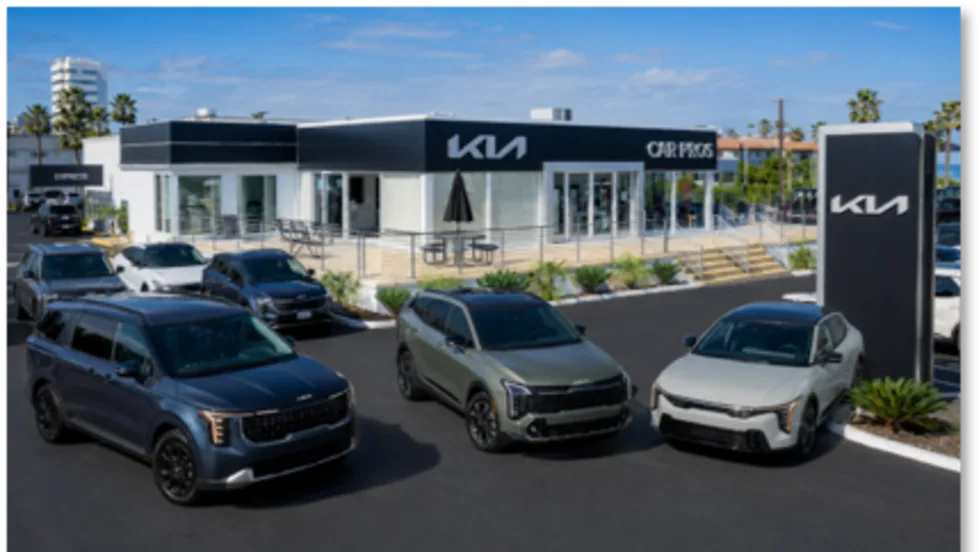
Auto Group Acquires Top-Performing Rooftop
Car Pros sold its Kia Huntington Beach location to Sutherlin Automotive Group, marking the buyer’s third location in Southern California.
Read More →
China as Pacesetter
Automotive leaders huddled on where North America stands in the global picture and how it can strengthen its position against the Asian juggernaut’s surging industry.
Read More →