



New Data Shows Delinquencies Remain Low Amid Rising Average Vehicle Loan Amounts
Experian’s "State of the Automotive Finance Market: Q3 2021" report finds delinquencies remain lower than pre-pandemic levels.


Experian’s "State of the Automotive Finance Market: Q3 2021" report finds delinquencies remain lower than pre-pandemic levels.
SCHAUMBURG, Ill. — The automotive industry has seen notable increases in average vehicle loan amounts and monthly payments over the past few quarters, as it continues to grapple with inventory shortages and other challenges. According to Experian’s latest State of the Automotive Finance Market report, the average new vehicle loan amount increased 8.5% year-over-year, increasing to $37,280 in Q3 2021, from $34,682 in Q3 2020. The average used vehicle loan amount saw a more significant increase—more than 20% year-over-year—jumping to $25,909 in Q3 2021, from $21,622 in Q3 2020. Similarly, average monthly payments increased, reaching $609 for new vehicle loans in Q3 2021, up from $565 in Q3 2020, and $465 for used vehicle loans, an increase from $401 over the same time frame.
With the ongoing inventory shortages disrupting the industry and causing vehicle prices to increase, some industry pundits have affordability concerns; however, it’s notable that 30- and 60-day delinquency rates remain low. Thirty-day delinquencies saw a minimal uptick during the quarter, increasing to 1.66% compared to 1.65% in Q3 2020, while 60-day delinquencies remained flat at 0.55% year-over-year. In addition to the year-over-year stability, these numbers remain notably lower than pre-pandemic levels. In Q3 2019, the 30-day delinquency rate was 2.35% in Q3 2019, while the 60-day delinquency rate was 0.79%.
“Vehicle prices have been on the rise for some time, so it’s a positive sign to see delinquencies remain so stable. Consumers are demonstrating their ability to manage these larger loans and higher monthly payments,” said Melinda Zabritski, Experian’s senior director of automotive financial solutions. “With the sizable increases that we’ve seen in loan amounts this quarter, delinquencies will be an important metric to monitor in the quarters tocome.”
In addition to lower delinquency rates, another positive trend has been the continued decrease of interest rates, both for new and used vehicle loans. In Q3 2021, the average interest rate for a new vehicle loan decreased to 4.05%, from 4.23% in Q3 2020. The average interest rate for used vehicles saw a similar decrease, to 7.98%from 8.39% year-over-year.
Highlighting the Used Vehicle Market
To add more context to the impact of the current inventory shortage, Experian’s latest report highlighted additional data about the used vehicle finance market. Since used vehicle loan amounts grew significantly at 20% year-over-year, affordability remains a point of interest. But taking a closer look at the data broken out by model year, much of the higher monthly payments can be attributed to late-model vehicles. For example, the average monthly payment at franchise dealerships dips below the $400 mark with the 2014 model year, at $391 in Q3 2021, while for independent dealers, this happens with the 2013 model year, with an average monthly payment of $385.
“Since most consumers shop based on monthly payments, there might be a bit of sticker shock for some, particularly those that have been out of the market for a few years. That said, consumers can still find comparable monthly payments—they may just have to go back a few model years in order to find it,” Zabritski continued. “It’s important for dealers to level-set expectations for consumers re-entering the market. These kinds of data points can help inform decision making as lenders and dealers look to help consumers secure the vehicle that best fitstheir budget and needs.”
Even with higher average monthly payments in the used vehicle space, delinquency rates remain low. For the five most recent model years (2017 – 2021), delinquency rates remain under 0.5%, and not until you get into much older model years, such as 2003, do those rates surpass 1%. Given that the most recent model years are the ones with higher average loan amounts and monthly payments, it’s promising that these delinquency rates remainlow, overall.
In addition, the study found the most financed used vehicle in Q3 2021 was the 2018 Ford F150, which made up 0.67% of used vehicle financing. Rounding out the top five are the 2019 RAM 1500 (0.59%), the 2018 Toyota RAV4 (0.48%), the 2018 Nissan Rouge (0.48%), and the 2018 Honda Civic (0.44%). With only one sedan making it into the top five financed used vehicles, the data shows consumers continue to prefer larger, more expensive vehicles, such as full-sized pickups, SUVs and CUVs, which typically come with larger loans and monthlypayments. It’s important to note, more than 50% of the new vehicle market are SUVs; an indicator that the used vehicle market could trend toward larger vehicles for the foreseeable future.
Additional findings for Q3 2021:
Overall loan balances grew 8% year-over-year, reaching $1.293 trillion in Q3 2021, compared to $1.2trillion in Q3 2020.
Leasing rates continued to be down, with leasing comprising only 24.03% of new vehicle financing in Q32021, compared to 27.62% in Q3 2020.
Honda holds the largest market share of leased vehicles in Q3 2021, at 12.38%, followed by Toyota (10.64%)and Ford (6.19%).
The average credit score for a used vehicle loan increased nine points, from 666 in Q3 2020 to 675 in Q3 2021; the average credit score for a new vehicle loan increased one point year- over-year, reaching 733.
The automotive finance market continued to become more prime: prime and super prime financing made up66.36% of total financing in Q3 2021, compared to 64.7% in Q3 2020.
To learn more, watch the entire State of the Automotive Finance Market: Q3 2021 webinar.
Originally posted on F&I and Showroom
More Sales

September Payments Reach New Heights
Despite lower interest rates and longer loan terms, the average new-vehicle monthly payment continues to climb, and transaction prices remain high.
Read More →
Used Lots Getting the Business
Many consumers are seeking out the units to save money, and the demand – higher in July than normal – is keeping supply limited and prices up.
Read More →
Two Kinds of Agents and the 5 Ps That Separate Them
Follow these key guidelines to distinguish your agency from competitors by adding more value to your dealer clients' businesses.
Read More →
Positive Equity Reaches Record High
Mainstream vehicle owners who bought a car seven years ago are likely to have positive equity when trading in for a new vehicle, according to second-quarter Edmunds data.
Read More →
Used Market Stabilizes
The Carfax Used Car Index noted a major drop in used-vehicle price increases in July after several months of hikes.
Read More →
July Auto Sales Simmer
Deliveries were up modestly from a year ago despite still-high prices as OEMs offered more incentives and loan rates eased somewhat.
Read More →
Used Sales Hit Summer Drag
The vacation season, combined with high prices, has dented deliveries and added to inventories, though supply is still slim enough to keep listings elevated.
Read More →
June Automotive Boon?
A forecast for this month’s new-vehicle sales tells a familiar 2026 story: Year-over-year comparisons must be made in light of last year’s aberrations.
Read More →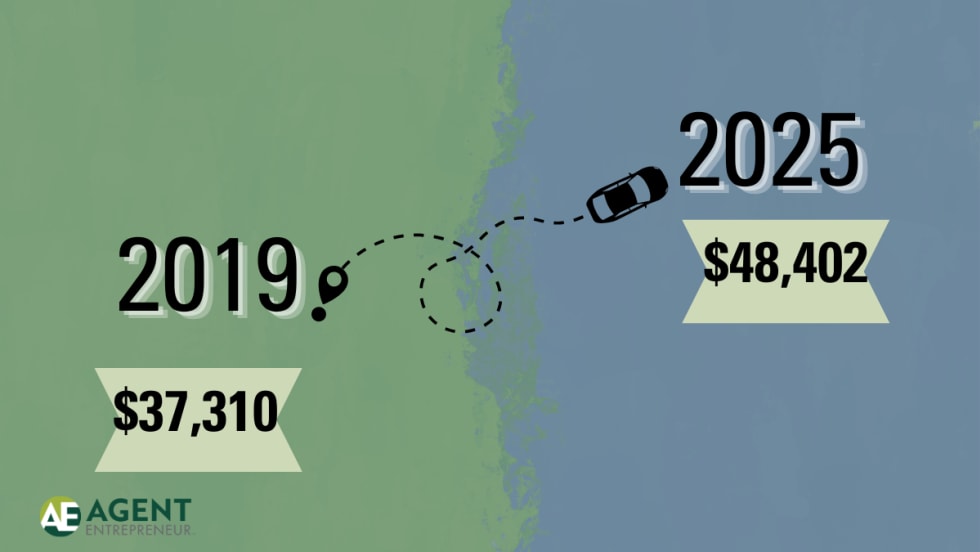
Affordable New Cars a Thing of the Past
More than one out of five new vehicles sell for more than $60,000, according to Edmunds. That's up 7% compared to prepandemic 2019.
Read More →
Legacy Automakers Risk Falling Behind
As legacy automakers, mostly in the U.S. and Japan, have revised their 2030 electric-vehicle sales targets and shifted to a hybrid focus, they risk falling behind new market leaders.
Read More →