



NADA Supports Bipartisan Effort to Reform CFPB Auto Lending Guidance
WASHINGTON – America’s new-car dealers convene on Capitol Hill this week to urge Members of Congress to cosponsor H.R. 5403—the Stutzman-Perlmutter bill. The National Automobile Dealers Association is urging Congress to pass a new bipartisan bill (H.R. 5403) that nullifies the Consumer Financial Protection Bureau’s flawed guidance on auto lending and requires more transparency and ... Read More »

WASHINGTON – America’s new-car dealers convene on Capitol Hill this week to urge Members of Congress to cosponsor H.R. 5403—the Stutzman-Perlmutter bill.
The National Automobile Dealers Association is urging Congress to pass a new bipartisan bill (H.R. 5403) that nullifies the Consumer Financial Protection Bureau’s flawed guidance on auto lending and requires more transparency and accountability from the agency on future guidance.
“The CFPB’s actions will likely raise the cost of credit for car buyers,” said NADA Chairman Forrest McConnell. “The CFPB is attempting to change the $905 billion auto loan market and limit market competition without prior public comment and without analyzing the impact of its guidance on consumers.”
The new bill, “Reforming CFPB Indirect Auto Financing Guidance Act,” would allow the agency to reissue its guidance under a more transparent process. The measure is sponsored by Reps. Marlin Stutzman (R-Ind.) and Ed Perlmutter (D-Colo.), and was introduced Sept. 8. The bill is a narrower version of H.R. 4811, which was reported out of the House Financial Services Committee by a bipartisan vote of 35-24 in June.
“A majority of car buyers choose to finance their purchases through indirect financing at dealerships, which is always optional,” added McConnell, a Honda/Acura dealer from Montgomery, Ala. “Dealers often discount these interest rates to earn their customers’ business.”
In March 2013, the CFPB issued guidance that threatens to eliminate the flexibility of new-car dealerships to discount the interest rate offered to consumers to finance vehicle purchases. The CFPB claims that negotiated interest rates between dealers and their customers create a significant risk of unintentional “disparate impact” discrimination. However, there are a variety of legitimate business-related factors that can affect finance rates, such as beating a competing rate.
“H.R. 5403 is needed because it requires the CFPB to follow a transparent process when issuing auto finance guidance,” McConnell said. “The bill would rescind the 2013 auto finance guidance and require public participation for future guidance before it is issued.”
More Industry

Autos More Appealing
Consumers gave new cars better scores again this year for design, performance and more as mass-market brands kept gaining on premium lineups, JD Power found in an annual poll.
Read More →
Used EVs Defy Overall Market
While the used-car market saw three months of price declines or stagnation, the used EV segment did the opposite – rising for three straight months.
Read More →
Trade-Ins in Negative Equity Reach New Heights
As such trade-ins rise in frequency, so do monthly loan payment amounts and interest rates, according to second-quarter data compiled by Edmunds.
Read More →
Gone to the Dogs
A Stellantis brand decided to have some fun with one of its SUVs’ design to address growing emphasis on family pets.
Read More →
OEM Poll Sees Industry Evolution
Kerrigan Advisors’ survey of automakers finds that tariffs, technology, network tightening and other factors are poised to reshape auto retail.
Read More →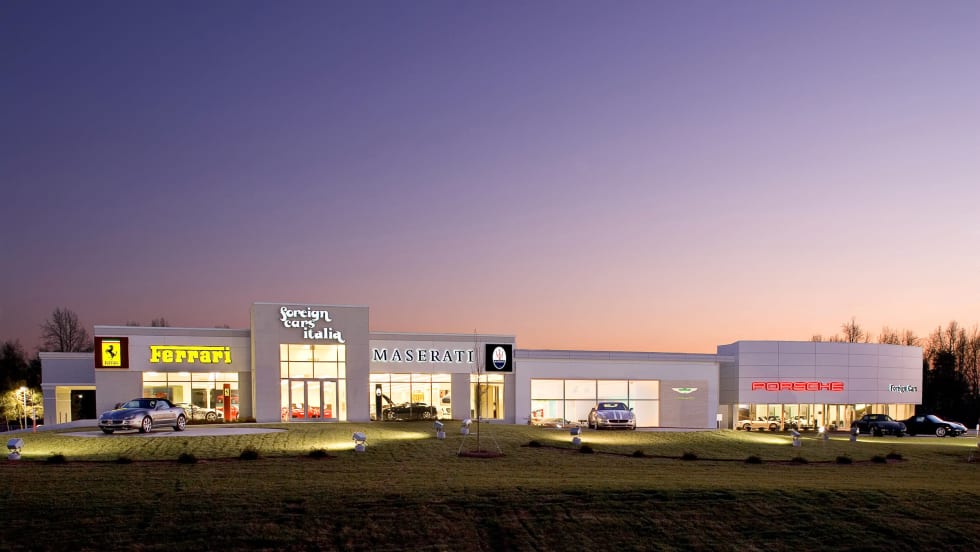
Luxe N.C. Dealerships Change Hands
A collection of Italian and English brand franchises were handed off to the owner’s friend in the business and include the Carolinas’ only Ferrari retail stores.
Read More →
Exposure Drives Interest in Chinese Cars
At a recent demonstration, consumers had the chance to ride in a Chinese-branded vehicle, a firsthand experience that improved their perceptions and purchase intent.
Read More →
Automotive Consumers Sink Further in Debt
Most financing metrics hit records in the second quarter as more buyers locked themselves into long terms and high monthly payments.
Read More →
Agent Advocate
Rob Mancuso, who comes from a long line of auto dealers, values general agents’ place in the industry and makes a case for them taking an even bigger seat at the table.
Read More →
Driving Under Distraction
Though consumers gave higher marks to new vehicles in JD Power’s most recent initial-quality poll, high-tech interference worsened, pointing to craving for simplicity.
Read More →