



NADA Chairman: Keep Automotive Retailing and Financing Competitive for Car Buyers
DETROIT, Mich. – Competition in automotive retailing is the cornerstone of the franchised new-car dealer network which benefits both car buyers and automakers, said Forrest McConnell, chairman of the National Automobile Dealers Association. “Competing with the dealer down the street or on the Internet benefits car buyers across the nation,” McConnell said today in remarks ... Read More »

DETROIT, Mich. – Competition in automotive retailing is the cornerstone of the franchised new-car dealer network which benefits both car buyers and automakers, said Forrest McConnell, chairman of the National Automobile Dealers Association.
“Competing with the dealer down the street or on the Internet benefits car buyers across the nation,” McConnell said today in remarks to the Automotive Press Association in Detroit. Dealers compete fiercely against each other on vehicle pricing, financing and service which reduces costs for consumers, he said.
As a percentage of total sales in the new, used and service/parts departments, net pretax profit at new-car dealerships was just 2.2 percent in 2013.
“Our manufacturers benefit from a high return on capital in making vehicles as opposed to the low margin of selling them because dealers bear the cost and risks of these investments—at virtually no cost to the manufacturer,” he said.
McConnell, a Honda/Acura dealer from Montgomery, Ala., said there’s a simple reason why manufacturers use dealers to sell new cars.
“The franchised dealer network is the most competitive, the most cost-effective and most pro-consumer model for buying and selling new cars and trucks,” he said. “If manufacturers sold directly to customers, there would be zero competition in pricing vehicles, parts and service. Car buyers would be stuck paying the full sticker price—because there would be no ‘same brand dealership’ to shop and compare prices.”
McConnell added that dealer-assisted financing, which is optional, increases competition for car buyers, and the retail finance rate offered by dealers is often more competitive than a bank or credit union.
“We work with multiple lenders who compete for the dealers’ business by offering us low financing rates,” he said. “The bottom line is this: dealer-assisted financing provides car buyers with the ability to get a discounted auto rate from the dealer. And low rates mean lower car payments for our customers. But the government is trying to take away a customer’s right to get that discount.”
The controversy with the CFPB has been ongoing since March 2013 when the agency issued its ‘guidance’ on indirect auto lending which took the wrong direction by attempting to eliminate the flexibility of dealers to discount financing rates offered to their customers by pressuring lenders to switch to a flat fee compensation system.
“We can all agree on one thing: we are all against discrimination. There’s no room for it in this business or any other business. But what we can’t agree on is the CFPB’s insistence on a flat fee model—which eliminates a customer’s right to get a discount,” McConnell said. “Right now, dealers are incentivized to select the lender that offers us the lowest available rate. The current system works because it forces banks to compete and offer dealers low rates to get their business. Next, dealers have to discount those rates to beat the competition or meet a customer’s budget. Those two competitive factors drive rates lower for our customers.
“What happens to customers if the current system changes to flat fees,” McConnell asked? “Lenders will want to pay higher flats to get business. Not lower interest rates. That would give dealers the incentive to select the lender that offers the highest flat fee.” That doesn’t help car buyers save money, he added.
Last January, NADA developed an optional Fair Credit Compliance Policy and Program for dealerships, which was released in partnership with the National Association of Minority Automobile Dealers and the American International Automobile Dealers Association.
“We’ve come up with a solution to address all the risks the CFPB talks about—a dealer following the program sets a standard starting point for dealer reserve,” McConnell said. “This gives a dealer who adopts the program the ability to discount the finance rate when there is a legitimate business reason—like helping a customer fit a monthly payment plan into their budget.”
Since March 2013, the industry—from dealers to lenders—and Congress have worked to bring greater transparency and accountability to the CFPB.
“There haven’t been many issues lately where members of Congress have seen eye to eye,” he added. “But the CFPB’s flawed position is one of them.”
Last month, Reps. Ed Perlmutter (D-Colo.) and Marlin Stutzman (R-Ind.) introduced H.R. 5403, a bipartisan bill to nullify the CFPB’s auto lending ‘guidance.’ So far, 69 Republicans and 40 Democrats in the U.S. House of Representatives support the dealer’s ability to discount the rate for our customers, he said.
More Industry

Autos More Appealing
Consumers gave new cars better scores again this year for design, performance and more as mass-market brands kept gaining on premium lineups, JD Power found in an annual poll.
Read More →
Used EVs Defy Overall Market
While the used-car market saw three months of price declines or stagnation, the used EV segment did the opposite – rising for three straight months.
Read More →
Gone to the Dogs
A Stellantis brand decided to have some fun with one of its SUVs’ design to address growing emphasis on family pets.
Read More →
OEM Poll Sees Industry Evolution
Kerrigan Advisors’ survey of automakers finds that tariffs, technology, network tightening and other factors are poised to reshape auto retail.
Read More →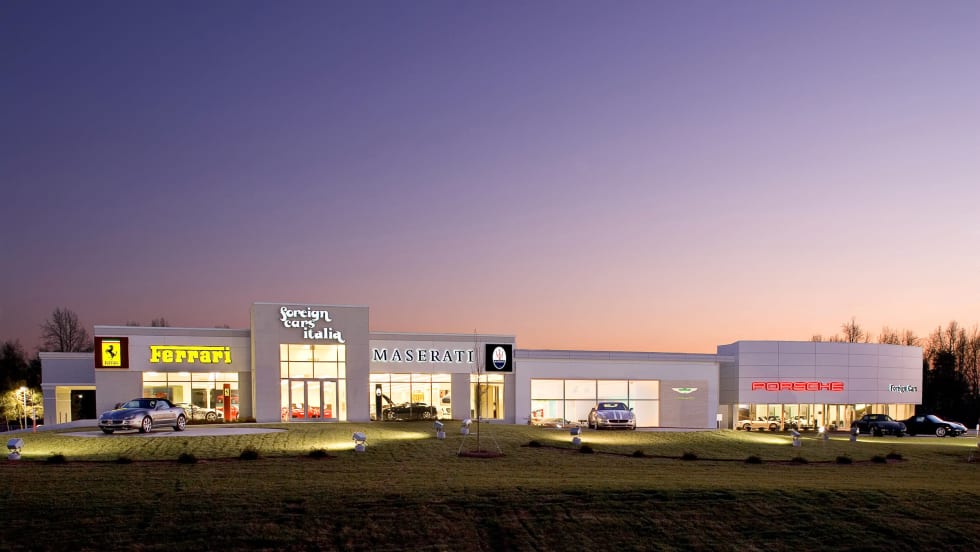
Luxe N.C. Dealerships Change Hands
A collection of Italian and English brand franchises were handed off to the owner’s friend in the business and include the Carolinas’ only Ferrari retail stores.
Read More →
Exposure Drives Interest in Chinese Cars
At a recent demonstration, consumers had the chance to ride in a Chinese-branded vehicle, a firsthand experience that improved their perceptions and purchase intent.
Read More →
Automotive Consumers Sink Further in Debt
Most financing metrics hit records in the second quarter as more buyers locked themselves into long terms and high monthly payments.
Read More →
Agent Advocate
Rob Mancuso, who comes from a long line of auto dealers, values general agents’ place in the industry and makes a case for them taking an even bigger seat at the table.
Read More →
Driving Under Distraction
Though consumers gave higher marks to new vehicles in JD Power’s most recent initial-quality poll, high-tech interference worsened, pointing to craving for simplicity.
Read More →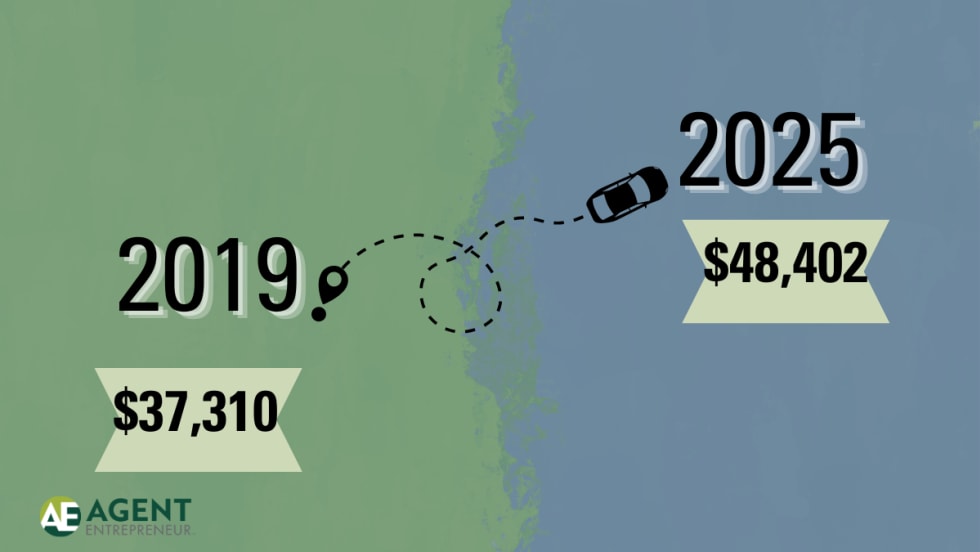
Affordable New Cars a Thing of the Past
More than one out of five new vehicles sell for more than $60,000, according to Edmunds. That's up 7% compared to prepandemic 2019.
Read More →