



Global Auto Execs Predict Stability, Investment and Growth in Next 5 Years

DETROIT - While still emerging from a period of historical crisis few had anticipated, senior global automotive executives see their industry stabilizing over the next five years with new investment and growth on the horizon, according to the 11th annual global automotive survey by KPMG LLP, the U.S. audit, tax and advisory firm.
However, the 200 senior executives representing vehicle manufacturers and suppliers worldwide, say they continue to face certain economic headwinds including high unemployment rates, particularly in the United States, better but still constrained credit markets and lack of clarity with regard to the impact of new government regulations and stimulus programs. Accordingly, executives still see profitability as a significant issue this year; although just over one-quarter of them expect vehicle manufacturer profits to increase, while almost 40 percent expected profits to be stable and 33 percent expect a decline.
"While this year's survey results are considerably more optimistic than last year, global executives will remain cautious, continuing to keep a close eye on cash flow and cost control, which is not a surprise given the tumult in the industry," said Gary Silberg, National Automotive Industry leader for KPMG LLP. "The respondents believe the winners will be those companies able to gain market share in an uncertain economic environment while also leveraging global products and supply chains."
Predicting Market Share Winners
When asked to predict global market share winners over the next five years, the auto executives identified various new Chinese and Indian vehicle manufacturers, as well as existing global players Kia/Hyundai, Toyota, Honda and Volkswagen as leaders again this year. Ford climbed more than two-fold among the respondents in this year's survey, as 29 percent of executives expect its market share to increase this year versus 13 percent of the respondents last year. General Motors and Chrysler remained on the low rung of market share expectations.
Most Important Issues
When asked about the most important issues affecting the global auto industry over the next 12 months, 85 percent of the respondents said developing new technologies, while just over 84 percent pointed to developing new products and another 80 percent said reducing costs.
In a related question, nine of 10 executives in the KPMG survey expect vehicle manufacturers to increase their investment over the next two years in new technologies and new models/products while just fewer than 30 percent expect investment in new plants. Asked the same question about an increase in investment by suppliers, 91 percent of the execs said they expected increased investment in new technologies, 78 percent in new models/products and only 28 percent in new plants.
"With the execs telling us that investment is back on the table this year, the vehicle manufacturers understand there is pent-up demand for new cars, especially in the United States, which still has one of the highest per capita car ownership rate in the world," said Silberg. "With a growing population, a steady scrappage rate of old vehicles, and Americans' love for the open road, the U.S. auto industry could be in for a better year ahead, particularly if unemployment numbers fall."
Identifying Demand
The KPMG survey asked the executives to identify the regions (not including the BRIC countries of Brazil, Russia, India and China), where consumer demand for autos will grow the fastest over the next five years. More than 37 percent of the execs believe the fastest growth in auto sales will occur in Southeast Asia while just over 30 percent believe that growth will occur in Eastern Europe.
In the KPMG survey, conducted during late September through early November 2009, the 200 executives interviewed represented vehicle manufacturers and suppliers in the United States, Canada, Mexico, United Kingdom, France, Germany, Sweden, India, China, South Korea, Japan, Thailand, Brazil, Spain, Poland, Slovakia, Russia, Czech Republic, Italy, Switzerland, South Africa and Australia. KPMG has released an annual survey of automotive executives expressing their views on the state of the industry since 1999.
More Industry

Auto Affordability Inches Up
The latest Cox Automotive and Moody’s Analytics index shows a slight increase in new-vehicle affordability despite high prices.
Read More →
Ohio Auto Group Under New Ownership
After 79 years with the Schluter family, Mansfield Auto Group has been acquired by Missouri-based Clement Auto Group.
Read More →
RV Group Expands Carolina Footprint
Blue Compass RV Columbia Northeast is the 13th RV dealership owned by Blue Compass in the Carolinas.
Read More →
Agent Acumen
An Agent Summit panel of people who’ve been supporting auto dealers for years gave both timely and timeless advice for those starting out or mulling the prospect.
Read More →
Missed Maintenance Creates Opportunity
As families get back on the road and into daily school routines, service drives have an opportunity to capture customers who are behind on recommended vehicle maintenance.
Read More →
Mitsubishi Unveils U.S. Plan
The automaker announced a strategy that includes an expanded lineup and dealership presence, along with more ‘rugged’ and electric models.
Read More →
Selling to Grow
The question of whether you should sell your agency and if so, when, is up to you. But it’s a question worth asking to ensure you keep the business on the right path for yourself, employees and clients.
Read More →
Recalled Vehicles Hit 5-Year High
Though the number of events has fallen so far this year, impacted units are up significantly. Meanwhile, regulators consider consumer notification changes.
Read More →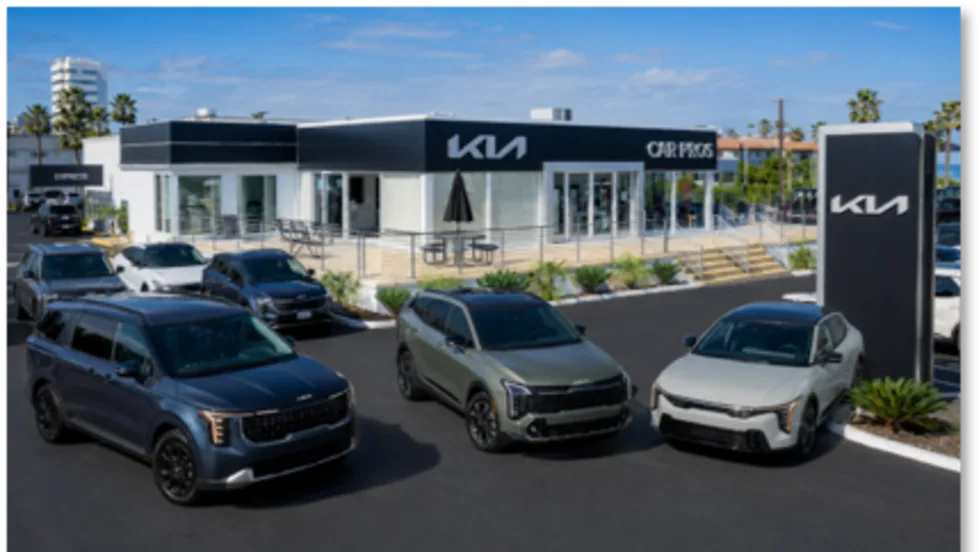
Auto Group Acquires Top-Performing Rooftop
Car Pros sold its Kia Huntington Beach location to Sutherlin Automotive Group, marking the buyer’s third location in Southern California.
Read More →
China as Pacesetter
Automotive leaders huddled on where North America stands in the global picture and how it can strengthen its position against the Asian juggernaut’s surging industry.
Read More →