



Ford Motors and GM Race to Capture EV Market
The automakers take two very different approaches to EV production but with many of the same goals in mind.

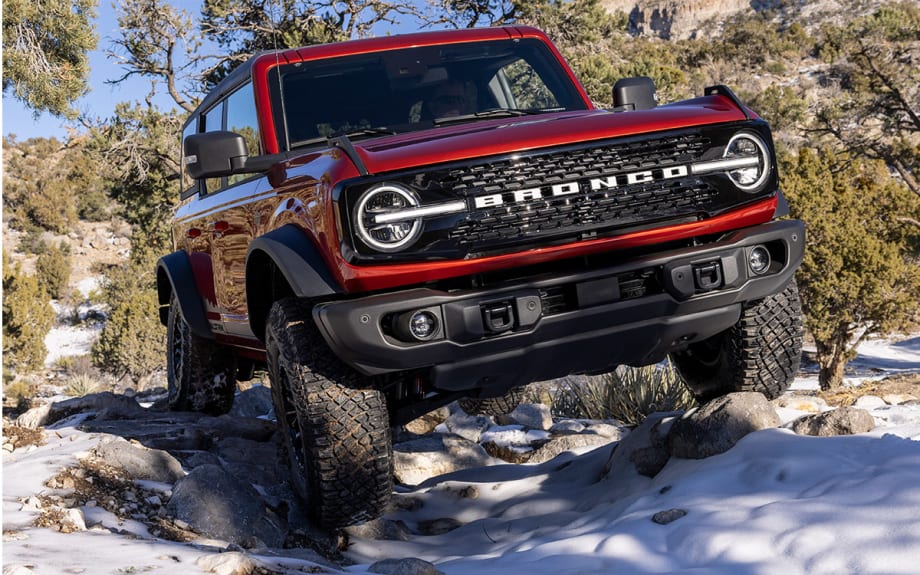
The automakers take two very different approaches to EV production but with many of the same goals in mind.
IMAGE: Ford
Ford Motors and GM have always been in a competitive race against each other. Each hoping to race ahead in sales, performance and styling of new vehicles.
Most recently GM has gained a competitive edge with better financials and early moves to electric vehicles (EVs). The automaker’s third quarter results bested Ford’s by a landslide.
But when it comes to EVs, the future remains uncertain. GM has diversified as much as possible around its emerging battery and self-driving vehicle businesses as part of a plan to exclusively offer EVs by 2035. Ford is also driving toward EVs while also maintaining investments in its traditional businesses. Ford plans at least 40% of its global sales to be EVs by 2030.
Wall Street analysts report they’re watching carefully to see when or if one of the Detroit automakers will distinguish itself.
“It’s a very competitive industry, and they all tend to be pretty fast followers from that regard,” Edward Jones analyst Jeff Windau told CNBC. “It becomes difficult to really be differentiated over a long period of time.”
GM restructured years ago under CEO Mary Barra, a move that is helping ease the company's challenges with the chip shortage. Ford, however, more recently took on a broad restructuring as part of CEO Jim Farley’s turnaround plan, Ford+.
Still, Wall Street maintains an average rating of “overweight” on both stocks, finds analyst reports compiled by FactSet. Both automakers' financials are off more than 30% this year.
Ford recently announced plans to disband its Argo AI autonomous vehicle unit, saying that autonomous vehicles will not be a profit center for some time. But GM Cruise CEO Kyle Vogt remains upbeat about the growth of the company’s robotaxi business, citing a “rapid scaling phase” with “meaningful revenue” in 2023. The automaker recently expanded its robotaxi service to cover most of San Francisco.
“GM clearly is looking at this as a longer-term opportunity that they want to be part of,” Sam Abuelsamid, principal analyst at Guidehouse Insights, told CNBC. “Ford is saying, ‘We think they’ll get there eventually, but it’s going to take a lot longer, and we have other fish to fry right now.’”
GM also was among the first automakers to announce billions of dollars in new EV investments and set a target to end sales of vehicles powered by internal combustion engines by 2035.
Still, Ford far outsells GM in EVs, while GM prioritizes luxury models with its new battery technologies, including $100,000+ Hummers and Bolt EVs, which use older battery technology. Ford sold 41,236 EVs through the first nine months of this year, while GM sold 22,830, most of which were older Bolt models.
Ford benefits from an EV strategy that enables it to ramp up production faster than GM and get more vehicles to dealers. GM, in contrast, has built a dedicated EV architecture, something Ford plans to do eventually. Ford's current approach has driven a head start in EV sales. Ford also continues to produce hybrids and plug-in hybrid electric vehicles, which GM has opted not to do.
Both companies are in a dead heat to produce battery technologies in the U.S. GM is the only automaker besides Tesla that produces its own battery cells through a joint venture in the U.S. The company has announced plans for four joint venture battery plants in the U.S., including one in Ohio that started commercial production of the cells earlier this year. Ford has similar plans and has allocated $5.8 billion to build twin lithium-ion battery plants in central Kentucky through a joint venture with South Korea-based SK. However, production will not start until 2026.
Originally posted on Auto Dealer Today
More Industry

Penske Auto Group Deal a Record
The deal to take the dealership and transportation services company private sets a new pace for industry buy-sell transactions.
Read More →
War Toll a Damper on Used Auto Prices
Cox Automotive found wholesale depreciation to be elevated in September amid high fuel prices and this year's unusual hurricane season.
Read More →
Bridge the Maintenance Gap
With many drivers missing recommended maintenance, service departments offering transparency and efficiency have a better chance of reaching financially strained consumers.
Read More →
California Store Has New Owner
The longtime dealership in the northern part of the state is known for robust fleet sales and has served the state capital for 115 years.
Read More →
BMW Plant Pursues Cleaner Energy
BMW Group Plant Leipzig has utilized hydrogen to help power its production since 2013, but a new pipeline is planned to take it to another level.
Read More →
Auto Affordability Inches Up
The latest Cox Automotive and Moody’s Analytics index shows a slight increase in new-vehicle affordability despite high prices.
Read More →
Ohio Auto Group Under New Ownership
After 79 years with the Schluter family, Mansfield Auto Group has been acquired by Missouri-based Clement Auto Group.
Read More →
RV Group Expands Carolina Footprint
Blue Compass RV Columbia Northeast is the 13th RV dealership owned by Blue Compass in the Carolinas.
Read More →
Agent Acumen
An Agent Summit panel of people who’ve been supporting auto dealers for years gave both timely and timeless advice for those starting out or mulling the prospect.
Read More →
Missed Maintenance Creates Opportunity
As families get back on the road and into daily school routines, service drives have an opportunity to capture customers who are behind on recommended vehicle maintenance.
Read More →