



Ford CEO Mulally Discusses Fuel Standards with U.S. House Speaker, White House Officials

Ford President and CEO Alan Mulally held meetings today with U.S. House Speaker John Boehner as well as two top White House officials to urge the continuation of a single national fuel efficiency standard.
He also met with freshmen members of Congress to tout the importance of manufacturing, reported The Detroit News.
The head of the Dearborn-based automaker was in Washington to discuss a number of issues, including the economy, trade policy and energy issues.
Mulally met at the White House with Chief of Staff Bill Daley and Senior Advisor David Plouffe. A White House official said they "discussed last year's historic agreement on fuel economy standards that will save consumers money at the pump and make America more energy independent while reinforcing a resurgent American auto industry."
Ford invited the 93 first-term members of Congress — 84 Republicans, 9 Democrats - to a roundtable discussion this afternoon "to discuss making the right decisions, the way forward and the return of American manufacturing," according to an email message sent to freshmen.
The event was hosted by freshmen Michigan Reps. Dan Benishek, R-Crystal Falls; Bill Huizenga, R-Zeeland; and Jeff Duncan, R-S.C.
Mulally also met with House Speaker John Boehner, R-Ohio, and Rep. Fred Upton, R-St. Joseph, chairman of the House Energy and Commerce Committee. Boehner's office released a photo of the meeting afterward.
"American companies like Ford have demonstrated they are capable of making the tough choices that are required when times are tough. That is a quality the speaker appreciates," said Brendan Buck, a Boehner spokesman.
Boehner has been critical of the bailout of General Motors Co. and Chrysler LLC, as well as the decision of Delphi Corp. to terminate its pension plans. Ford did not receive a government bailout.
Mulally also met with Rep. John Dingell, D-Dearborn.
One issue raised by Mulally was the Environmental Protection Agency and National Highway Traffic Safety Administration's ongoing efforts to write the proposed fuel efficiency standards and tailpipe emissions limits for the 2017-2025 model years.
In May 2009, automakers, California and the White House agreed on a national standard for fuel efficiency increases and tailpipe emissions limits for the 2012-2016, requiring about a 40 percent increase in fuel efficiency to a fleetwide average of 34.1 miles per gallon over 2009 levels.
Those standards will cost the auto industry an estimated $51.5 billion over five years. The requirements will save a projected 1.8 billion barrels of oil and add about $1,000 to the cost of a new vehicle — but reduce fuel costs by about $4,000 per owner.
As part of the deal, California waived its right under a 2007 Supreme Court decision to impose its own tailpipe emissions limits. At least a dozen states have signed on to adopt California's rules. But the Golden State is considering imposing its own rules for 2017 and beyond — a big concern of automakers that worry it would cause a "patchwork of regulations."
Federal regulators and California officials will propose draft regulations in September.
NHTSA and EPA are considering annual increases in fuel efficiency ranging from 3-6 percent between 2017 and 2025, which equates to a fleetwide average of 47 mpg to 62 mpg by the period's end. The range of government-estimated costs per vehicle is $770 to $3,500, depending on the stringency of the emissions limits.
More Industry

Ohio Auto Group Under New Ownership
After 79 years with the Schluter family, Mansfield Auto Group has been acquired by Missouri-based Clement Auto Group.
Read More →
RV Group Expands Carolina Footprint
Blue Compass RV Columbia Northeast is the 13th RV dealership owned by Blue Compass in the Carolinas.
Read More →
Agent Acumen
An Agent Summit panel of people who’ve been supporting auto dealers for years gave both timely and timeless advice for those starting out or mulling the prospect.
Read More →
Missed Maintenance Creates Opportunity
As families get back on the road and into daily school routines, service drives have an opportunity to capture customers who are behind on recommended vehicle maintenance.
Read More →
Mitsubishi Unveils U.S. Plan
The automaker announced a strategy that includes an expanded lineup and dealership presence, along with more ‘rugged’ and electric models.
Read More →
Selling to Grow
The question of whether you should sell your agency and if so, when, is up to you. But it’s a question worth asking to ensure you keep the business on the right path for yourself, employees and clients.
Read More →
Recalled Vehicles Hit 5-Year High
Though the number of events has fallen so far this year, impacted units are up significantly. Meanwhile, regulators consider consumer notification changes.
Read More →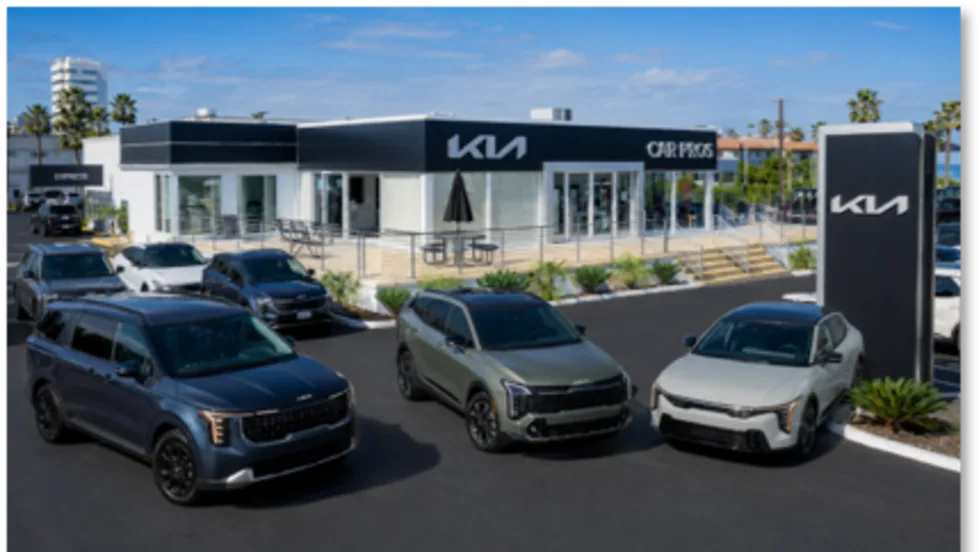
Auto Group Acquires Top-Performing Rooftop
Car Pros sold its Kia Huntington Beach location to Sutherlin Automotive Group, marking the buyer’s third location in Southern California.
Read More →
China as Pacesetter
Automotive leaders huddled on where North America stands in the global picture and how it can strengthen its position against the Asian juggernaut’s surging industry.
Read More →
BMW Concept Car Makes Fuel to Burn
The prototype developed in concert with a South Carolina university engineering team generates more solar energy than it uses in a typical daily commute.
Read More →