



EVs Pummel Today’s Road Guardrails
Crash tests show today’s barriers are no match for the heavier vehicles.

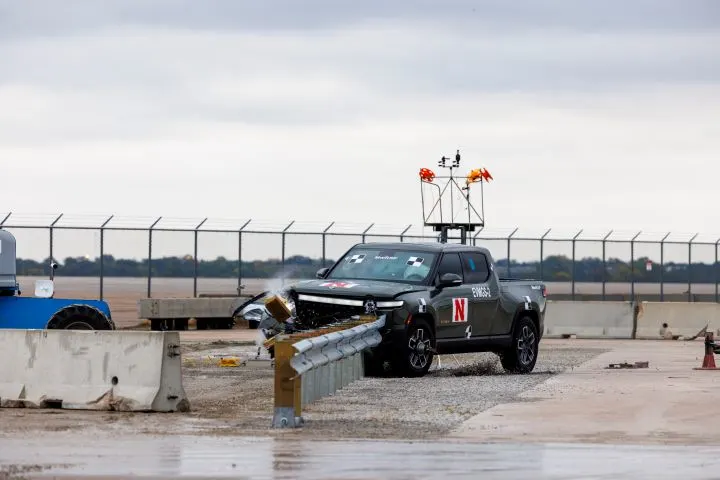
Today's guardrails were designed for lighter vehicles, but EVs are significantly heavier than gas-powered models.
IMAGE: Midwest Roadside Safety Facility
Today’s roadway guardrails don’t appear to be sturdy enough for electric vehicles, according to recent crash tests.
Commissioned by the U.S. Army Corps of Engineers to determine whether guardrails and military barriers can handle “hostile” EVs, the tests were conducted last fall by the Midwest Roadside Safety Facility at the University of Nebraska-Lincoln.
The facility used a 2018 Tesla Model 3 sedan and a 2022 Rivian R1T pickup in the 60-mph crash tests. It said the Tesla lifted the guardrail upon impact and passed underneath it, and the truck tore through it with little loss of speed.
The guardrail was designed for lighter vehicles of up to 5,000 pounds, but EVs are significantly heavier than gas-powered vehicles and can therefore do more damage, having 20% to 50% more energy upon impact, the facility said in a press release on the crash test findings.
The Corps of Engineers wanted to determine whether the proliferation of EVs could break through national safety defenses. It plans more such tests.
Beyond potential hostile vehicle operators who might compromise national security, there is the issue of general public traffic safety. The testing center said there are more than 100,000 off-road crashes in the U.S. each year that lead to thousands of deaths.
“It is going to be necessary to re-examine the designs of roadside barriers even beyond the EVs,” said Cody Stolle, the facility’s assistant director. “It’s a critical and timely need.”
The university, which has led past roadside barrier design projects, will work on a new design to accommodate EVs.
Originally posted on Auto Dealer Today
More Industry

Auto Affordability Inches Up
The latest Cox Automotive and Moody’s Analytics index shows a slight increase in new-vehicle affordability despite high prices.
Read More →
Ohio Auto Group Under New Ownership
After 79 years with the Schluter family, Mansfield Auto Group has been acquired by Missouri-based Clement Auto Group.
Read More →
RV Group Expands Carolina Footprint
Blue Compass RV Columbia Northeast is the 13th RV dealership owned by Blue Compass in the Carolinas.
Read More →
Agent Acumen
An Agent Summit panel of people who’ve been supporting auto dealers for years gave both timely and timeless advice for those starting out or mulling the prospect.
Read More →
Missed Maintenance Creates Opportunity
As families get back on the road and into daily school routines, service drives have an opportunity to capture customers who are behind on recommended vehicle maintenance.
Read More →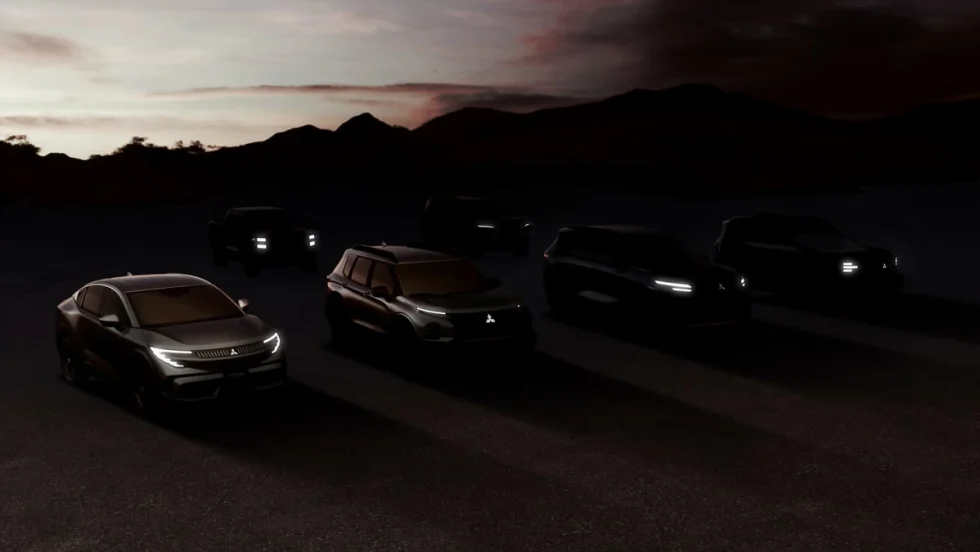
Mitsubishi Unveils U.S. Plan
The automaker announced a strategy that includes an expanded lineup and dealership presence, along with more ‘rugged’ and electric models.
Read More →
Selling to Grow
The question of whether you should sell your agency and if so, when, is up to you. But it’s a question worth asking to ensure you keep the business on the right path for yourself, employees and clients.
Read More →
Recalled Vehicles Hit 5-Year High
Though the number of events has fallen so far this year, impacted units are up significantly. Meanwhile, regulators consider consumer notification changes.
Read More →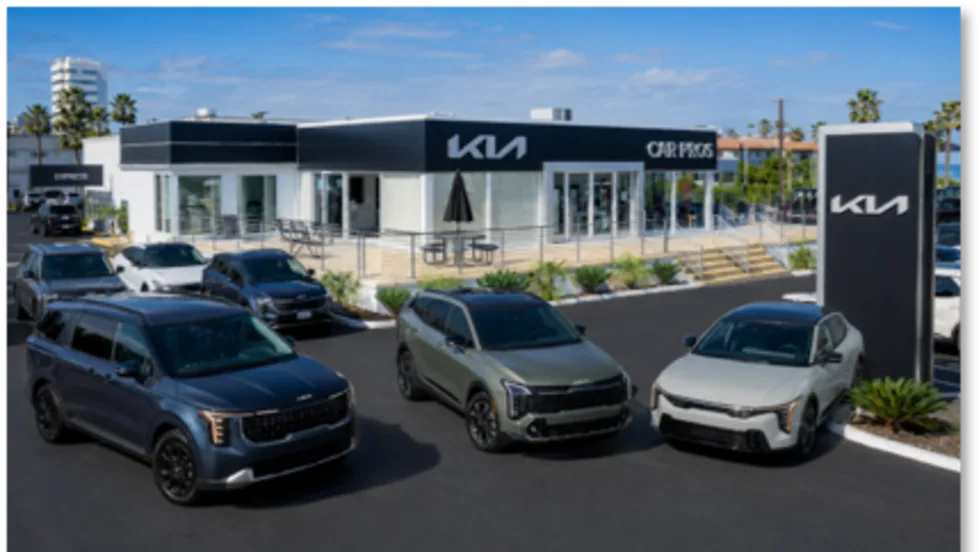
Auto Group Acquires Top-Performing Rooftop
Car Pros sold its Kia Huntington Beach location to Sutherlin Automotive Group, marking the buyer’s third location in Southern California.
Read More →
China as Pacesetter
Automotive leaders huddled on where North America stands in the global picture and how it can strengthen its position against the Asian juggernaut’s surging industry.
Read More →