



Credit Tightening at Wells Fargo to Continue Into 2018
SAN FRANCISCO — In 2009, the year before Wachovia Dealer Services officially became Wells Fargo Dealer Services, the finance source was listed as the No. 1 subprime auto lender by market share. It also held the largest share in the used-vehicle financing segment. Times have changed. During the bank’s second-quarter earnings call on July 14, ... Read More »

SAN FRANCISCO — In 2009, the year before Wachovia Dealer Services officially became Wells Fargo Dealer Services, the finance source was listed as the No. 1 subprime auto lender by market share. It also held the largest share in the used-vehicle financing segment. Times have changed.
During the bank’s second-quarter earnings call on July 14, Wells Fargo executives reported auto originations of $4.5 billion. That’s down $2.5 billion from the first quarter and $4 billion from the year-ago quarter. The reason: tighter underwriting standards.
“As we’ve discussed previously, we’ve tightened credit underwriting standards in auto, which has our origination volume down 17% from the first quarter (45% from a year ago),” said CFO John Shrewsberry, noting that the average FICO for auto loans originated during the period rose from 696 in the year-ago period to 719. “As we focus on improving execution and efficiency through increased standardization and centralization, we expect auto loans to continue to decline in the second half of this year.”
Reflecting this tightening was an $82 million decline in consumer credit losses, with net charge-offs down $41 million from the previous quarter. The improvement in overall consumer credit allowed the bank to releases $100 million in reserves for credit losses, officials said.
Additionally, the bank’s total outstanding loan balance declined 4% from the first quarter and 6% from a year ago to $58 billion. Loans 30 days past due increased by $225 million from a year ago on weaker market conditions.
As for the bank’s commercial portfolio, loans increased 7% from a year ago to $11.5 billion on higher dealer floorplan utilization.
In 2015, Wells Fargo reported record originations of $31 billion. A year later, the bank originated more loans than any other finance source, according to Experian Automotive. In the first quarter of this year, however, Wells Fargo Dealer Services fell to No. 4 on Experian’s market share list, with originations falling 29% on a year-over-year basis.
Several members of the executive team that led the transition from Wachovia Dealer Services to Wells Fargo Dealer Services in March 2010 have also left the company. Tom Wolfe, who headed up the business during its transition to Wells Fargo Dealer Services as president, was named vice president of the bank’s consumer credit solutions in 2012 before retiring in October 2014.
Wolfe’s successor as head of Wells Fargo Dealer Services, Dawn Martin Harp, retired this past April, and Bill Katafias, another Wachovia holdover who served as Wells Fargo Dealer Services’ national product retail credit executive, left the company this past February. In May, he joined Irvine, Calif.-based CRB Auto, a division of Mechanics Bank.
Wells Fargo’s dealer services business unit is now led by 20-year company veteran Laura Schupbach, who was appointed to the post this past March. She officially assumed her new role in April. Shrewsberry mentioned Schupbach’s hiring during the bank’s recent earnings call, noting that consumer loan growth will continue to be impacted by the actions “we’re taking in our auto portfolio and expected runoff of legacy junior lien mortgage loans.”
Shrewsberry added that the bank is making “modest changes” to generate loan originations for its consumer loan segment, including offering interest-only jumbo mortgage loans to high-quality borrowers and testing credit card offerings through the company’s digital channels.
When asked during last Friday’s earnings call how far the bank’s tightening on auto loans will go, Wells Fargo President and CEO Timothy Sloan responded, in part, “My bet is it will probably stabilize sometime in the first half of next year. I think during that entire time, it’s reasonable to assume that’s the quality of the underlying customer … measured by FICO score will continue to improve.
“I don’t know if it will continue to improve at the levels we’ve seen, but it will continue to be very strong,” he added. “And then my guess is that’s where the business will stabilize sometime in the first half of next year.”
More Industry

Penske Auto Group Deal a Record
The deal to take the dealership and transportation services company private sets a new pace for industry buy-sell transactions.
Read More →
War Toll a Damper on Used Auto Prices
Cox Automotive found wholesale depreciation to be elevated in September amid high fuel prices and this year's unusual hurricane season.
Read More →
Bridge the Maintenance Gap
With many drivers missing recommended maintenance, service departments offering transparency and efficiency have a better chance of reaching financially strained consumers.
Read More →
California Store Has New Owner
The longtime dealership in the northern part of the state is known for robust fleet sales and has served the state capital for 115 years.
Read More →
BMW Plant Pursues Cleaner Energy
BMW Group Plant Leipzig has utilized hydrogen to help power its production since 2013, but a new pipeline is planned to take it to another level.
Read More →
Auto Affordability Inches Up
The latest Cox Automotive and Moody’s Analytics index shows a slight increase in new-vehicle affordability despite high prices.
Read More →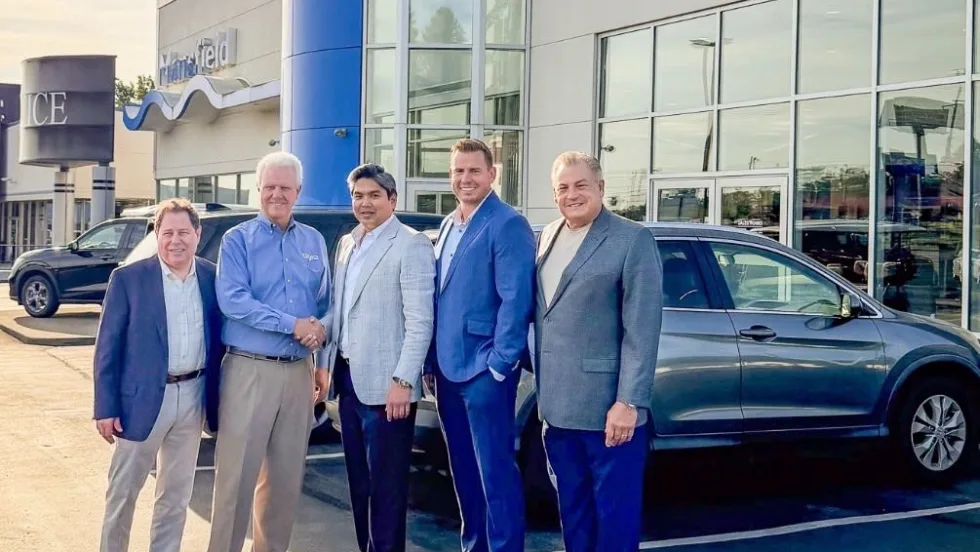
Ohio Auto Group Under New Ownership
After 79 years with the Schluter family, Mansfield Auto Group has been acquired by Missouri-based Clement Auto Group.
Read More →
RV Group Expands Carolina Footprint
Blue Compass RV Columbia Northeast is the 13th RV dealership owned by Blue Compass in the Carolinas.
Read More →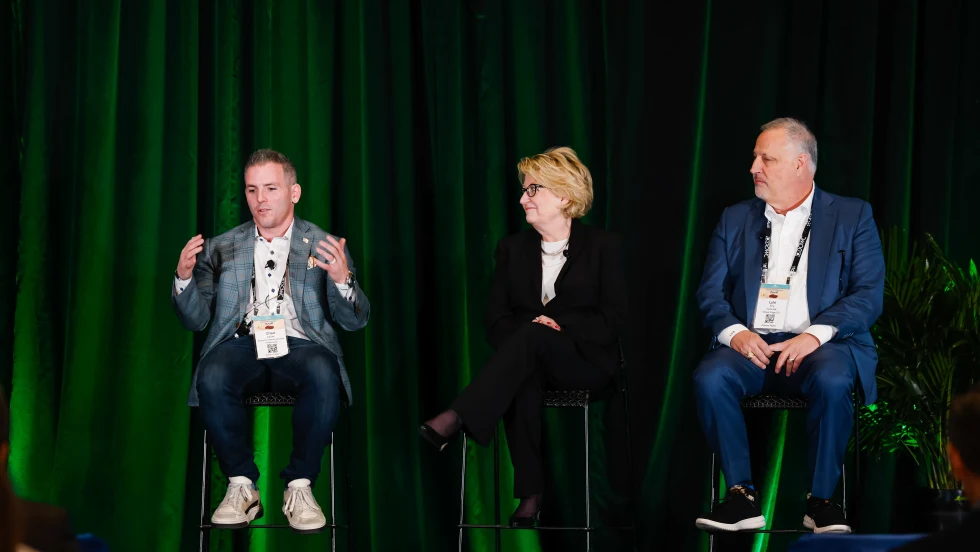
Agent Acumen
An Agent Summit panel of people who’ve been supporting auto dealers for years gave both timely and timeless advice for those starting out or mulling the prospect.
Read More →
Missed Maintenance Creates Opportunity
As families get back on the road and into daily school routines, service drives have an opportunity to capture customers who are behind on recommended vehicle maintenance.
Read More →