



Canada Suggests Proposed U.S. EV Tax Credit Will Harm North American Auto Industry
Letter penned by Canadian Trade Minister Mary Ng suggest proposed EV tax credits will harm North American auto industry and violate trade agreements.

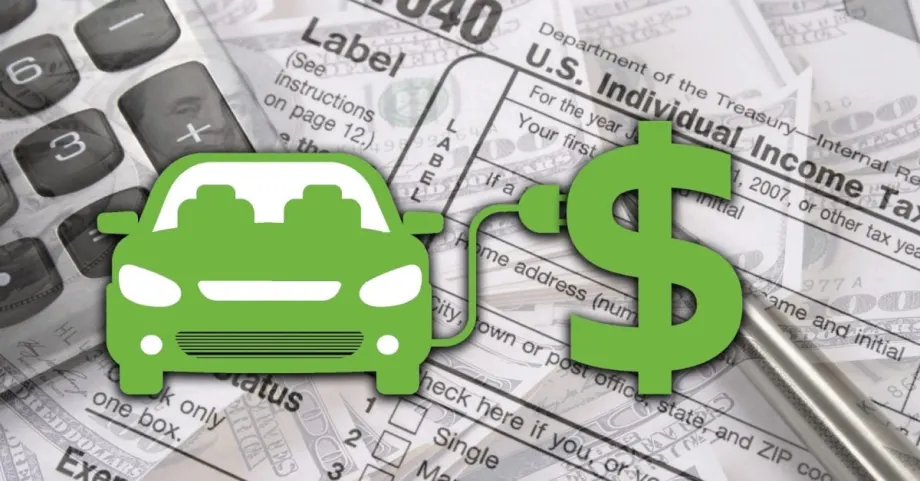
Canadian officials say U.S. proposals to create new electric vehicle tax credits for American-built vehicles could violate trade agreements.
Creative Commons
Canadian officials say U.S. proposals to create new electric vehicle (EV) tax credits for American-built vehicles could harm the North American auto industry and violate trade agreements, according to a letter seen by Reuters.
Reuters also followed this with a statement from a Canadian government source, who expressed confidence that the countries could eventually reach a solution. However, the source also noted Ottawa may need to launch a challenge through the United States-Mexico-Canada (USMCA) trade deal.
In the letter to U.S. lawmakers and the Biden Administration, Canadian Trade Minister Mary Ng said that the credits, if approved, “would have a major adverse impact on the future of EV and automotive production in Canada.”
She stressed the move will raise the risk of severe economic harm and tens of thousands of job losses in one of Canada's largest manufacturing sectors. Ng also suggested U.S. companies and workers would also be affected as the auto industries of both nations are highly integrated.
According to Ng, the proposed credits are also inconsistent with U.S. obligations under the USMCA and the World Trade Organization.
The Canadian government source, who requested anonymity in the Reuters article, indicated Ottawa did not want to mount a USMCA challenge but said “it is entirely conceivable that that's a tool we would look at” if need be.
A U.S. House panel approved legislation to boost EV credits to up to $12,500 per vehicle, allocating $4,500 for union-made vehicles produced in the United States and $500 for U.S. produced batteries made. Under the proposal, vehicles would need to be assembled in the United States as of 2027 to qualify for all of the proposed tax credits.
The credits also would disproportionately benefit Detroit’s Big Three automakers - General Motors, Ford Motor Co., and Chrysler parent Stellantis. These automakers assemble their American-made vehicles in union-represented plants.
GM, Ford and Stellantis have announced plans to make EVs at factories in Ontario.
The U.S. divisions of foreign automakers also criticize the tax incentive. Tesla also criticizes the move that is strongly supported by the United Auto Workers union.
The Canadian government source reports Cabinet ministers plan to step up their lobbying efforts.
“We will eventually reach a resolution … Ideally we would be able to change the legislation before it gets passed,” said the source.
Ng expressed concerns over the “protectionist elements" of the proposed tax credits, saying they discriminate against EVs and parts produced in Canada.
“Canada is also necessary for the United States to achieve its electric vehicle objectives in the future,” she wrote. She also noted that Canada is the only country in the Western Hemisphere that has all critical minerals required to manufacture EV batteries.
Originally posted on Auto Dealer Today
More Industry

Penske Auto Group Deal a Record
The deal to take the dealership and transportation services company private sets a new pace for industry buy-sell transactions.
Read More →
War Toll a Damper on Used Auto Prices
Cox Automotive found wholesale depreciation to be elevated in September amid high fuel prices and this year's unusual hurricane season.
Read More →
Bridge the Maintenance Gap
With many drivers missing recommended maintenance, service departments offering transparency and efficiency have a better chance of reaching financially strained consumers.
Read More →
California Store Has New Owner
The longtime dealership in the northern part of the state is known for robust fleet sales and has served the state capital for 115 years.
Read More →
BMW Plant Pursues Cleaner Energy
BMW Group Plant Leipzig has utilized hydrogen to help power its production since 2013, but a new pipeline is planned to take it to another level.
Read More →
Auto Affordability Inches Up
The latest Cox Automotive and Moody’s Analytics index shows a slight increase in new-vehicle affordability despite high prices.
Read More →
Ohio Auto Group Under New Ownership
After 79 years with the Schluter family, Mansfield Auto Group has been acquired by Missouri-based Clement Auto Group.
Read More →
RV Group Expands Carolina Footprint
Blue Compass RV Columbia Northeast is the 13th RV dealership owned by Blue Compass in the Carolinas.
Read More →
Agent Acumen
An Agent Summit panel of people who’ve been supporting auto dealers for years gave both timely and timeless advice for those starting out or mulling the prospect.
Read More →
Missed Maintenance Creates Opportunity
As families get back on the road and into daily school routines, service drives have an opportunity to capture customers who are behind on recommended vehicle maintenance.
Read More →