



Where’s Your Moral Compass?
Conversations with wayward finance managers prove old F&I habits die hard, including those that qualify as bank fraud.

Consider if you might be crossing the moral or legal line in your decisions on the job.
Pexels/Bakr Magrabi
An idiot shooting up a classroom full of kids. A football player driving drunk and killing his girlfriend in a crash. Depressing headlines cause one to pause and ponder the question: “Where’s your moral compass?”
After recent conversations I’ve had with colleagues, dealers and finance sources, the same question can be asked of people in our industry.
Here are capsulations of a few such conversations:
The Forged Signature
A dealer friend called the other day to complain about having to fire a recently hired finance manager. I know this dealer runs one of the most compliant enterprises in the country. He fully stresses the importance of compliance throughout the hiring process and onboarding process.
He was particularly perturbed by two issues: First, he had just hired this person within the last month, and she had already decided to forge the customer’s signature on a contract.
But more disturbing was her reply when presented with the evidence: “I don’t see why you are making such a big deal about it. The customer’s payment stayed the same, I just forgot to have him sign the gap section on the contract, and he knew he bought gap.”
Don’t see why the manager is making a “big deal” about forging the customer’s signature? Where’s your moral compass?
The Kinked Income
A friend from the auto finance sector recently lamented about the number of buybacks the institution was faced with and the strain it was putting on its relationships with dealers. At her institution and many like it, the recovery department scrutinizes the credit application for violations of the dealer-lender agreement when an account defaults.
Most of the buybacks were a result of the dealers misstating the customer’s income on the credit application.
Sometimes the income was simply increased. Other times the customer had two jobs, and the dealer represented the total income from the two jobs as one income from one job. There were also instances in which the fixed income was grossed up; this finance source does not permit grossing up fixed income.
My friend shared that she was amazed by the responses she received when she asked why the income was wrong. The biggest lie was, “It was an honest mistake.” The next biggest lie was, “I don’t know.” The honest answer was, “I know what your payment-to-income ratios are, and I had to adjust the income to fit the deal to your guidelines.”
In other words, lying. Where’s your moral compass?
Incidentally, the lender gets the last laugh on these transactions. All federally insured financial institutions are required by law to file a top-secret Suspicious Activity Report with their regulators whenever they suspect a transaction of bank fraud.
Lying on the credit application is bank fraud. Every instance the lender finds causes this top-secret report to be filed, identifying the dealer in the “Suspect Information” portion of the report as committing bank fraud.
Everyone’s a Manager
During a recent dealership audit, I noticed that job titles on credit application submissions through Dealertrack and RouteOne were different than what the customer wrote on the credit application. For example, a Walmart greeter was promoted to “customer relations manager.”
When I asked about the differences, the employee said — with a straight face — that, “Everyone manages something in their job, so everyone is a manager.”
In my previous life, I helped create and also managed the creation of internal scorecards for financial institutions. We used to consider job type as a partial predictor of the likelihood of default. For example, nurses got extra points because they usually paid their bills and didn’t default. The Dark Side, on the other hand, is only concerned with technical accuracy.
Yet another reason for a financial institution to file a Suspicious Activity Report and require a deal to be bought back, along with another prompt of the same old question: Where’s your moral compass?
Continued good health, good luck and good selling, and while we’re at it, live long and prosper.
Gil Van Over is executive director of Automotive Compliance Education (ACE), founder and president of gvo3 & Associates and author of “Automotive Compliance in a Digital World.”
Originally posted on F&I and Showroom
More F&I
To Include Products in the First Pencil or Not
In this month's Under the Hood, Editor Hannah Mitchell examines a question many auto dealers have been asking since Federal Trade Commission enforcement intensified this year.
Read More →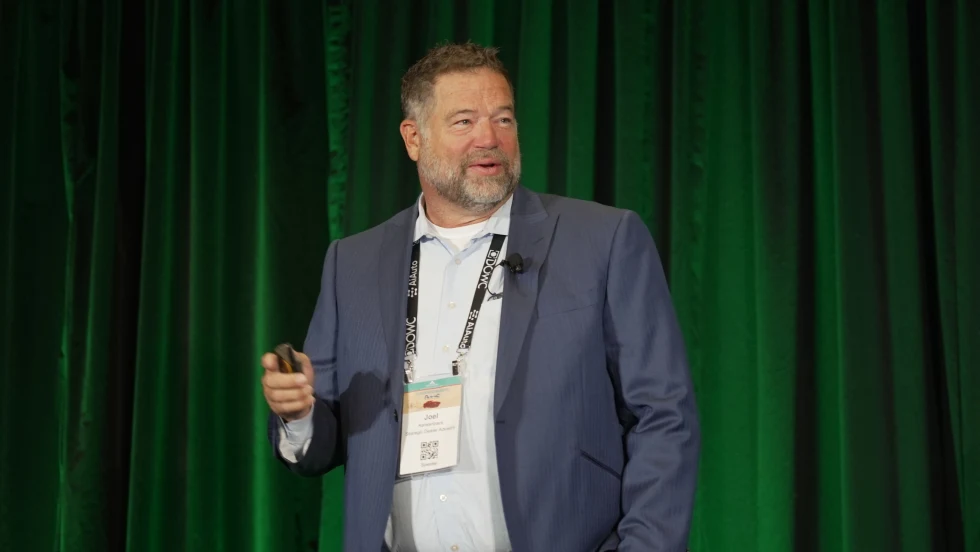
Get Ahead of the Change
A strong culture, among other things, will be a key differentiator for auto dealerships as the market speeds ahead to new heights, says industry veteran Joel Kansanback.
Read More →
F&I Without the Handoff
Get more familiar with what your dealer clients are really buying when they entrust you with finance-and-insurance.
Read More →
Affordability Shapes Auto Demand
Auto originations increased 1% in the first quarter, and electric vehicles are rebounding, according to TransUnion's latest credit report.
Read More →
The Evolution of Agency Development in Modern F&I
General agents have a different roadmap for success than their predecessors. It will pay for them to follow it in order to be true dealer partners.
Read More →
Four-Figure Loan Payments on the Rise
A LendingTree analysis found that location, age and credit score play a role in the rising amount of auto loan borrowers who make monthly payments of $1,000 or more.
Read More →
APCO Holdings Acquires Fidelity Dealer Services
The finance-and-insurance product provider says the addition strengthens EasyCare’s reach across key markets.
Read More →
Tariffs Could Raise Insurance Premiums
As U.S. import tariffs affect repair costs, consumers might find it more affordable to replace a damaged vehicle, according to recent Insurify tariff analysis.
Read More →
Smaller Loans, Longer Terms
The youngest generation of car buyers is more likely to finance less expensive vehicles, more than half of generation Z consumers borrowing less than $25,000.
Read More →
Ensure Your Clients Are Sure About Reinsurance
Industry experts recently broke down the complicated profit center at Agent Summit. Learn what’s relevant and what’s new to share with your dealers.
Read More →