



The Silver Lining: A New Sales Model Emerges
Whether we choose to keep a leaner staffing model, hire a different caliber of employee that requires more compensation, or grow our expectations for what we can sell per month, there is no looking back — and that is good for business.

Whether we choose to keep a leaner staffing model, hire a different caliber of employee that requires more compensation, or grow our expectations for what we can sell per month, there is no looking back — and that is good for business.
Consumer behavior is continuously evolving, but it takes a major event such as a global pandemic to see it change overnight. Health concerns and stay-at-home orders due to COVID-19 have driven consumers to buy more online than ever before.
Whether we choose to keep a leaner staffing model, hire a different caliber of employee that requires more compensation, or grow our expectations for what we can sell per month, there is no looking back — and that is good for business.
The automotive industry has experienced this phenomenon first hand. With many showrooms closed earlier this year, dealers were forced to conduct business differently. They pivoted their teams to remote selling, leading to both an increase in online purchase activity, and significant efficiency gains. In fact, according to a recent study by Roadster and NADA, 44% of consumers who bought a vehicle between April and August of 2020 conducted some of the transaction online, and 63% of customers who bought cars in the past five months said their recent transaction was materially faster than their previous purchase.
What is faster for the consumer is more efficient for the dealership, creating cost savings. Given the market uncertainty as we head into 2021, this is good news for dealers far and wide.
Consumers Are Doing More Online
The automotive industry can no longer ignore consumers’ move to online buying. Carvana has spent millions making consumers aware of online capabilities and other online-only retailers like Vroom, Shift, and Carlotz are following suit, leveraging the public markets to help scale their businesses this year.
No longer are consumers just window shopping for cars on the internet; they are completing critical and traditionally time-consuming aspects of the transaction.
A recent study examining consumers’ car buying behavior during the pandemic found consumers completed price negotiation, credit apps, and payment term selection online 34% of the time, regardless of in-person restrictions. Even F&I selection, a considerable percentage of dealership profitability, moved online for 23% of consumers, 42% if the dealership was only open for online sales.
For consumers, the move to online means a significant reduction in time spent buying a car. Up until recently, 90% of transactions took hours to complete in the dealership. But according to data fielded by Roadster and NADA, 38% of transactions are now happening in under an hour. This is good news for dealerships. If the customer spends less time at your dealership, your sales and finance people will be freed up to complete more transactions on a given day.
Profit Implications for Dealers
When salespeople can work remotely with multiple customers at once, they can sell more cars per person. This is a significant finding as units sold per person has been stuck at 9-10 for the past 35+ years. After a turbulent month of April, where dealerships had to cut staff and sell primarily online, the industry saw this metric grow to 13 units per person in May. As of September, with showrooms back open, we are now at 16 units per person, a 60% increase over the NADA industry average.
Efficiency gains open up a world of possibilities for profitability. At the moment, this means handling current consumer demand using remote selling techniques with less staff. If we play this out using industry averages for units sold and salaries, this equates to $200 in compensation savings per vehicle sold.
Demand will eventually return to previous levels. With the ability to sell more cars per person, the world is our oyster. Whether we choose to keep a leaner staffing model, hire a different caliber of employee that requires more compensation, or grow our expectations for what we can sell per month, there is no looking back -- and that is good for business.
Michelle Denogean is CMO of Roadster.
Originally posted on Auto Dealer Today
More Sales
Used Lots Getting the Business
Many consumers are seeking out the units to save money, and the demand – higher in July than normal – is keeping supply limited and prices up.
Read More →
Two Kinds of Agents and the 5 Ps That Separate Them
Follow these key guidelines to distinguish your agency from competitors by adding more value to your dealer clients' businesses.
Read More →
Positive Equity Reaches Record High
Mainstream vehicle owners who bought a car seven years ago are likely to have positive equity when trading in for a new vehicle, according to second-quarter Edmunds data.
Read More →
Used Market Stabilizes
The Carfax Used Car Index noted a major drop in used-vehicle price increases in July after several months of hikes.
Read More →
July Auto Sales Simmer
Deliveries were up modestly from a year ago despite still-high prices as OEMs offered more incentives and loan rates eased somewhat.
Read More →
Used Sales Hit Summer Drag
The vacation season, combined with high prices, has dented deliveries and added to inventories, though supply is still slim enough to keep listings elevated.
Read More →
June Automotive Boon?
A forecast for this month’s new-vehicle sales tells a familiar 2026 story: Year-over-year comparisons must be made in light of last year’s aberrations.
Read More →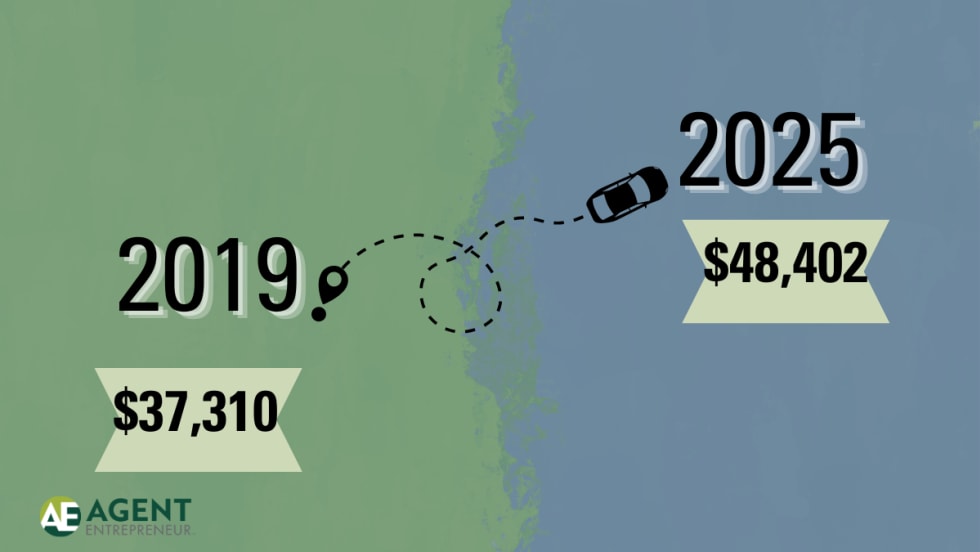
Affordable New Cars a Thing of the Past
More than one out of five new vehicles sell for more than $60,000, according to Edmunds. That's up 7% compared to prepandemic 2019.
Read More →
Legacy Automakers Risk Falling Behind
As legacy automakers, mostly in the U.S. and Japan, have revised their 2030 electric-vehicle sales targets and shifted to a hybrid focus, they risk falling behind new market leaders.
Read More →
New Cars a Tad More Affordable
May averages show that combined circumstances gave auto consumers slightly better buying power for the month, though average prices were up year-over-year.
Read More →