



Of Brisket and Compliance
Barbecuing brisket turns out to be an apt analogy for compliance.
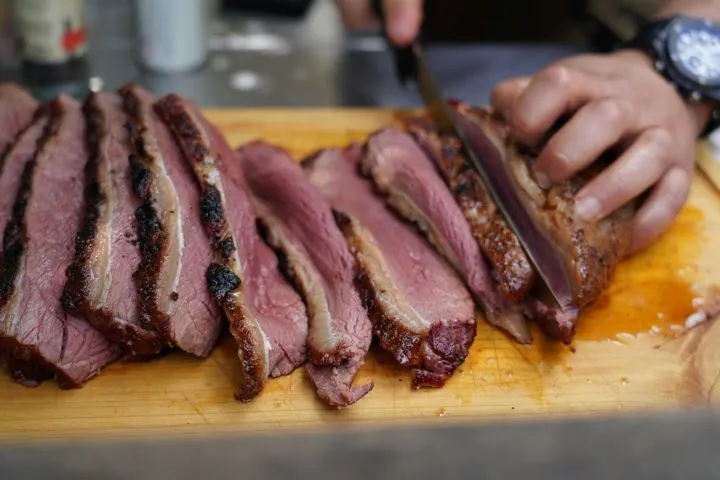
There must be more than desire to be compliant in a dealership.
Pexels/Gil Goldman
This will be an article about compliance … eventually.
As I write this, a brand-new Pitts & Spitts Maverick 2000 pellet smoker is going through the “burn-in” process of its initial use in my backyard. In less than an hour, I will place 10 pounds of brisket point on one of its three cooking grids and begin the process of creating burnt ends.
I love barbeque. Odds are, so do you.
My company sponsors a competitive barbecue team, “Grillable Hours.” As a result of our recent merger with gvo3 & Associates, we inherited another. Based in Louisiana, its name is “The Pig Easy.” Clearly, we are a compliance company with a barbecue problem!
So indulge my description of how I prepare brisket – the Mount Everest of barbeque:
Begin with a full packer brisket (point and flat) of 15- to 25-pound size. I have a large family, so I go for the largest brisket I can get. Get prime quality if you can; choice if you must. If all you can get is select, just forget about it, and order in pizza or something.
Trim the fat cap to a thickness of approximately a quarter inch and excise the thick, stiff layer of fat between the point and the flat called, inaccurately, the “deckle.” Slice away any meat thinner than your thumb. Don’t be shy – thin meat will dry out in the smoking process and become hard, debasing your Brisket King legend.
Now here comes the important part: Submerge the trimmed packer in a brining solution and place it in a refrigerator for three to seven days (the actual duration of the brine will be driven by the size of the brisket and experience). Brining the meat for over a week will yield corned beef; two weeks will get you into pastrami territory, and we don’t want that. But moderate brining will ensure the finished product is moist and tender. This step really makes the process foolproof.
Once the brisket is properly brined, remove it from the brining solution and rinse it in cold, fresh water. Put it back in the container, and cover it with cold water. Allow it to soak for two hours. Dump it, and refill the container with cold water. Put it back in the refrigerator overnight. If you’ve got the time, repeat the process for another day. The idea is to leach out the excess salt taste.
When ready to smoke the beast, remove it from the water and pat-dry with paper towels. Slather it on all sides with Dijon mustard. This will act as a binder and help the rub stick. Shake a salt-free rub all over the brisket; the meat already has enough salt from the brine. I use four parts coarse black pepper, one part garlic powder, one part onion powder, and one part cayenne pepper. Or ancho pepper. Or both.
Place the brisket on your smoker over a drip pan filled with water and beer (the beer doesn’t really add anything to the meat, but it does make your backyard smell good). Add your favorite smoking wood, as appropriate for your smoker. Stick a remote-read thermometer in the thickest part of the meat. No guessing!
Smoke over low heat – 225 degrees – until the meat reaches an internal temperature of around 150. Meat efficiently absorbs smoke flavors only until it hits about 140 to 158 degrees, so after that point, it’s OK to increase the smoker temperature to shorten the overall cook time. I up it to 250 degrees until The Stall.
Somewhere around 165 degrees, the meat’s internal temperature will stop rising. This is The Stall, which is when the effect of evaporative cooling from the rendering of the brisket’s fat balances the BTUs trying to raise its temperature. To speed through The Stall, we take off the meat, wrap it in peach butcher paper with a generous slather of Wagyu beef tallow, and return it to the smoker. After The Wrap, raise the smoker temp to 275.
Once the internal temperature of the meat hits 203 and a probe inserted into the meat feels like it’s encountering soft butter, it is time to take off the meat and allow it to rest, still wrapped, for at least two hours. Then slice it and serve to the Adoring Masses.
Does that sound good? (Yes). Are you hungry just reading this? (Also yes). Are you ready to run out and do this yourself? (NOT ON A BET). And that, my friends, is where we get to the topic of compliance.
Do most dealers want their operations to be compliant? (Yes). Do most dealers want to learn the processes necessary to achieve consistently compliant operations? (NOT ON A BET).
James Ganther is president of Mosaic Compliance Services.
Originally posted on Auto Dealer Today
More Industry

Auto Affordability Inches Up
The latest Cox Automotive and Moody’s Analytics index shows a slight increase in new-vehicle affordability despite high prices.
Read More →
Ohio Auto Group Under New Ownership
After 79 years with the Schluter family, Mansfield Auto Group has been acquired by Missouri-based Clement Auto Group.
Read More →
RV Group Expands Carolina Footprint
Blue Compass RV Columbia Northeast is the 13th RV dealership owned by Blue Compass in the Carolinas.
Read More →
Agent Acumen
An Agent Summit panel of people who’ve been supporting auto dealers for years gave both timely and timeless advice for those starting out or mulling the prospect.
Read More →
Missed Maintenance Creates Opportunity
As families get back on the road and into daily school routines, service drives have an opportunity to capture customers who are behind on recommended vehicle maintenance.
Read More →
Mitsubishi Unveils U.S. Plan
The automaker announced a strategy that includes an expanded lineup and dealership presence, along with more ‘rugged’ and electric models.
Read More →
Selling to Grow
The question of whether you should sell your agency and if so, when, is up to you. But it’s a question worth asking to ensure you keep the business on the right path for yourself, employees and clients.
Read More →
Recalled Vehicles Hit 5-Year High
Though the number of events has fallen so far this year, impacted units are up significantly. Meanwhile, regulators consider consumer notification changes.
Read More →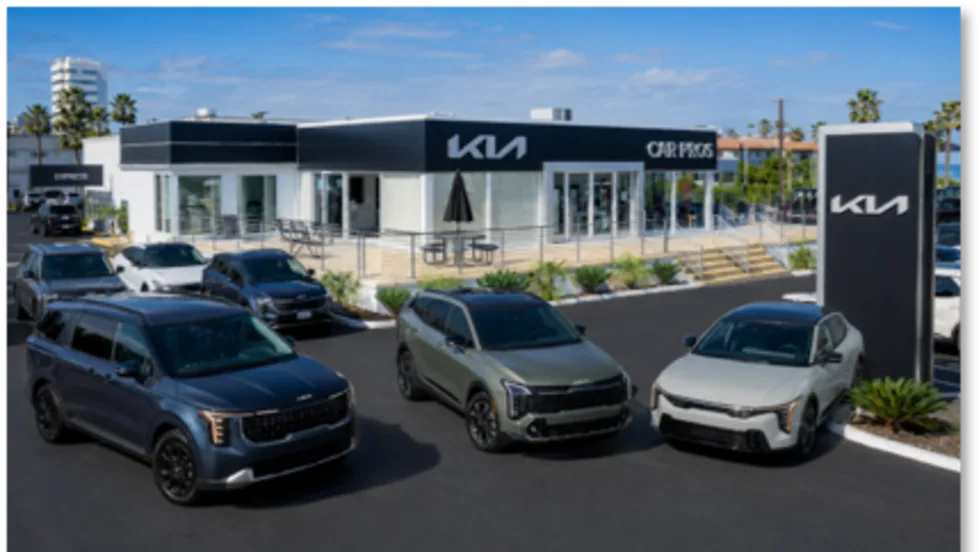
Auto Group Acquires Top-Performing Rooftop
Car Pros sold its Kia Huntington Beach location to Sutherlin Automotive Group, marking the buyer’s third location in Southern California.
Read More →
China as Pacesetter
Automotive leaders huddled on where North America stands in the global picture and how it can strengthen its position against the Asian juggernaut’s surging industry.
Read More →