



A Brief History of F&I


A Brief History of FI
Recently I’ve been reminiscing about the changes I’ve seen in F&I over the last 40-plus years. The industry originated in the midwest, and many of the pioneering companies – or their offspring – are still in business. Initially, they sold CLAH, CLAH and CLAH.
It was considered an accomplishment to obtain $100 per retail unit, which was completely found money. Contracts were executed by hand and charts were used to calculate payments. Customers were in the dark, but often so were the dealers and the guy in that new management position – the F&I manager.
The early and mid-70s brought two significant developments. Calculators, and then computers, were developed that could compute the payments, then actually print the contracts. Names like “Wang” and “Oakleaf” became prominent. The biggest development, however, was the advent of the vehicle service contract (VSC). VSCs were generally not regulated and any price could be charged.
All of a sudden F&I income started to soar. It was at this time that payment packing became prevalent and the method “Assume Quote and Explain” (AQE) became en vogue. In essence, this meant that you were supposed to assume customers wanted all the products, quote them a payment including those products, and then explain to them what they had purchased. That last step was frequently forgotten by the F&I manager.
We all worked to develop and promote products and techniques that not only increased the F&I profit, but benefited the consumer as well. GAP continues to be one of the most beneficial products for all parties. It’s a classic case in which the customer benefits if the vehicle is stolen or totaled because he or she can purchase another car at a reasonable payment. The dealer benefits by having another opportunity to sell the customer a car and make a profit in F&I.
The many ancillary products that have come along have had a similar impact. If a product offers a real benefit to the consumer and the dealer can make a fair profit, that’s capitalism at its best.
So where are we now? Many of the changes in products and techniques resulted from laws that came about due to the abuses committed by a few bad apples. Not fully disclosing payments and selling products with minimal benefit compared to the price led to increased regulations. I remember a product called “Aqua Magic.” The aqua was the water used to wash the car pre-delivery and the magic was the $199 dollars or more charged for it.
As with most things, the pendulum swings too far in one direction as a result of having swung too far in the other. Today, extreme care must be taken to protect both the dealers’ and the consumers’ interests. If you’re not using a computer menu on every deal and having it signed by the consumer, you are – quite frankly – a fool. Not only does the menu make the F&I manager’s job easier and increase F&I profit, it also protects the dealer and F&I manager from future claims and lawsuits.
Continuing education is paramount, especially for management. Certifications such as AFIP go a long way toward avoiding problems and providing a good defense if a legal situation arises.
This leads us to the question, “Where are we going?” There will definitely be increased regulation, regardless of who controls Washington. Some of the laws will be federal and some will be state and local. The industry will fight the unjust, unfair and just plain bad laws and their enforcement, but many will remain on the books.
I would be shocked if the rate spread charged to the customer does not change to a flat amount, perhaps based on FICO scores so the F&I manager’s hard work in obtaining credit for the less qualified is recognized. Industry leaders will continue to innovate with new products, and technology will continue to streamline the entire process. In short, the future is bright for those willing to adapt and change methods and products. For those who are stuck in the past, it’s time to move on.
More Industry
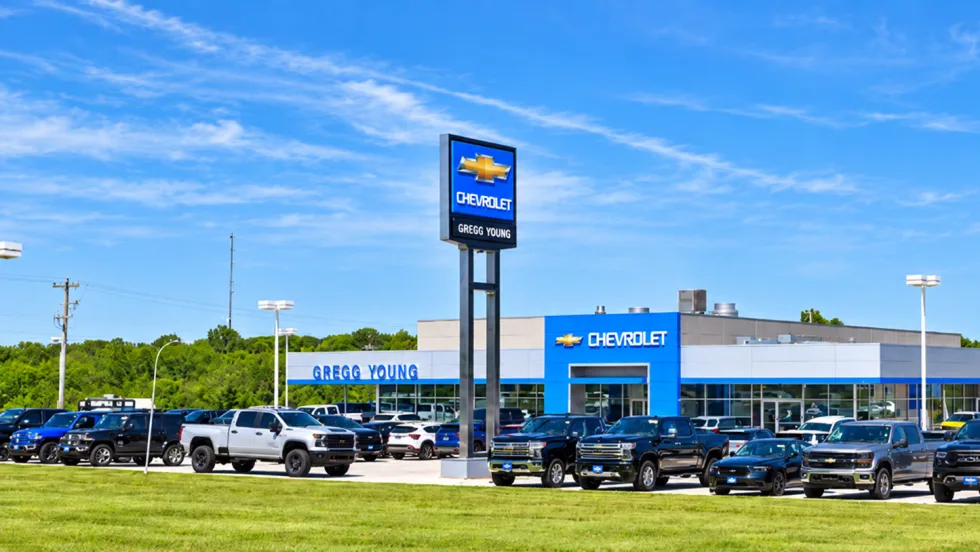
Nebraska Rooftop Changes Hands
The Gregg Young Automotive Group has sold its second dealership to Janssen Auto Group, both in Plattsmouth, Neb.
Read More →
Penske Auto Group Deal a Record
The deal to take the dealership and transportation services company private sets a new pace for industry buy-sell transactions.
Read More →
War Toll a Damper on Used Auto Prices
Cox Automotive found wholesale depreciation to be elevated in September amid high fuel prices and this year's unusual hurricane season.
Read More →
Bridge the Maintenance Gap
With many drivers missing recommended maintenance, service departments offering transparency and efficiency have a better chance of reaching financially strained consumers.
Read More →
California Store Has New Owner
The longtime dealership in the northern part of the state is known for robust fleet sales and has served the state capital for 115 years.
Read More →
BMW Plant Pursues Cleaner Energy
BMW Group Plant Leipzig has utilized hydrogen to help power its production since 2013, but a new pipeline is planned to take it to another level.
Read More →
Auto Affordability Inches Up
The latest Cox Automotive and Moody’s Analytics index shows a slight increase in new-vehicle affordability despite high prices.
Read More →
Ohio Auto Group Under New Ownership
After 79 years with the Schluter family, Mansfield Auto Group has been acquired by Missouri-based Clement Auto Group.
Read More →
RV Group Expands Carolina Footprint
Blue Compass RV Columbia Northeast is the 13th RV dealership owned by Blue Compass in the Carolinas.
Read More →
Agent Acumen
An Agent Summit panel of people who’ve been supporting auto dealers for years gave both timely and timeless advice for those starting out or mulling the prospect.
Read More →