



Survey: The Pandemic Accelerated the Adoption of Digital Retailing
A new eLEND Solutions report shows widespread acceleration of Digital Retail adoption due to the pandemic, continued implementation, a shift in perception from lead generation to deal generation and promising data on PVR.

A new eLEND Solutions report shows widespread acceleration of Digital Retail adoption (80%) due to the pandemic, continued implementation (90%), a shift in perception from lead generation (47%) to deal generation (53%) and promising data on PVR.
IRVINE, Calif. – A new report from digital financing innovator eLEND Solutions reveals how the COVID-19 pandemic has impelled dealers to embrace digital retailing as a low-touch transaction alternative – and how this adoption of technology has changed traditional dealer process and perception.
What this study reveals, however, is that while dealers were forced into change by the pandemic, they quickly saw the value and have embraced it as a blessing in disguise.
Based on a survey fielded by eLEND Solutions among auto dealers in the fourth quarter of 2020, “The Pandemic Drove a Great Leap Forward in Digital Retailing Adoption” explores the shift in dealer acceptance and application of digital retailing, while also investigating whether this forced innovation has been a blessing – or curse – for dealers.
“Confronting change can be a painful challenge for dealers, which is understandable given the risk inherent to implementing a new process, retraining staff, and the application of technology which can cause significant upheaval and anxiety in a store…so I can see it could be viewed as a ‘curse,’ ” said Pete MacInnis, CEO of eLEND Solutions. “What this study reveals, however, is that while dealers were forced into change by the pandemic, they quickly saw the value and have embraced it as a blessing in disguise.” According to the report, among those digital retailing blessings is a trend towards higher profit-per-vehicle retailed (PVR) and reduced transaction times.
Digital Retailing and the Shift from Lead Generation to Deal Generation:
Perhaps one of the most important findings in the report is how dealer perceptions have shifted as a result of the change to digital retailing. According to the survey, 53% now see digital retailing as a deal generator – ‘the start of the deal’ – while 47% continue to view digital retailing as little more than enhanced lead generation.
“Old habits die hard in the auto industry, so this shift in perception is pretty extraordinary,” said MacInnis. “It’s inspiring to see dealers evolve to, and embrace, technology that will expand the power and value of their business model. “Getting to over 50% of auto dealerships viewing digital retailing as ‘deal’ versus ‘lead’ generation is huge.”
Dealer acceptance of digital retail as a “deal” maker is supported by their opinions about the actual steps in the experience: Only 14% of dealers see digital retailing ending at the first pencil, and almost 30% see its ‘relative finish’ as getting to a qualified deal structure – including trade and down payment. Twenty percent see the digital retail process going as far as contracting and remote delivery.
Digital Retailing Impact on Profit Per Vehicle:
Over 30% of dealers (31%) surveyed said that their digital retail-initiated transactions resulted in a higher profit-per-vehicle retailed (PVR). In total, 87% said that the PVR (front and back) of digital retail-initiated transactions has been the same or higher compared to pre-COVID averages.
“The positive impact that digital retailing has on PVR is a clear myth-buster,” said eLEND’s MacInnis. “Dealers should view this as a signal that it’s time to rethink the common belief that digital retailing has an adverse impact on PVR, and realize that – pandemic or not – consumers now think digital retailing is a normal and necessary part of their vehicle transaction.”
As a result of the accelerated digital retail adoption, 90% of dealers surveyed said that their websites are now more transactional – meaning that shoppers can get closer to a transactable deal online. The report indicates that a silver lining of COVID-19 has been the industry’s rapid adoption of digital buying experiences to meet consumers demands for a low-touch transaction. “The survey findings tell us that the pandemic was key to digital adoption,” continued MacInnis. “It’s entirely likely that the same level of adoption, without a pandemic, could have taken up to five years.”
Challenges Remain with In-Store Process, CSI Results:
Just 23% of dealers surveyed said that CSI scores had improved – with 66% seeing no change at the time of the survey. One possible explanation is that digital retailing technology, and the required process changes, had not yet been widely implemented. Indeed, although most dealers ranked the transition to a digital-first sales process as ‘not extremely difficult,’ 56% said that the hardest aspect was process change. If so, the customer experience could well be hampered by online to in-store redundancies. “Customers don’t want to do what they did online at the dealership,” said MacInnis. “They have expectations that starting the deal online means that they’ll save time at the dealership.”
Survey findings show that dealers are largely meeting those expectations – at least in terms of time saved. Sixty-four percent of dealerships reported reduced transaction times compared to the pre-COVID average, with 38% claiming that at least 30 minutes had been reduced.
Key Highlights from the eLEND Solutions Digital Retailing Survey:
80% of auto dealers said the pandemic has accelerated their adoption of digital path-to-purchase experiences.
90% say they expect to continue, or accelerate, digital retailing at their dealership
53% see digital retailing as deal generation – ‘the start of the deal’
20% define digital retailing’s ‘relative finish’ as contracting and remote delivery
90% of say their websites are more transactional today than they were pre-pandemic.
87% report that digital retail-initiated transactions have resulted in unchanged, or higher, PVR (profit-per-vehicle retailed)
64% said they reduced total transaction times compared to the pre-COVID average
38% reported a reduction of at least 30 minutes off the transaction time
56% of dealers said that ‘process change’ was the most difficult aspect of transitioning to a digital-first sales process
23% said CSI scores improved with digital retail adoption
Originally posted on F&I and Showroom
More Sales
Used Lots Getting the Business
Many consumers are seeking out the units to save money, and the demand – higher in July than normal – is keeping supply limited and prices up.
Read More →
Two Kinds of Agents and the 5 Ps That Separate Them
Follow these key guidelines to distinguish your agency from competitors by adding more value to your dealer clients' businesses.
Read More →
Positive Equity Reaches Record High
Mainstream vehicle owners who bought a car seven years ago are likely to have positive equity when trading in for a new vehicle, according to second-quarter Edmunds data.
Read More →
Used Market Stabilizes
The Carfax Used Car Index noted a major drop in used-vehicle price increases in July after several months of hikes.
Read More →
July Auto Sales Simmer
Deliveries were up modestly from a year ago despite still-high prices as OEMs offered more incentives and loan rates eased somewhat.
Read More →
Used Sales Hit Summer Drag
The vacation season, combined with high prices, has dented deliveries and added to inventories, though supply is still slim enough to keep listings elevated.
Read More →
June Automotive Boon?
A forecast for this month’s new-vehicle sales tells a familiar 2026 story: Year-over-year comparisons must be made in light of last year’s aberrations.
Read More →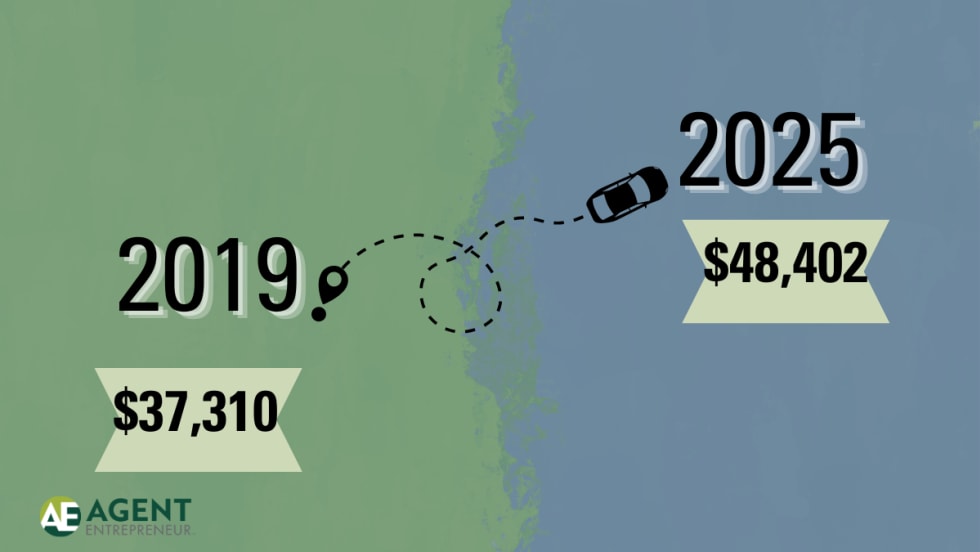
Affordable New Cars a Thing of the Past
More than one out of five new vehicles sell for more than $60,000, according to Edmunds. That's up 7% compared to prepandemic 2019.
Read More →
Legacy Automakers Risk Falling Behind
As legacy automakers, mostly in the U.S. and Japan, have revised their 2030 electric-vehicle sales targets and shifted to a hybrid focus, they risk falling behind new market leaders.
Read More →
New Cars a Tad More Affordable
May averages show that combined circumstances gave auto consumers slightly better buying power for the month, though average prices were up year-over-year.
Read More →