



Consumers Shifting Back to Used Vehicles as Inventory Shortages Continue
As used originations increase, credit unions reach nearly 26% total vehicle financing market share, the highest volume in five years.


As used originations increase, credit unions reach nearly 26% total vehicle financing market share, the highest volume in five years.
EXPERIAN — As the automotive market continues to face inventory shortages, consumers are shifting back to the used vehicle market. According to Experian’s State of the Automotive Finance Market Report: Q2 2022, 61.78% of all vehicle financing was for used vehicles, up from 58.48% in Q2 2021.
The shift back to used vehicles was present across all credit tiers, though near prime saw the largest increase, going from 72.3% in Q2 2021 to 77.69% in Q2 2022. Subprime consumers saw the percentage of used vehicle loans grow from 86.28% in Q2 2021 to 89.29% in Q2 2022, while prime consumers saw growth from 61.02% to 63.59% in the same time frame.
“Between the inventory shortage and rising vehicle costs, consumers are looking to make the most cost-effective decision, which is often a used vehicle,” said Melinda Zabritski, Experian’s senior director of automotive financial solutions. “The benefit of higher vehicle values is that consumers are able to get more for their trade-ins, which can help offset the increased cost of their next vehicle.”
The shift to used comes amid rising average vehicle loan amounts and monthly payments for both new and used vehicles. The average new vehicle loan amount increased 13.21% year-over-year to reach $40,290 in Q2 2022, with a monthly payment of $667 compared to $582 in Q2 2021. Average used vehicle loan amounts saw a sharper increase of 18.66% year-over-year, clocking in at $28,534, with an average monthly payment of $515, an increase from $440 in Q2 2021.
Credit unions see jump in market share As consumers financed more used vehicles, credit unions experienced significant growth. Credit unions saw a jump in overall market share, reaching 25.81% in Q1 2022, up from 18.32% in Q1 2021, coming in second only to banks (27.94%) and surpassing captive lenders (22.64%).
Credit unions achieved growth in both new and used vehicle financing, though the growth was more pronounced in the used vehicle space. Though captives still led new vehicle financing at 46.14% in Q2 2021, credit unions increased to 21.35%, up from 11.15% last year. For used vehicle financing, credit unions comprised 28.62% in Q1 2022, up from 23.49% in Q1 2021. The growth places credit unions just behind banks, which held 29.19% of used vehicle financing in Q1 2022.
“With the market dynamics we’re seeing right now, the shift in lender market share makes sense, as credit unions often offer two things that consumers are seeking: lower interest rates and longer terms,” Zabritski continued. “This helps to manage their monthly payment, which is often what consumers prioritize when looking at financing options. Understanding these trends will ensure lenders and dealers can help consumers make the most informed decisions when purchasing a vehicle.”
Additional findings for Q2 2022:
Leasing decreased to 19.65% of new vehicles in Q2 2022, down from 27.82% in Q2 2021.
The market continues to move more prime with prime (45.74%) and super prime (19.57%) comprising more than 63% of all originations in Q2 2022.
SUVs surpassed 60% of total financing in Q2 2022 at 60.43%, up from 58.57% in Q2 2021.
The average difference between a new vehicle loan and lease payment was $127 in Q2 2022.
The average loan term for new vehicle loans remained flat going from 69.45 to 69.46 months from Q2 2021 to Q2 2022; average used vehicle loan terms grew from 66.14 months to 68.01 months, year-over-year.
Originally posted on F&I and Showroom
More Sales

September Payments Reach New Heights
Despite lower interest rates and longer loan terms, the average new-vehicle monthly payment continues to climb, and transaction prices remain high.
Read More →
Used Lots Getting the Business
Many consumers are seeking out the units to save money, and the demand – higher in July than normal – is keeping supply limited and prices up.
Read More →
Two Kinds of Agents and the 5 Ps That Separate Them
Follow these key guidelines to distinguish your agency from competitors by adding more value to your dealer clients' businesses.
Read More →
Positive Equity Reaches Record High
Mainstream vehicle owners who bought a car seven years ago are likely to have positive equity when trading in for a new vehicle, according to second-quarter Edmunds data.
Read More →
Used Market Stabilizes
The Carfax Used Car Index noted a major drop in used-vehicle price increases in July after several months of hikes.
Read More →
July Auto Sales Simmer
Deliveries were up modestly from a year ago despite still-high prices as OEMs offered more incentives and loan rates eased somewhat.
Read More →
Used Sales Hit Summer Drag
The vacation season, combined with high prices, has dented deliveries and added to inventories, though supply is still slim enough to keep listings elevated.
Read More →
June Automotive Boon?
A forecast for this month’s new-vehicle sales tells a familiar 2026 story: Year-over-year comparisons must be made in light of last year’s aberrations.
Read More →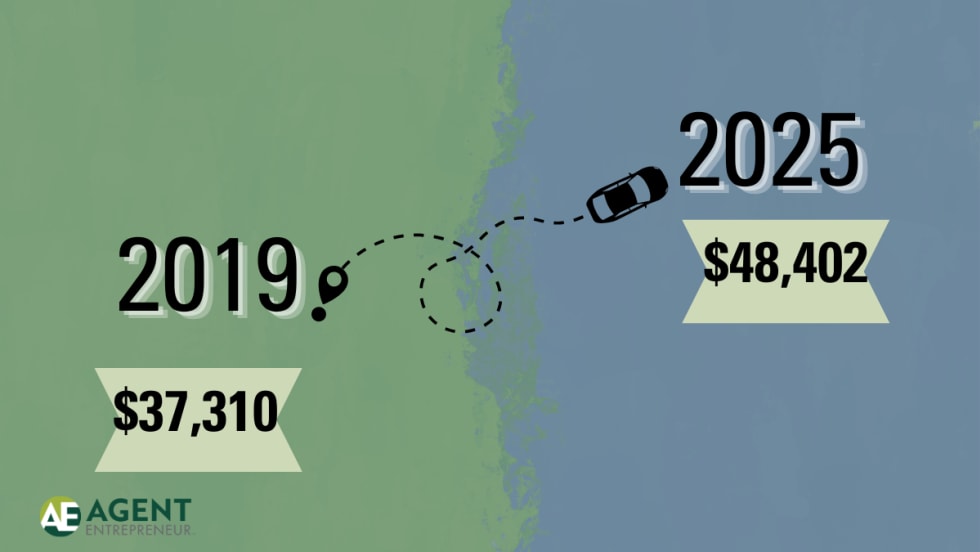
Affordable New Cars a Thing of the Past
More than one out of five new vehicles sell for more than $60,000, according to Edmunds. That's up 7% compared to prepandemic 2019.
Read More →
Legacy Automakers Risk Falling Behind
As legacy automakers, mostly in the U.S. and Japan, have revised their 2030 electric-vehicle sales targets and shifted to a hybrid focus, they risk falling behind new market leaders.
Read More →