



Black Book’s Used Vehicle Retention Index Continues to Increase
The seasonally adjusted Retention Index moved up by 0.6% – the lowest rate of increase since July – reaching 197.0 points during the first month of 2022.

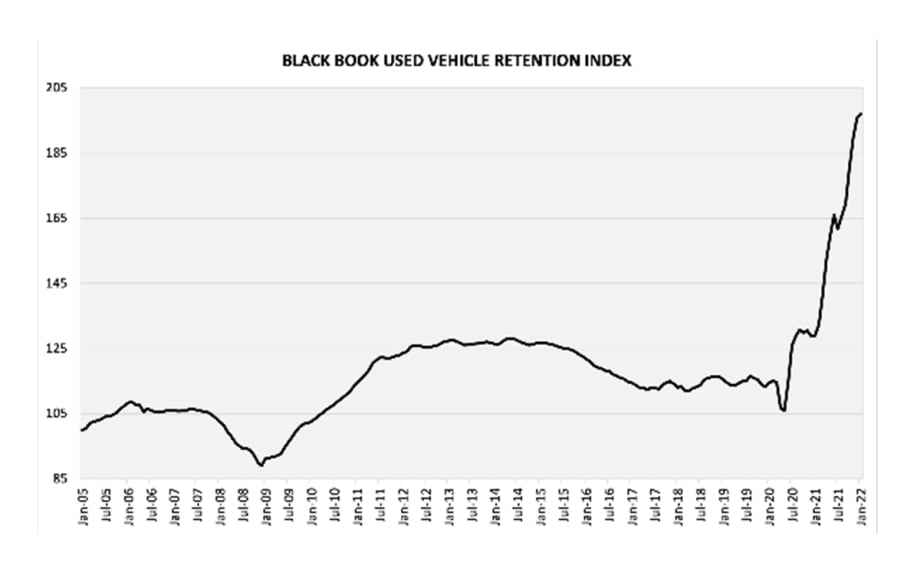
The seasonally adjusted Retention Index moved up by 0.6% – the lowest rate of increase since July – reaching 197.0 points during the first month of 2022.
LAWRENCEVILLE, Georgia – Black Book, a division of Hearst that provides industry-leading used vehicle valuation and residual value forecast solutions, today released its Used Vehicle Retention Index for January 2022. The Index increased to 197.0 points, a 1.3 point (or 0.64%) increase from December of 2021 (195.7). The Index currently stands 53% above where it was at the same time in 2021 and 72% above January 2020 (right before the pandemic started).
“During the first month of 2022, we continued to see declines in wholesale prices in most segments, but at a slower rate than historical data. That led to a small increase in the overall monthly seasonally adjusted retention index,” said Alex Yurchenko, Chief Data Science Officer at Black Book. “Some of the segments experienced a larger than typical January drop (like Mid-Size Cars and Full-Size Pickups), but we also saw continued strength in Van (of all sizes) segments. We expect a stable wholesale market in February as the industry prepares for the tax buying season.”
The Black Book Used Vehicle Retention Index is calculated using Black Book’s published Wholesale Average value on two- to six-year-old used vehicles, as percent of original typically equipped MSRP. It is weighted based on registration volume and adjusted for seasonality, vehicle age, mileage, and condition. The Index offers an accurate, representative, and unbiased view of the strength of today’s used vehicle market values.
Originally posted on Auto Dealer Today
More Sales
Used Lots Getting the Business
Many consumers are seeking out the units to save money, and the demand – higher in July than normal – is keeping supply limited and prices up.
Read More →
Two Kinds of Agents and the 5 Ps That Separate Them
Follow these key guidelines to distinguish your agency from competitors by adding more value to your dealer clients' businesses.
Read More →
Positive Equity Reaches Record High
Mainstream vehicle owners who bought a car seven years ago are likely to have positive equity when trading in for a new vehicle, according to second-quarter Edmunds data.
Read More →
Used Market Stabilizes
The Carfax Used Car Index noted a major drop in used-vehicle price increases in July after several months of hikes.
Read More →
July Auto Sales Simmer
Deliveries were up modestly from a year ago despite still-high prices as OEMs offered more incentives and loan rates eased somewhat.
Read More →
Used Sales Hit Summer Drag
The vacation season, combined with high prices, has dented deliveries and added to inventories, though supply is still slim enough to keep listings elevated.
Read More →
June Automotive Boon?
A forecast for this month’s new-vehicle sales tells a familiar 2026 story: Year-over-year comparisons must be made in light of last year’s aberrations.
Read More →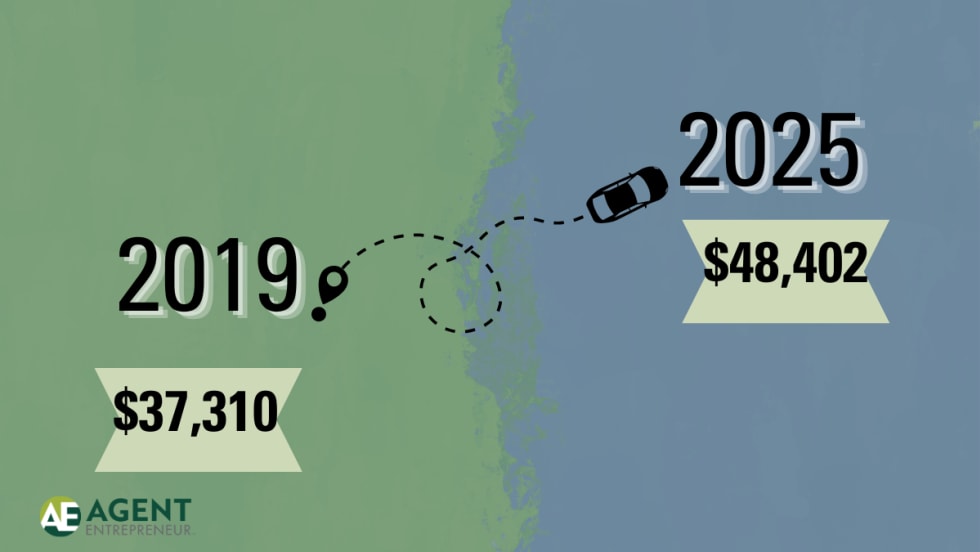
Affordable New Cars a Thing of the Past
More than one out of five new vehicles sell for more than $60,000, according to Edmunds. That's up 7% compared to prepandemic 2019.
Read More →
Legacy Automakers Risk Falling Behind
As legacy automakers, mostly in the U.S. and Japan, have revised their 2030 electric-vehicle sales targets and shifted to a hybrid focus, they risk falling behind new market leaders.
Read More →
New Cars a Tad More Affordable
May averages show that combined circumstances gave auto consumers slightly better buying power for the month, though average prices were up year-over-year.
Read More →