



Down the Road: Selling Cars Remotely
The coronavirus appears to be driving the automotive industry to selling vehicles remotely, a radical departure from the traditional dealer model. By identifying the issues that dealers need to contemplate, we find some solutions to the new direction we’re heading.


The coronavirus appears to be driving the automotive industry to selling vehicles remotely, a radical departure from the traditional dealer model. By identifying the issues that dealers need to contemplate, we find some solutions to the new direction we’re heading.
If one adds the element, Cesium, to water, there is an immediate explosion. This reaction is so dangerous that even if a small amount of this metal is added to a glass of water the glass will explode. The coronavirus would appear to be the Cesium to the automotive industry, and the reaction is a mad dash to retail vehicles remotely, a radical departure from the traditional dealer model. Do dealers understand the implications of this new model? Especially with the way less than satisfactory results from previous attempts to sell vehicles remotely.
It is quite obvious dealers need to study all the laws that may apply to remote sales.
Consumer Protections from a Traditional Age
There is a very large body of consumer law that addresses consumer protection. For the most part, this law is steeped in an ink-on-paper world where consumers are fully apprised of their purchases via advertising, written documents, and other forms of practices and procedures based in the 20th century. Consumer law places the burden on merchants. The fact that a pandemic has prevented the traditional approach to commerce doesn’t negate the application of these laws and their enforcement. For example, state attorneys general are currently prosecuting dealers for various remote sales violations, regardless of the existing public welfare restrictions.
New and Unknown Vendors
There are many creative businesses in the automotive industry reacting to the remote selling needs of dealers. But have all these companies recognized the regulatory framework in which they operate? Based upon this writer’s perspective, some of these vendors have not and could enmesh a dealer in liability. Dealers should be aware that they may be fully liable for the actions taken by their vendors on their behalf. They may be relying on vendors that are unaware of the legal strictures. Ignorance of the law is never a defense. Dealers need to know these vendors and question them.
Legal Woes of Remote Transactions
As with the traditional business model, car transactions include garnering the prospect, presenting the car, agreeing on the trade-in, getting credit approved, consummating the transaction at the signing ceremony, and, ultimately, delivering the vehicle. All these factors in the transaction can now be done remotely without the customer leaving his residence with distant computer applications designed for virtual sales presentations, trade-in appraisals, electronic documentation and signatures, and even replacing a person for the signing ceremony with an avatar.
Each of these steps has corresponding legal peril. Dealers who embrace these technologies place themselves in legal jeopardy should they not address these compliance issues.
There are also legal corollaries to these various sales steps and technological solutions. There are a litany of legal issues: OFAC, Red Flags Rule, vendor liability, specific off-site sales issues, Home Solicitation Sales Acts, local zoning, Safeguards Rule, document disclosure laws, insurance risks, ECOA, FCRA, UETA, ESIGN, UCC, DMV regulations, privacy, FTC Cooling-Off Rule, odometer laws, Sunday Blue Laws, and UDAP. This is a daunting list, and the remote selling challenges of these issues need to be studied by dealers and their legal advisors.
A Modest Checklist of Questions and Issues
The following is an executive checklist of questions and issues that dealers, engaging in remote sales, need to contemplate:
Is the website accurate in all respects? Advertising has a broad application and is one of the favorite targets of regulators and applies to websites.
Is the virtual conference portal secure?
How are telephone credit applications being addressed? Are disclosure requirements for taking these applications being provided?
If a virtual test drive is being implemented, does it mislead a consumer in its use? If it does, it could be a UDAP violation.
How are OFAC policies being implemented remotely?
If utilizing a cell phone, and other technologies, for a virtual trade-in evaluation, is the evaluation in any manner deceiving?
Is care being employed for outbound sales calls using auto-dialers?
With more e-mail use, is CANSPAM being observed?
How are the documents being presented and signed? On-site or electronically?
Are customers who are entering into installment sale contracts being given the opportunity to review the contract, in a form they can keep, prior to execution?
Does state law prohibit vehicle sales on Sunday? How is “sale” defined in these states?
Are all deal terms agreed upon prior to delivery or are there negotiations at the consumer’s home? (It should be the former.)
Have dealers studied the terms and conditions of their vendor agreements for which actions of these third parties are dealers liable?
Are there any forms that the state requires be signed manually and in ink?
How are the identities of customers being ascertained? Are all Red Flags procedures being followed?
In delivering the vehicle, is it being driven or conveyed by truck? Is the odometer reading correct upon delivery?
If a dealer is using generic e-signature tools, is the conversion of electronic chattel paper into UCC Article 9 tangible chattel paper legally adequate? (If the dealer doesn’t understand this question, it raises a host of other disquieting issues.)
In an electronic document environment, are the disclosures appearing in the correct font size or larger? Are signature and initial lines closely aligned with their corresponding language? Is all the language at least six point type on the electronic device and clearly legible?
There are certain states that have deadlines for filing registration and title applications. How are those deadlines being met?
Many financing source dealer agreements have a representation and warranty by the dealer that the entire transaction, including the delivery of the vehicle and the buyer's acceptance of the vehicle, occur at the dealer's licensed place of business. Has the dealer reviewed this language in his agreement? Is there compliance with this contractual provision?
Are dealers conducting sales from an unlicensed location? In some states, such as Texas, it is prohibited. (It should be noted, however, that a Texas dealer may sell, or offer to sell, a motor vehicle online through an advertisement, on the internet, or to a buyer who never personally appears at the dealer's established and permanent place of business.)
Is the dealer negotiating the sale at the customer’s home? It may violate state dealer licensing statutes that may restrict sales to the dealership location, and it might also be violating a federal law permitting a "cooling-off period" for sales made at a customer's home. In addition, it may be violating a comparable state law on home solicitation sales addressing a cooling-off period.
Home solicitation laws vary by state. Has the dealer reviewed its state’s law and is following this law?
How are dealers observing the FTC's Cooling-Off Rule? The rule requires written and oral disclosures, gives a buyer a three-day right to cancel, prohibits misrepresentations regarding that right, and restricts a seller's ability to assign the contract for a period of time.
Does a dealer’s state mandate that the delivery of the vehicle occur only at the dealer’s licensed established place of business?
Has the dealer considered insurance laws, zoning issues, and reflected on potential tort matters?
These issues, and various others, are the legal traps that dealers must elude to be successful in remote selling.
Recommendations
These issues are wide-ranging and can be daunting. Dealers need to be judicious in exchanging exotic technological solutions for traditional and tested practices. They should also be careful in relying upon companies that are new at providing remote selling services. It is quite obvious dealers need to study all the laws that may apply to remote sales. One should hope that a Cesium-type explosion in liability and fines can be avoided through dealer due diligence.
GOVERN YOURSELVES ACCORDINGLY
Terrence J. O’Loughlin, J.D., M.B.A. is the Reynolds and Reynolds Company’s director of compliance.
Read: The Perfect Complement: Inside the Portfolio/NAE Acquisition
Originally posted on P&A Magazine
More Sales

September Payments Reach New Heights
Despite lower interest rates and longer loan terms, the average new-vehicle monthly payment continues to climb, and transaction prices remain high.
Read More →
Used Lots Getting the Business
Many consumers are seeking out the units to save money, and the demand – higher in July than normal – is keeping supply limited and prices up.
Read More →
Two Kinds of Agents and the 5 Ps That Separate Them
Follow these key guidelines to distinguish your agency from competitors by adding more value to your dealer clients' businesses.
Read More →
Positive Equity Reaches Record High
Mainstream vehicle owners who bought a car seven years ago are likely to have positive equity when trading in for a new vehicle, according to second-quarter Edmunds data.
Read More →
Used Market Stabilizes
The Carfax Used Car Index noted a major drop in used-vehicle price increases in July after several months of hikes.
Read More →
July Auto Sales Simmer
Deliveries were up modestly from a year ago despite still-high prices as OEMs offered more incentives and loan rates eased somewhat.
Read More →
Used Sales Hit Summer Drag
The vacation season, combined with high prices, has dented deliveries and added to inventories, though supply is still slim enough to keep listings elevated.
Read More →
June Automotive Boon?
A forecast for this month’s new-vehicle sales tells a familiar 2026 story: Year-over-year comparisons must be made in light of last year’s aberrations.
Read More →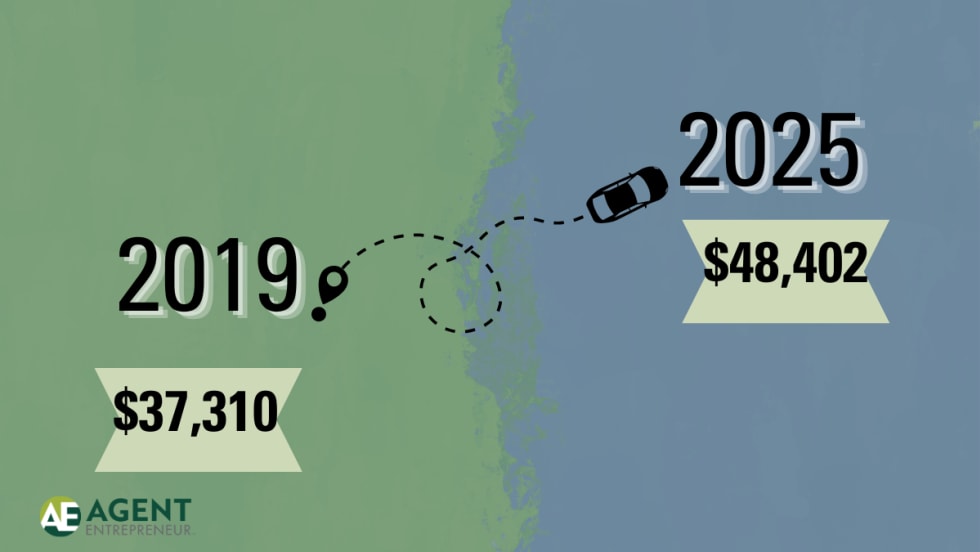
Affordable New Cars a Thing of the Past
More than one out of five new vehicles sell for more than $60,000, according to Edmunds. That's up 7% compared to prepandemic 2019.
Read More →
Legacy Automakers Risk Falling Behind
As legacy automakers, mostly in the U.S. and Japan, have revised their 2030 electric-vehicle sales targets and shifted to a hybrid focus, they risk falling behind new market leaders.
Read More →