



Diagnosing Your Clients’ Needs


Diagnosing Your Clients’ Needs
When people think about making a vehicle purchase, they aren’t likely to compare talking with you to going to the doctor, but you should make that comparison when preparing to talk with clients. People trust doctors. They usually accept the diagnosis and prescription for wellness with few questions asked. That’s because they recognize doctors as experts in their fields. Your goal is to have your clients see you the same way. When they have an ache or pain related to their mode of transportation, they should immediately think of calling you. That’s because they’ll be confident you have the right prescription for their ills.
To earn this level of respect and trust, you need to start every relationship with the right skills. These skills include a caring manner, a confident air, and your diagnostic tools. The tools you use in diagnosing the automotive needs of your clients may be as simple as a pad of paper and your product knowledge. They may include your past client experiences, personal experiences or memories.
The most powerful diagnostic tools used by all people in sales are questions. Like a doctor, your use of questions begins with general areas of need. Then, based on the answers you are given, you narrow your questions down to where you can readily determine the right cure or solution for the clients’ needs.
Average car salespeople have this fantasy in which they think they should be able to simply present the wonderful features of their vehicles and the customer, seeing the value, pulls out their checkbook or credit card and says, “I’ll take it.” If customers made buying decisions based on features alone that might work, but it’s a rare occasion when it does.
The reality of it is that most buying decisions are based on past experiences, the experiences of others the client trusts, advertising, gut feelings and hundreds of other factors that you can’t do much about. So, you have to start with questions to find out what they’re thinking. Get them talking about their needs, wants and perceptions of your product or service. The answers will help you put yourself in their shoes. Once you’re there, you’ll see what steps you need to take in order to help them take to make a sound buying decision.
Be sure to ask “what past experience do you have with this type of vehicle?” It could be that they’re very well-versed on the features of an SUV or luxury sedan, even used it in the past, and are seeking a new one of the same type. If they know little or nothing about the vehicle they’ve come to see, you’ll have to invest a bit more time in educating them as to the features and what they can expect.
Ask very specifically what they hope to accomplish with an investment in this particular type of vehicle. It could be that one of your vehicle’s key benefits is sought after by most clients. However, that feature does nothing for this particular client. You won’t want to turn them off by talking about something that doesn’t matter to them.
I like to use the analogy of a torpedo when talking about this subject. A torpedo leaves a ship in the general direction of its intended target. It bounces a signal off in the target direction. If the signal doesn’t come back, it corrects its direction to get back on course, and sends another signal seeking feedback.
That’s what questioning does for you. You take off in a certain direction with your questions. The answers you receive either tell you that you’re on target or that you need to take another tack. Rarely will you take a direct course from initial contact to the vehicle sale. More often than not, you’ll find yourself zig-zagging but all the while heading in the general direction of the sale until you find just the right answer for each and every client.
Take a moment to think about the quality of the questions you are asking. How quickly and accurately are they bringing you back the information you need to move forward with a sale? If you continually get hung up in one aspect of your presentation, invest some non-client time writing out the questions you’re using now. Then, think about how you could rephrase them to get better feedback. An even better strategy is to make a list of all the information you need to have before asking for a decision. Then, work backwards, writing out the questions that will provide those answers. Either way, you’ll soon find yourself with better questions to ask, and a shorter, more efficient sales process.
More Sales

September Payments Reach New Heights
Despite lower interest rates and longer loan terms, the average new-vehicle monthly payment continues to climb, and transaction prices remain high.
Read More →
Used Lots Getting the Business
Many consumers are seeking out the units to save money, and the demand – higher in July than normal – is keeping supply limited and prices up.
Read More →
Two Kinds of Agents and the 5 Ps That Separate Them
Follow these key guidelines to distinguish your agency from competitors by adding more value to your dealer clients' businesses.
Read More →
Positive Equity Reaches Record High
Mainstream vehicle owners who bought a car seven years ago are likely to have positive equity when trading in for a new vehicle, according to second-quarter Edmunds data.
Read More →
Used Market Stabilizes
The Carfax Used Car Index noted a major drop in used-vehicle price increases in July after several months of hikes.
Read More →
July Auto Sales Simmer
Deliveries were up modestly from a year ago despite still-high prices as OEMs offered more incentives and loan rates eased somewhat.
Read More →
Used Sales Hit Summer Drag
The vacation season, combined with high prices, has dented deliveries and added to inventories, though supply is still slim enough to keep listings elevated.
Read More →
June Automotive Boon?
A forecast for this month’s new-vehicle sales tells a familiar 2026 story: Year-over-year comparisons must be made in light of last year’s aberrations.
Read More →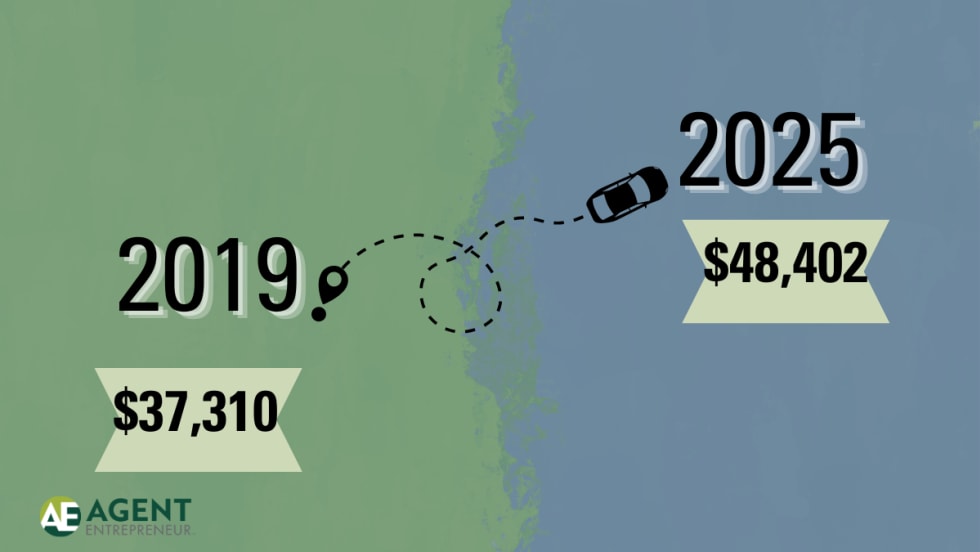
Affordable New Cars a Thing of the Past
More than one out of five new vehicles sell for more than $60,000, according to Edmunds. That's up 7% compared to prepandemic 2019.
Read More →
Legacy Automakers Risk Falling Behind
As legacy automakers, mostly in the U.S. and Japan, have revised their 2030 electric-vehicle sales targets and shifted to a hybrid focus, they risk falling behind new market leaders.
Read More →